
See the indigenous Vande Bharat Sleeper train hit 180 KPH in successful high-speed trials! Explore its advanced tech, fulfilling Make in India goals. Click to learn more!
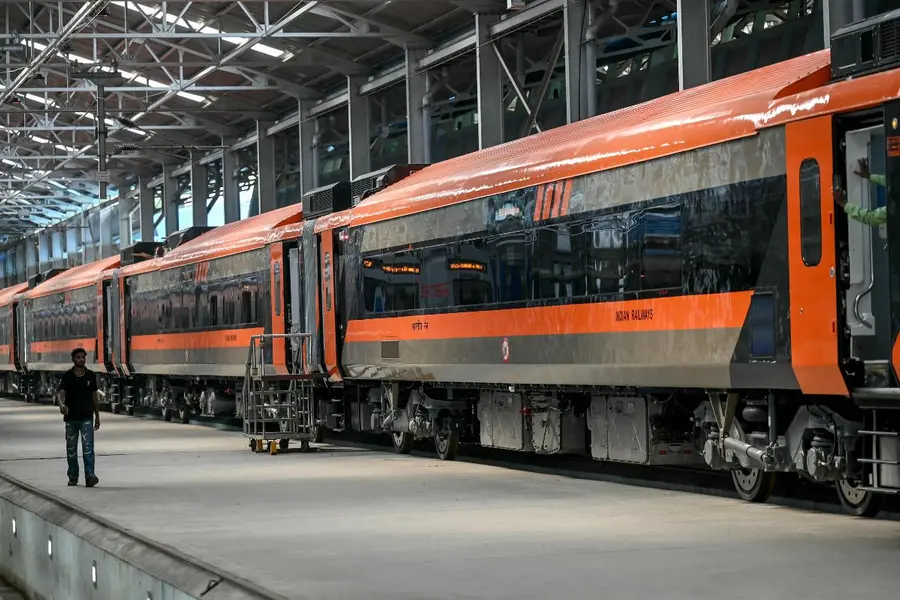
The indigenously manufactured Vande Bharat sleeper train successfully hit the 180 kilometres per hour (KPH) high-speed mark in loaded and empty conditions, during trials conducted in the Kota division of West Central Railways.
The first rake of the Vande Bharat sleeper train was put on trial between December 2024 and January 2025 in the same Kota division of West Central Railways.
The second rake of high-speed Vande Bharat sleeper train (Version 2, 16 coaches) in both loaded and empty conditions was successfully tested by the Testing Directorate team of Research Designs and Standards Organisation (RDSO), Lucknow, from November 2 to 17.
The second rake of the train with a load of 908 tons hit the success mark at 180 KPH earlier last week, followed by a successful trial (Version 2, 16 coaches, Empty Series) with an 800-ton empty rake on Monday, a senior railway official said.
This marks another historic achievement towards "Mission Raftar" and "Make in India", the official added.
Technical experts from the Integral Coach Factory (ICF) Chennai, Medha Servo Drives Limited, and Faiveley India Pvt Ltd were also present during the trials.
The trial was conducted in two trips on the Rohalkhurd-Indragarh-Kota section, covering a total distance of 100 kilometres, Senior Divisional Commercial Manager Saurabh Jain said in an official statement.
READ MORE: New Vande Bharat Sleeper trains fix one thing everyone complains about
During the trials, the train achieved a maximum speed of 180 kilometres per hour and successfully completed significant technical tests such as the oscillation test and long confirmatory run (LCR).
What makes the Vande Bharat Sleeper train technically advanced?
The trials in loaded and empty conditions aimed to scientifically evaluate the train's stability, safety, braking efficiency, and ride comfort at high speed.
Earlier, a similar test of this train was conducted in fully loaded condition of 908 tons, including 108 tons of additional load (in the form of canisters filled with 50-50 kilograms of iron dust) added to the 800-ton rake weight, the railway official said.
This time, the test was repeated with an 800-ton empty rake (empty load conditions), the official added.
The two trials offered a comparative study of the train's performance in both conditions to ensure scientific validation of the train's structural and mechanical stability under different operational circumstances.
READ MORE: Vande Bharat sleeper trains not ready yet? Here’s what’s causing the delay
RDSO Lucknow's Testing Director Radheshyam Tiwari, Chief Loco Inspector R N Meena, Traffic Inspector Sushil Jaithwani, Loco Pilot Anil Bhardwaj, Co-Loco Pilot Rakesh Sakarwal, and Train Manager Hari Mohan Meena played a major role in two successful high-speed trials.
The Vande Bharat Sleeper rake is manufactured using indigenous technology, incorporating an advanced suspension system, low-noise aerodynamic structure, and modified bogie design.
These features provide better stability even at high speeds and an excellent ride experience for passengers. This achievement is another strong step towards Indian Railways' technical self-reliance and global competitiveness, showcasing the success of the "Make in India" initiative, Jain said.
PTI
Published: 12 Nov 2025, 07:02 pm IST
Disclaimer: Kindly avoid objectionable, derogatory, unlawful and lewd comments, while responding to reports. Such comments are punishable under cyber laws. Please keep away from personal attacks. The opinions expressed here are the personal opinions of readers and not that of Mathrubhumi.
