
Vande Bharat visionary Sudhanshu Mani reviews the train. Get his honest take on design, occupancy, and operational flaws. Click for full details!
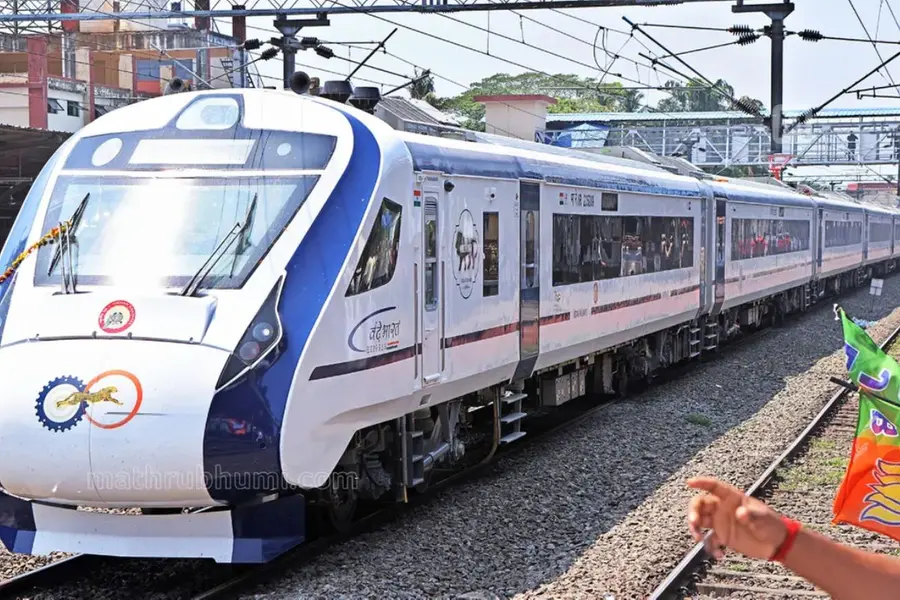
The man who envisioned and led the production of the Vande Bharat Express, retired Integral Coach Factory (ICF) General Manager Sudhanshu Mani, has finally shared his passenger review, seven years after the semi-high-speed train’s first launch. His candid feedback, documented after a trip from Lucknow to Prayagraj, paints a mixed picture, praising the indigenous design but delivering sharp criticism of the train’s operations and current passenger viability.
Mani’s most stinging critique is aimed at the low ridership and the ongoing delay in launching a crucial component of the project's vision: the sleeper version.
Mani did not hold back on the glaring issue of poor passenger turnout on his journey.
Occupancy Crisis: He noted that the Executive Class was "Occupancy was, frankly, poor -- Executive Class hovering below 25 per cent, Chair Car barely at half capacity"
Sleeper Version Urged: Mani linked the dismal numbers directly to the lack of a suitable overnight option, stating: "We had predicted this long ago: without a sleeper variant, the day-train model was bound to struggle on routes where the extent of clientele would simply not justify the glamour."
Taking a dig at the multiple missed launch deadlines for the sleeper version, he concluded that the project is currently “a train more in hype than reality.”
The Vande Bharat creator also expressed frustration that the trains are being operated far below their capability, "Even Delhi feels too long for a day journey at the current permissible running speed of 130 kmph, even though the train is capable of 160."
While his review was critical of the operation, Mani was largely appreciative of the core engineering and passenger experience:
Design Integrity: He stated the exterior "looked largely the same as what we built. Maybe a little wavier on the sidewall skins, but still better than most Indian trains"
Comfort Improvements: The seating comfort was praised as being better than the prototype, specifically mentioning the improved back-recline mechanism.
Key Strengths: He affirmed that acceleration remains a "key USP" due to the distributed power system, as in the original prototype (Train 18).
However, he pointed out noticeable issues in the quality of fittings: "The toilet was neat and functional, though the fittings bore the unmistakable fingerprints of cost-cutting and multi-sourcing, the eternal curse of our procurement system." He also found the "unnecessary red carpet strip" in the Executive Class coach to be a distracting attempt to disguise the coach floor.
Mani, who retired in 2018 after a distinguished 38-year career, took the journey organically after seven years, finally giving the country's flagship indigenous train an honest and unfiltered review from its own architect.
Published: 25 Nov 2025, 09:48 pm IST
Disclaimer: Kindly avoid objectionable, derogatory, unlawful and lewd comments, while responding to reports. Such comments are punishable under cyber laws. Please keep away from personal attacks. The opinions expressed here are the personal opinions of readers and not that of Mathrubhumi.
