
UPI payments at petrol pumps are not being stopped. Petroleum dealers have asked the Centre to waive MDR and transaction charges on UPI payments.
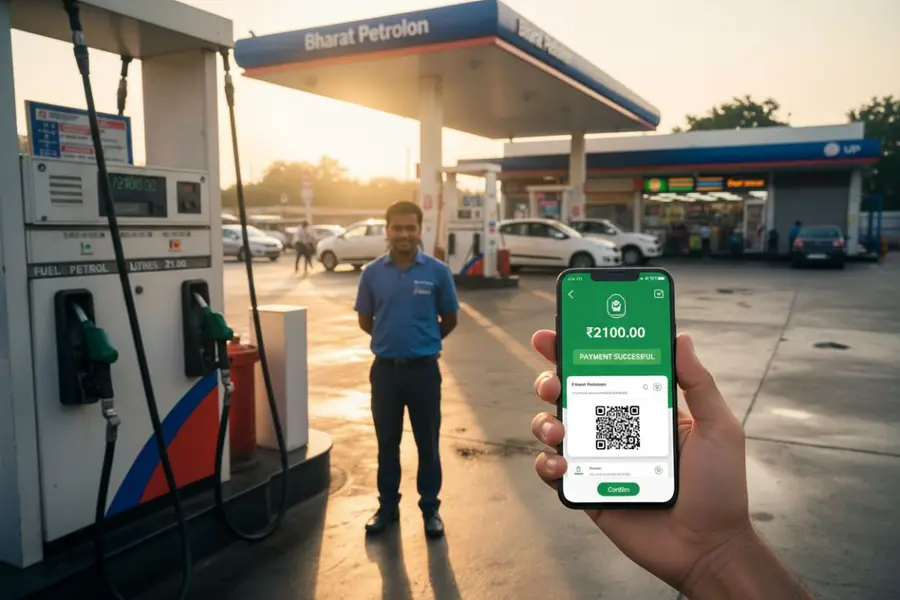
New Delhi: Paying for fuel through UPI could become a bigger financial issue for petrol pump dealers as the All India Petroleum Dealers Association seeks an exemption from MDR and transaction charges on UPI payments above Rs 2,000.
The association has approached the Centre, arguing that even small charges on high-value UPI transactions can eat into the already limited margins of petrol pump dealers. It has sought either a complete waiver of such charges on UPI payments at fuel stations or specific relief for transactions above the Rs 2,000 mark.
Why are petrol pump dealers raising the UPI issue?
The main concern is how petrol pump dealers earn their money.
In a letter to the Finance Minister on Wednesday, association President Ajay Bansal said dealer margins are fixed primarily on a per-litre basis by oil marketing companies (OMCs), under the guidance of the Ministry of Petroleum and Natural Gas.
In other words, a dealer's earnings do not increase in proportion to the amount a customer pays in a single transaction.
ALSO READ: UPI charges from October 15: RBI backs new MDR on payments above Rs 2,000; here’s what changes
The association said its commissions have not been revised since October 2017, while costs such as electricity, wages and regulatory compliance have continued to rise.
Against this backdrop, dealers argue that having to pay UPI transaction charges would further reduce their earnings.
What happens with UPI payments above Rs 2,000?
The association has specifically highlighted UPI transactions above Rs 2,000, saying that both fixed and percentage-based charges could become a recurring cost for petrol pumps.
It cited the example of a Rs 5 fixed charge per UPI transaction above Rs 2,000. While the amount may appear small for an individual payment, the association said petrol pumps handle large numbers of transactions every day, meaning the charges could accumulate quickly.
It also raised concerns about a percentage-based MDR of up to 0.4%, arguing that such a charge would be disproportionate to the economics of fuel retailing because dealer margins are not linked to the transaction value.
ALSO READ: Who really pays the 0.4% MDR fee? What the new UPI rules mean for buyers and retailers
Why does MDR matter for petrol pumps?
MDR, or Merchant Discount Rate, is a charge associated with processing certain digital payments. For fuel dealers, the concern is that any such cost comes out of margins that are largely fixed.
The association therefore wants petrol pumps to be treated differently when it comes to UPI payment charges.
It said the government has previously recognised the distinct nature of fuel transactions in the context of card payments and argued that a similar approach should apply to UPI payments at petrol pumps.
What are petrol pump dealers asking the government to do?
The All India Petroleum Dealers Association has sought an absolute exemption from MDR and associated transaction fees on UPI payments at retail fuel outlets, irrespective of the transaction amount.
If a general threshold is retained, the association wants petrol pumps to be exempted from both percentage-based MDR and fixed per-transaction charges on UPI payments above Rs 2,000.
The association has also warned that additional payment costs could create a situation where dealers feel compelled to discourage or restrict UPI payments above a particular amount to protect their margins.
ALSO READ: UPI payments up to ₹2,000 remain free: What users need to know
It argued that this would run counter to the wider push towards digital payments and convenient cashless transactions.
What does this mean for customers paying for fuel through UPI?
The association's demand is centred on who bears the cost of processing UPI transactions at petrol pumps, rather than a request to stop digital payments.
Its position is that customers should continue to have the convenience of paying for fuel digitally without petrol pump dealers being financially penalised for facilitating UPI transactions.
“Digital payments have significantly enhanced customer convenience, transaction transparency and operational efficiency in fuel retailing,” the association said in its letter, adding that dealers should not be financially penalised for facilitating such transactions.
Published: 17 Sept 2026, 12:42 pm IST
ABOUT THE AUTHOR

Related Topics
Disclaimer: Kindly avoid objectionable, derogatory, unlawful and lewd comments, while responding to reports. Such comments are punishable under cyber laws. Please keep away from personal attacks. The opinions expressed here are the personal opinions of readers and not that of Mathrubhumi.