
Once active, a 0.4% MDR applies to transactions over ₹2,000 (capped at ₹300), while payments up to ₹2,000 remain entirely free.
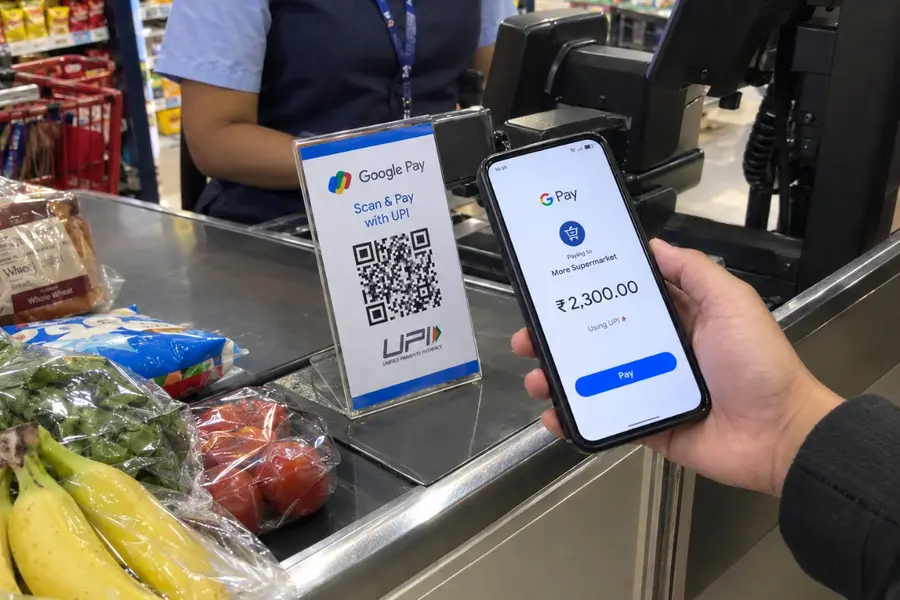
Mumbai: In a substantial reprieve for Unified Payments Interface (UPI) users and commercial vendors, the controversial enforcement of a 0.4 per cent Merchant Discount Rate (MDR) on transactions exceeding Rs 2,000 has been postponed, with the National Payments Corporation of India (NPCI) announcing on Tuesday that a revised implementation schedule will be finalised following the Diwali festival. The decision aims to shield commercial traders and consumers from potential operational shifts during peak festive shopping, ensuring uninterrupted digital transaction volumes across commercial hubs nationwide.
Structure of the Revised MDR Framework
Once formally notified, the new regulatory framework introduces a nominal 0.4 per cent MDR on eligible P2M transactions exceeding Rs 2,000, with total charges capped at Rs 300 for high-value payments of Rs 75,000 and above. Low-value transactions of Rs 2,000 or less remain entirely exempt, ensuring that approximately 96 per cent of routine daily merchant transactions will incur zero fees. Concessional structures have been established for specialised sectors, including a flat Rs 5 charge per transaction exceeding Rs 2,000 across fuel stations, utility services, insurance premiums, and railway bookings.
Safeguards for Consumers and Small Businesses
Official guidance issued by the National Payments Corporation of India (NPCI) and the Ministry of Finance confirms that everyday peer-to-peer (P2P) transfers and qualifying small vendors operating under the Person-to-Person-Merchant (P2PM) category will remain completely free of MDR. Furthermore, regulatory guidelines strictly prohibit merchants from passing on any processing charges to retail buyers or levying additional checkout surcharges. The strategic delay gives acquiring banks, payment aggregators, and fintech applications extended operational lead time to calibrate accounting software without disrupting India's digital payments ecosystem during the holiday rush.
Structure of the Revised MDR Framework
Once formally notified, the new regulatory framework introduces a nominal 0.4 per cent MDR on eligible P2M transactions exceeding Rs 2,000, with total charges capped at Rs 300 for high-value payments of Rs 75,000 and above. Low-value transactions of Rs 2,000 or less remain entirely exempt, ensuring that approximately 96 per cent of routine daily merchant transactions will incur zero fees. Concessional structures have been established for specialised sectors, including a flat Rs 5 charge per transaction exceeding Rs 2,000 across fuel stations, utility services, insurance premiums, and railway bookings.
Safeguards for Consumers and Small Businesses
Official guidance issued by the National Payments Corporation of India (NPCI) and the Ministry of Finance confirms that everyday peer-to-peer (P2P) transfers and qualifying small vendors operating under the Person-to-Person-Merchant (P2PM) category will remain completely free of MDR. Furthermore, regulatory guidelines strictly prohibit merchants from passing on any processing charges to retail buyers or levying additional checkout surcharges. The strategic delay gives acquiring banks, payment aggregators, and fintech applications extended operational lead time to calibrate accounting software without disrupting India's digital payments ecosystem during the holiday rush.
Published: 13 Oct 2026, 01:40 pm IST
ABOUT THE AUTHOR

Related Topics
Disclaimer: Kindly avoid objectionable, derogatory, unlawful and lewd comments, while responding to reports. Such comments are punishable under cyber laws. Please keep away from personal attacks. The opinions expressed here are the personal opinions of readers and not that of Mathrubhumi.