
As Union Budget 2025 approaches, we look back at five historic budget speeches that didn’t just present numbers but changed India’s economic thinking, policy direction and political discourse—leaving legacies that still shape the nation today.
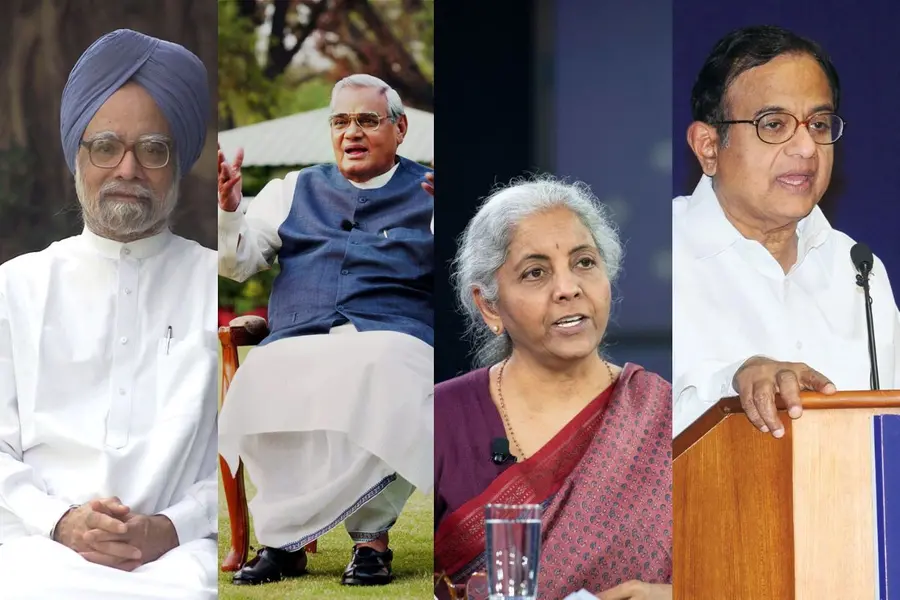
As India looks ahead to the Union Budget 2026, it is worth revisiting the landmark budget speeches that reshaped the country’s economic direction and political imagination.
Budget speeches are not merely fiscal statements; at crucial moments, they have captured turning points in India’s journey, reflecting crisis, reform, aspiration, and resilience. Here are five historic Union Budget speeches that left a lasting imprint on India’s economic and political landscape.
Also Read

Jawaharlal Nehru and the Idea of Planned Development (1950s)
In the early years after Independence, budget speeches under Prime Minister Jawaharlal Nehru laid the foundation of India’s planned economy.
These speeches went beyond balance sheets, articulating a vision of state-led development, industrialisation, and social justice. Heavy industries, public sector enterprises, and Five-Year Plans dominated the narrative.
Nehru’s budgets reflected optimism and nation-building at a time when India was still defining its economic identity, making them historically significant for setting the ideological tone of post-colonial India.
Atal Bihari Vajpayee and Infrastructure Push (Late 1990s–2000s)
Budgets under Prime Minister Atal Bihari Vajpayee reflected a pragmatic blend of reform and welfare. The speeches during his tenure emphasised fiscal discipline while prioritising infrastructure-led growth.
Initiatives like the National Highways Development Project signalled a recognition that roads, connectivity, and urban infrastructure were central to economic expansion. Vajpayee-era budgets helped normalise reform politics, making economic modernisation acceptable across party lines.
Manmohan Singh’s 1991 Budget: Liberalisation Begins
Few budget speeches have had the transformative impact of the 1991 speech delivered by Manmohan Singh, then Finance Minister.
Faced with a severe balance-of-payments crisis, Singh announced sweeping reforms that dismantled the Licence Raj, opened India to foreign investment, and reduced trade barriers.
His speech famously quoted Victor Hugo, declaring that “no power on earth can stop an idea whose time has come.”
That moment marked India’s decisive shift from a closed economy to a liberalised one, reshaping growth, entrepreneurship, and global integration for decades.
P Chidambaram’s Dream Budget of 1997
Often remembered as a “Dream Budget,” Finance Minister P Chidambaram’s 1997 speech focused on tax rationalisation and simplicity.
By lowering income tax rates and widening the tax base, the budget aimed to improve compliance and boost consumer confidence.
The speech stood out for its reformist tone without crisis-driven compulsion, showing that structural changes could be pursued proactively. It also reinforced the idea that taxation policy could be a tool for growth, not just revenue collection.
Nirmala Sitharaman and Budgets in an Age of Crisis
More recently, Finance Minister Nirmala Sitharaman’s budget speeches during and after the COVID-19 pandemic marked a new chapter. Delivered amid unprecedented global uncertainty, these speeches focused on resilience, welfare support, and long-term capacity building.
Emphasis on capital expenditure, digital public infrastructure, and self-reliance underscored a shift toward preparing India for future shocks while sustaining growth. Her speeches are likely to be remembered for navigating a crisis without abandoning reform.
Why These Speeches Matter Today
With the Union Budget 2026 to be announced on February 1, these historic speeches serve as reminders that budgets can be moments of transformation.
Whether articulating a new economic philosophy, responding to a crisis, or redefining growth priorities, India’s most memorable budget speeches have shaped not just policy but the country’s trajectory itself.
Published: 21 Jan 2026, 01:45 pm IST
Related Topics
Disclaimer: Kindly avoid objectionable, derogatory, unlawful and lewd comments, while responding to reports. Such comments are punishable under cyber laws. Please keep away from personal attacks. The opinions expressed here are the personal opinions of readers and not that of Mathrubhumi.