
This episode underscores the growing interoperability and trust between Indian and UK defence forces
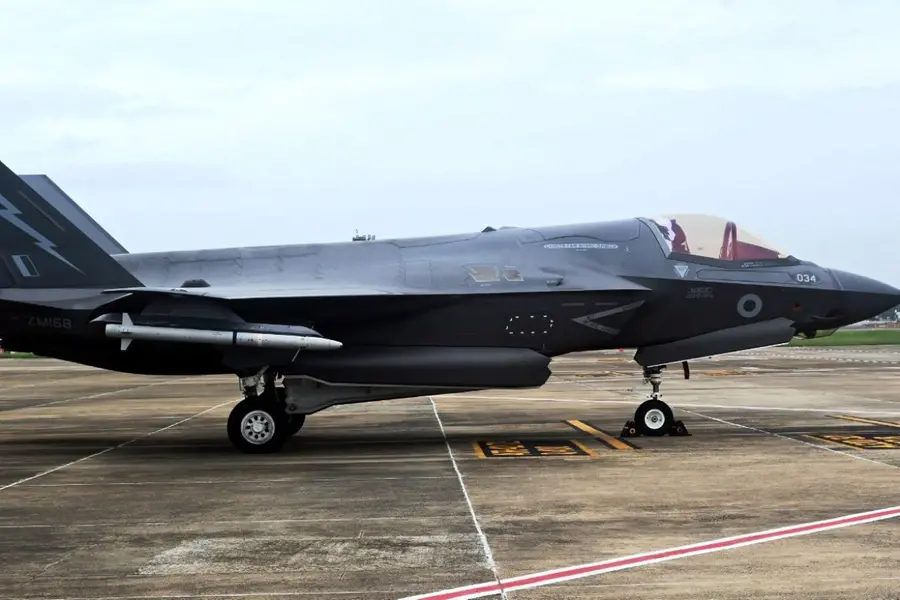
Kochi: A high-level British technical team is expected to arrive in Kerala on July 5 to assess and repair a stranded F-35B Lightning II stealth fighter jet belonging to the UK Royal Navy. The aircraft has been grounded at Thiruvananthapuram International Airport in Kerala following a precautionary landing made during a joint military exercise in the Arabian Sea.
The F-35B, considered one of the most advanced multi-role combat aircraft in the world, was operating from the HMS Prince of Wales, the UK’s largest aircraft carrier, which is currently deployed in the Indian Ocean Region (IOR) as part of Carrier Strike Group 25 (CSG25).
The aircraft had to make an unplanned diversion to the mainland after encountering a technical snag during flight operations. Sources indicate that while no emergency was declared, the pilot opted for a safety-first approach and diverted to Kochi, landing safely without incident.
The jet, which is worth $110 million, was moved to the Maintenance, Repair, and Overhaul (MRO) facility at Thiruvananthapuram Airport after the Indian Air Force offered to assist the UK in repairing the engineering issue.
The aircraft has since remained grounded under high security, drawing considerable attention due to its advanced stealth technology and sensitive onboard systems. India has ensured tight perimeter security around the jet while allowing only limited access under strict coordination with UK defence representatives stationed in New Delhi.
According to defence sources, a 40-member aviation team is expected to arrive in Kerala on a special flight and may include specialists from BAE Systems, Lockheed Martin (the aircraft’s manufacturer), and Rolls-Royce, which supplies the F-35B’s unique vertical lift fan system.
Their mandate includes diagnosing the root cause of the technical issue, executing necessary repairs, and preparing the aircraft for its eventual return to the HMS Prince of Wales, or possibly airlifting it out, depending on its operational status.
This visit follows diplomatic coordination between the UK Ministry of Defence and India’s Ministry of External Affairs and the Ministry of Defence. Given the aircraft's fifth-generation classification and its role in the UK’s Indo-Pacific outreach, every step of the recovery operation is being closely monitored.
F-35B and Indo-UK Defence Ties: The F-35B variant, used by both the UK Royal Navy and US Marine Corps, is capable of short take-off and vertical landing (STOVL), making it ideal for operations from aircraft carriers and short runways. Its presence in Indian territory, though unplanned, marks a rare instance of such an advanced Western fighter jet being stationed at an Indian military facility, albeit temporarily.
This episode also underscores the growing interoperability and trust between Indian and UK defence forces, particularly as both nations step up maritime collaboration in the Indian Ocean Region. The HMS Prince of Wales is part of the UK’s Indo-Pacific tilt, a strategic posture shift aimed at strengthening presence and partnerships in the region.
The aircraft carrier had earlier participated in joint drills with the Indian Navy under Exercise Konkan. While neither government has released official technical details on the F-35B’s malfunction, the swift and transparent coordination between the two sides reflects evolving military diplomacy in a high-technology environment.
Following the inspection and rectification by the UK team, the aircraft is expected to resume operational duties. However, if the jet cannot be returned to airworthiness in situ, alternative recovery methods, including disassembly and airlift via a C-17 Globemaster or similar military transport, may be considered.
Defence analysts suggest that India’s handling of the situation, including the high-level logistical support, may pave the way for deeper cooperation on technical services, logistics, and secure infrastructure for visiting foreign platforms.
As of July 4, the aircraft remains under protection at the naval base, with British personnel expected to take full charge of its inspection on July 5. Further updates are anticipated after an official review by the visiting technical team.
Published: 04 Jul 2025, 04:34 pm IST
ABOUT THE AUTHOR

Disclaimer: Kindly avoid objectionable, derogatory, unlawful and lewd comments, while responding to reports. Such comments are punishable under cyber laws. Please keep away from personal attacks. The opinions expressed here are the personal opinions of readers and not that of Mathrubhumi.