
India’s Tejas Mk1A is closer to the IAF than ever, but the fighter is not yet fully ready for handover. With radar and missile integration still undergoing final testing, HAL is working to bridge the gap between a finished airframe and a combat-ready aircraft.
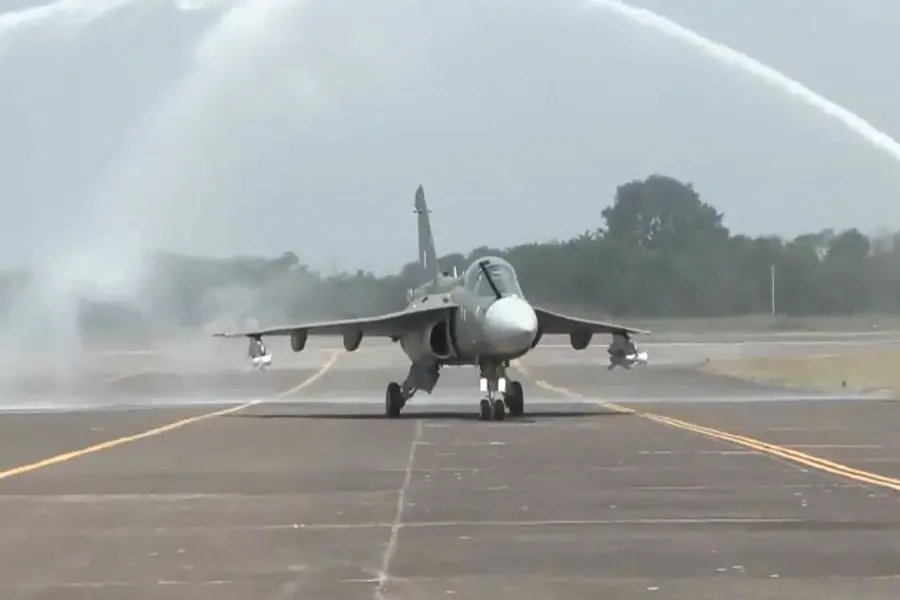
Somewhere in Bengaluru, under the white glare of hangar lights, a row of sharp-nosed fighters is waiting. They are finished to look at. They are not finished to fight. That distance, between a completed airframe and an aircraft an air force will sign for, is the whole story of the Tejas Mk1A today, and Hindustan Aeronautics Limited has never stood closer to closing it.
HAL's Chairman and Managing Director, Ravi, put it plainly this week. The jets must meet the exact specification promised to the services before one changes hands, and on two counts, radar and missile fit, he admitted the team is not there yet. He announced no date. That restraint honestly separates building an aeroplane from clearing its fighting systems.
Begin with the radar, the eye of any modern fighter. Older sets used a dish that swung from side to side, rather like a torch turned by hand. The new radar on the Tejas, called an Active Electronically Scanned Array, works differently. Hundreds of tiny tiles sit side by side and shift the beam electronically, and nothing moves at all. The jet therefore sees farther, tracks several targets at once, and is much harder to jam. The first eighty-three Mk1A aircraft carry the EL/M-2052 set, built in India by HAL with Israeli know-how from ELTA. No LCA-class aircraft has flown such a radar before, Ravi notes, which is why the last stretch of software and a few more test flights cannot be hurried. He places that work at roughly ninety to ninety-five per cent.
The fully Indian chapter comes later. The follow-on batch of ninety-seven aircraft is planned around the Uttam radar from DRDO's LRDE laboratory, which moves from older chips to newer ones that run hotter and send out a stronger signal. That set belongs to tomorrow's jets, not the ones standing ready today.
The weapons tell a similar tale: work on the ground is largely settled. What remains is flying the aircraft with the missiles mounted, not necessarily fired, to confirm that airframe, controls and stores behave as the engineers calculated. MBDA's ASRAAM handles close combat, homing on the heat picture of its target and able to be launched even when the enemy is not straight ahead. For distance there is the indigenous Astra Mk1, which carries its own small radar and can hit a jet the pilot cannot see with his eyes, while earlier Tejas work also covered Rafael's I-Derby ER and Python-5. Binding radar, mission computer and missile software into one dependable chain is the last-mile task. Other firing trials, Ravi confirmed, are already complete.
The shop floor reads better than the delay headlines suggest. HAL holds ten GE Aerospace F404-IN20 engines and about twenty-seven airframes across its two LCA divisions in Bengaluru and at Nashik. Production never stopped for want of engines; structures kept rising so jets could be completed the moment engines landed. Ten of them are enough for a first practical batch, if the last tests close.
Patience has thinned for understandable reasons. The first order of eighty-three jets was signed in February 2021 for about ₹48,000 crore, with deliveries expected from 2024. Ninety-seven more followed in September 2025 at roughly ₹67,000 crore, taking the Air Force's book to 180 aircraft and the combined bill past ₹1.15 lakh crore. Two delays then ran together. GE's engine line slipped, while fitting an unfamiliar radar and a fuller weapons package swallowed more time than any paper schedule allowed. Neither difficulty cancels the other.
Capacity today stands near twenty-four Mk1A aircraft a year. If engine supply holds, and GE has indicated more units through December, Ravi believes around ten aircraft may be achievable this financial year, with the first handovers hoped for late 2026. These are planning figures, not promises; he has refused to commit beyond the engines in hand.
Ravi's long years inside the Tejas programme lend his caution weight, and the Air Force is right to wait until radar and missiles work as contracted: a jet that is almost ready is not yet a squadron aircraft. If the remaining flights and software corrections fall into place, these fighters may reach their squadrons before the year ends. If not, the airframes will wait a little longer under those lights. The problem is far narrower than the years when both engines and structures were missing, and for the hands that have carried this national ambition through decades of doubt, narrowing it is already a quiet victory.
(The author is an award-winning science communicator and a defence, aerospace & geopolitical analyst.)
Published: 18 Sept 2026, 09:01 pm IST
ABOUT THE AUTHOR

Related Topics
Disclaimer: Kindly avoid objectionable, derogatory, unlawful and lewd comments, while responding to reports. Such comments are punishable under cyber laws. Please keep away from personal attacks. The opinions expressed here are the personal opinions of readers and not that of Mathrubhumi.