
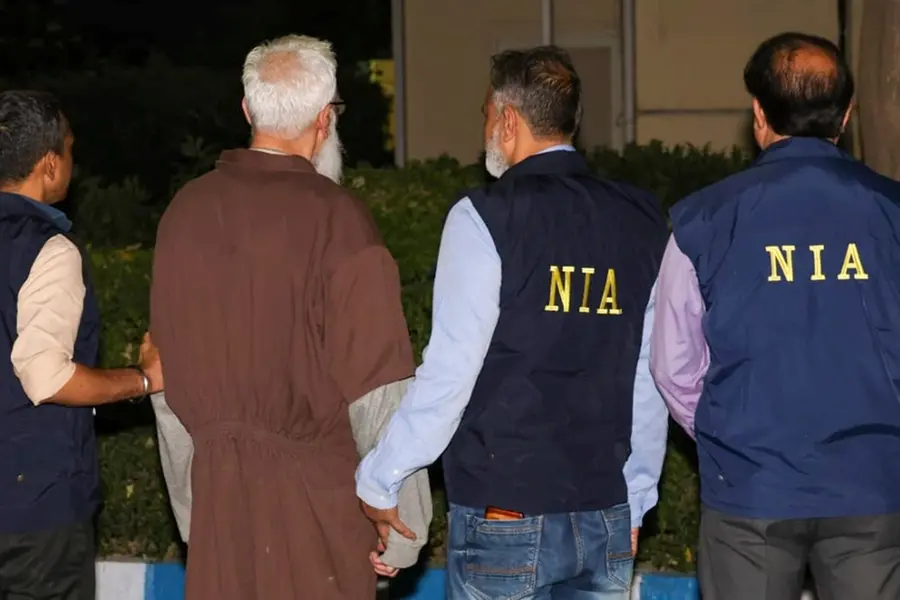
New Delhi: Mumbai Police Crime Branch officials interrogated Tahawwur Hussain Rana, a key accused in the 2008 Mumbai terror attacks, at the National Investigation Agency (NIA) headquarters in Delhi earlier this week.
According to officials, Rana, who was questioned for over eight hours on Wednesday, provided evasive responses and did not cooperate with investigators.
Rana, a Pakistani-Canadian national and former military doctor, was recently extradited from the United States to face trial in India for his alleged role in the planning and execution of the 26/11 attacks.
He is facing multiple charges under the Indian Penal Code (IPC) and the Unlawful Activities (Prevention) Act (UAPA), including conspiracy, terrorism, and waging war against the nation.
In a related development, a Delhi court on Thursday dismissed a plea filed by Rana seeking permission to speak with his family over the phone. The plea was heard by Special NIA Judge Chander Jit Singh at Patiala House Court, where Rana’s legal counsel, Piyush Sachdeva, argued that his client, being a foreign national, had a fundamental right to communicate with his family, who were concerned about his well-being in custody.
However, the NIA opposed the request, stating that given the sensitive nature of the ongoing investigation, there were fears Rana could reveal classified or case-related information. The court upheld the NIA’s position, noting that under the terms of the extradition treaty, Rana can only be prosecuted for offences specifically mentioned in the agreement. It also acknowledged that extended police custody could be warranted, as Sections 16 and 18 of the UAPA—pertaining to terrorism—are applicable in this case.
Published: 26 Apr 2025, 11:27 am IST
Related Topics
Disclaimer: Kindly avoid objectionable, derogatory, unlawful and lewd comments, while responding to reports. Such comments are punishable under cyber laws. Please keep away from personal attacks. The opinions expressed here are the personal opinions of readers and not that of Mathrubhumi.
