
The petitions challenge the composition of the selection committee for appointing the Chief Election Commissioner (CEC) and Election Commissioners (ECs). Under the law enacted by Parliament, the committee comprises the Prime Minister, a Union Cabinet Minister nominated by the Prime Minister, and the Leader of the Opposition in the Lok Sabha
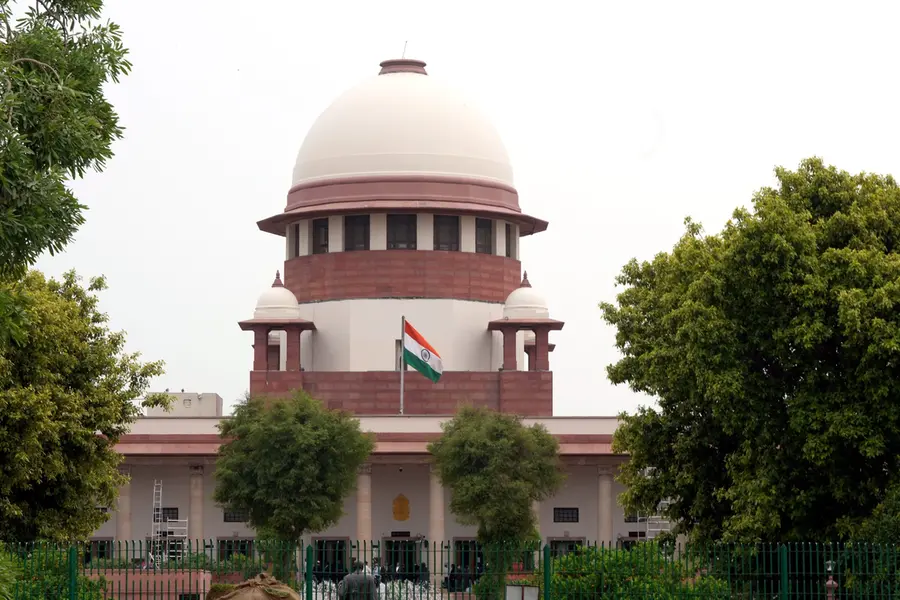
New Delhi: The Supreme Court has pronounced its verdict on petitions challenging the constitutional validity of the Chief Election Commissioner and Other Election Commissioners (Appointment, Conditions of Service and Term of Office) Act, 2023.
The court delivered a split verdict on the rules for appointing the CEC, referring the matter to a Constitution Bench.
What is the petition about?
The petitions challenge the composition of the selection committee for appointing the Chief Election Commissioner (CEC) and Election Commissioners (ECs). Under the law enacted by Parliament, the committee comprises the Prime Minister, a Union Cabinet Minister nominated by the Prime Minister, and the Leader of the Opposition in the Lok Sabha.
The challenge centres on the replacement of the Chief Justice of India (CJI) with a Union Cabinet Minister. In its 2023 Anoop Baranwal judgment, the Supreme Court had directed that, in the absence of a law enacted by Parliament, appointments to the Election Commission should be made by a panel comprising the Prime Minister, the Leader of the Opposition and the CJI.
The petitions contend that the present arrangement gives the executive greater influence over the appointment process. The Union government has argued that Parliament was constitutionally entitled to enact a law governing the appointments and that the Court should not presume that the executive would act against democratic principles.
Delhi SIR plea
Meanwhile, the Supreme Court on Tuesday heard a fresh petition concerning the ongoing Special Intensive Revision (SIR) of electoral rolls in Delhi. The bench headed by Chief Justice Surya Kant sought a response from the Election Commission after concerns were raised over notices issued to voters classified under categories such as “unmapped” and “logical discrepancy”.
Advocate Prashant Bhushan, appearing for the petitioners, said that Delhi had around 1.45 crore voters before the revision, of whom around 47 lakh were excluded from the draft electoral roll. He said the remaining electorate was around 97 lakh and that notices had subsequently been issued to more than 33 lakh voters.
Bhushan questioned the basis on which voters were being categorised as having a “logical discrepancy” or being “unmapped”. He also asked whether the exercise could eventually result in Delhi having only around half, or even less than half, of its earlier electorate.
“On what basis are they being classified as having a logical discrepancy?” Bhushan asked, according to his account of the proceedings.
He further claimed that notices had been issued even to people who had previously held prominent constitutional positions, including former Vice-Presidents, Supreme Court judges and Election Commissioners.
The Supreme Court has questioned the manner in which the notices were issued, with the bench observing that they appeared to have been sent “mechanically” and asking the Election Commission to clarify the “logical discrepancy” category and whether voters were being told what documents or information would address the issues flagged.
Published: 23 Sept 2026, 02:27 pm IST
ABOUT THE AUTHOR

Related Topics
Disclaimer: Kindly avoid objectionable, derogatory, unlawful and lewd comments, while responding to reports. Such comments are punishable under cyber laws. Please keep away from personal attacks. The opinions expressed here are the personal opinions of readers and not that of Mathrubhumi.