
The Supreme Court has suggested linking unpaid traffic challans with electricity bills as States and UTs explore ways to recover around Rs 20,000 crore in outstanding e-challan fines.
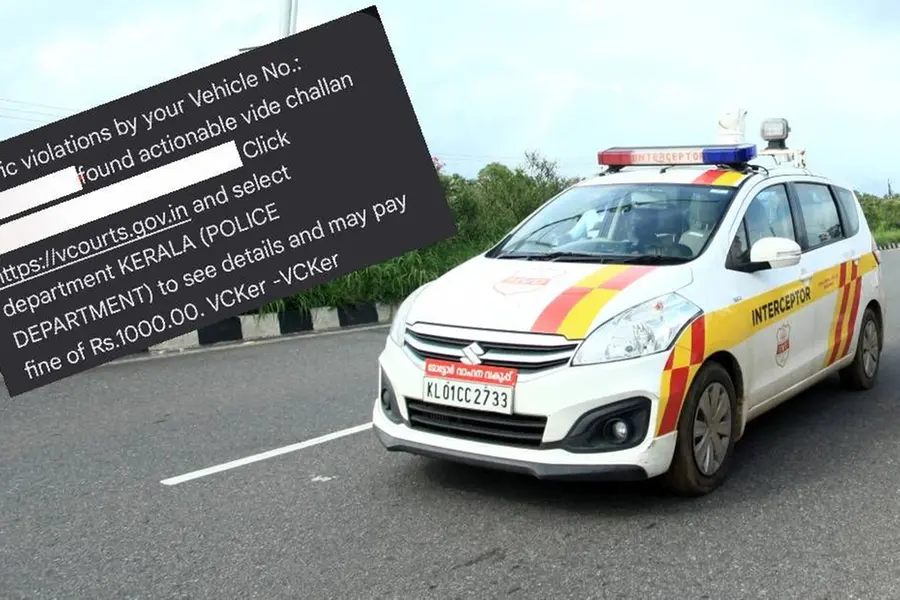
New Delhi: The Supreme Court has suggested that States and Union Territories consider linking unpaid traffic challans with electricity bills as part of efforts to recover a reported Rs 20,000 crore in outstanding e-challan fines.
The Supreme Court on Monday raised concerns over the large amount of traffic fines that remain unpaid despite the widespread use of electronic challans.
Also Read

A Bench of Justices JB Pardiwala and KV Viswanathan said merely issuing e-challans was not enough and stressed that authorities also needed an effective mechanism to recover the fines.
Justice Pardiwala pointed out that police could issue thousands or even lakhs of e-challans, but the key issue was whether the fines were eventually recovered.
The court was hearing a matter concerning the electronic enforcement of traffic violations and the recovery of unpaid e-challan amounts.
Electricity bills suggested as a possible recovery mechanism
During the hearing, the Bench suggested that States and Union Territories could explore linking unpaid traffic fines with electricity bills.
The idea, as reported from the hearing, is that outstanding challans could be added to electricity dues, creating an additional incentive for defaulters to clear their traffic fines.
The court suggested that authorities should “work it out” and find an effective mechanism for recovering the outstanding amounts.
According to the information placed before the court, States and Union Territories have yet to recover around Rs 20,000 crore in e-challan dues.
The electricity-bill proposal was presented as a suggestion for consideration, rather than as an order establishing such a system nationwide.
Other measures suggested by the Supreme Court
The Bench also discussed several other possible measures to encourage vehicle owners to clear pending challans.
The suggestions included:
- Blocking renewal of vehicle registration certificates until outstanding challans are cleared.
- Not issuing duplicate registration certificates where fines remain unpaid.
- Preventing changes in vehicle ownership details until dues are settled.
- Blacklisting vehicles with pending challans on the Parivahan portal.
- Blocking transfer of vehicle ownership where outstanding fines exist.
- Withholding fitness and Pollution Under Control certificates in applicable cases.
- Stopping renewal of driving licences when traffic fines remain unpaid.
Considering suspension of existing driving licences where outstanding fines continue to remain unpaid.
These measures were discussed in the context of improving enforcement and ensuring that traffic penalties imposed through electronic challans do not remain uncollected.
What the proposal could mean for vehicle owners
If such mechanisms are eventually adopted by States or UTs, an unpaid traffic challan could have consequences beyond the original traffic violation.
Vehicle owners could potentially face restrictions involving registration, ownership transfer, fitness or PUC certification and driving-licence renewal until outstanding fines are cleared.
However, the Supreme Court's suggestion to link challans with electricity bills does not by itself mean that unpaid traffic fines will immediately be added to electricity bills across India. Such a system would require consideration and implementation by the relevant authorities.
Why recovery of e-challans is becoming a focus
The development highlights a shift from simply detecting and issuing traffic violations digitally to ensuring that penalties are actually recovered.
E-challans have made it easier for authorities to record traffic offences electronically, but a large volume of unpaid fines can reduce the practical impact of the enforcement system.
The measures discussed by the Supreme Court focus on connecting outstanding traffic penalties with services and vehicle-related transactions that owners regularly need. Registration renewal, ownership transfer, fitness certification, PUC documentation and driving-licence renewal are examples of such administrative touchpoints.
The electricity-bill proposal goes further because it would connect a traffic-related financial liability with a separate essential utility service. The suggestion therefore raises implementation questions, including how such dues would be legally linked, which authority would collect them and what safeguards would apply in cases involving disputed or wrongly issued challans.
For now, the proposals discussed in court should be understood as measures under consideration, rather than a nationwide rule already in force.
Published: 28 Sept 2026, 05:55 pm IST
ABOUT THE AUTHOR
Disclaimer: Kindly avoid objectionable, derogatory, unlawful and lewd comments, while responding to reports. Such comments are punishable under cyber laws. Please keep away from personal attacks. The opinions expressed here are the personal opinions of readers and not that of Mathrubhumi.