
Supreme Court to examine Aravalli Hills redefinition due to fears of increased mining and ecological damage.
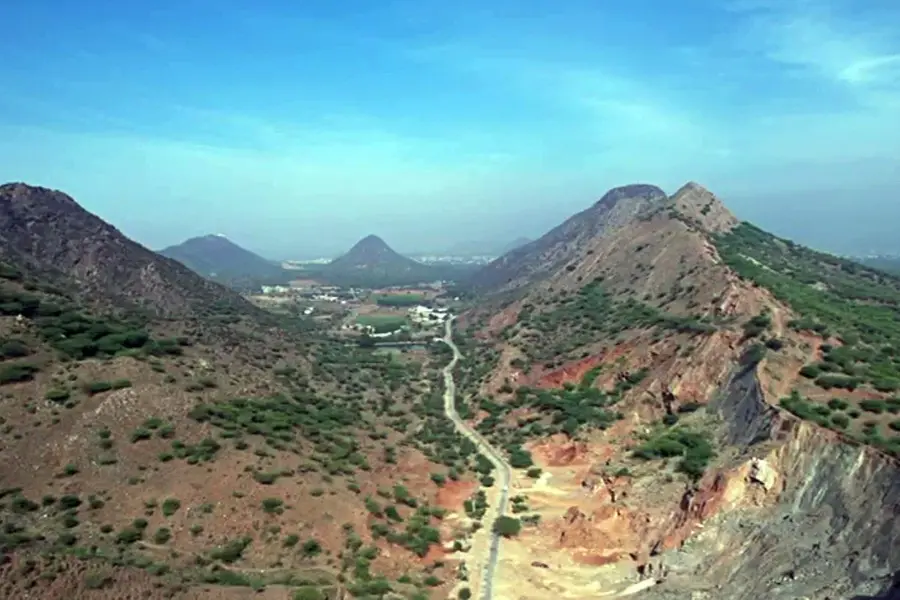
The Supreme Court has taken suo motu note of growing concerns over the recent redefinition of the Aravalli Hills, amid fears that the change could open the door to unchecked mining and large-scale ecological damage. A vacation Bench led by Chief Justice of India Surya Kant, along with Justices J K Maheshwari and A G Masih, will examine the issue on Monday, 29 December.
The court’s intervention follows rising public unease and environmental criticism surrounding the altered definition, which activists say may weaken existing safeguards for one of India’s most fragile mountain systems.
Environmental concerns spark court action
The Aravalli range is widely regarded as a natural barrier against desertification and plays a crucial role in groundwater recharge across north-western India. Environmental organisations and citizen groups have warned that a diluted definition may allow mining and construction in areas that were previously protected.
Protests across several states have highlighted fears that the revised criteria could accelerate degradation in a region already under stress from years of quarrying, encroachments and regulatory loopholes.
Background to the dispute
Differences in how Delhi, Haryana, Rajasthan and Gujarat define the Aravalli Hills have long created inconsistencies in regulation, leaving gaps that illegal miners have exploited. To address this, the Supreme Court earlier set up a high-level panel to develop a uniform understanding of what constitutes the Aravalli Hills and Ranges.
In a ruling delivered in November, a Bench headed by then Chief Justice B R Gavai, along with Justices K Vinod Chandran and N V Anjaria, endorsed the definition recommended by a committee of the Ministry of Environment, Forest and Climate Change (MoEF&CC). That operational definition was to guide decision-making in matters related to mining.
Published: 27 Dec 2025, 10:45 pm IST
Disclaimer: Kindly avoid objectionable, derogatory, unlawful and lewd comments, while responding to reports. Such comments are punishable under cyber laws. Please keep away from personal attacks. The opinions expressed here are the personal opinions of readers and not that of Mathrubhumi.
