
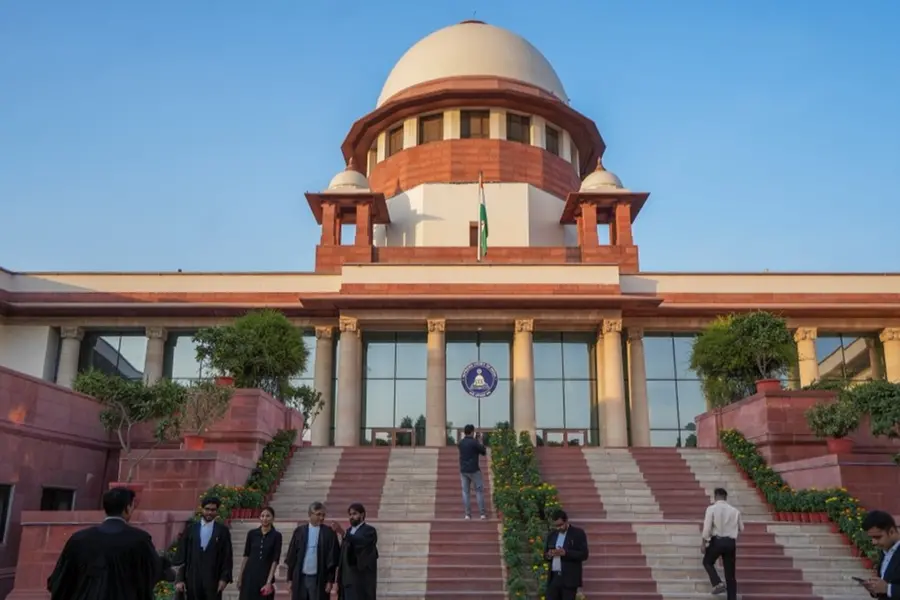
The Supreme Court on Monday held that candidates who are visually challenged were entitled to being appointed to the district judiciary. The court issued the judgment on a batch of petitions, a suo motu case pertaining to denial of reservation to such candidates in judicial service of some states.
A bench of Justices JB Pardiwala and R Mahadevan gave the verdict in a suo motu case questioning Rule 6A of the Madhya Pradesh Services Examination (Recruitment and Conditions of Services) Rules, 1994. The Court also heard similar objections taken by PWD candidates in Rajasthan Judicial Services.
The Court struck down Rule 7 of the Madhya Pradesh Service Rules, which added extra conditions on Persons With Disabilities (PWD), such as a three-year practice period prior to applying and a cumulative score of 70%, which had to be obtained in the first attempt.
The Supreme Court invalidated discriminatory clauses that imposed excessive limitations on PWD candidates, stressing that PWD candidates should be provided with equal opportunity in judicial service recruitment. The judgment stated that any indirect discrimination, including procedural hurdles or cut-off marks that limit their participation, should be removed.
The Court went on to hold that the accommodations need to be made available to PWD candidates as per the Rights of Persons with Disabilities Act, 2016. "No candidate can be rejected just because of their disability," the Court held strongly.
The Supreme Court made it clear that though the educational requirements are not altered, the extra barriers imposed on PWD candidates need to be eliminated. The Court ruled that PWD candidates who had already undergone the selection process are now eligible for judicial service selection and appointment if they are eligible according to the requirements.
"Visually handicapped and low vision candidates can apply for the selection for judicial service posts," the Court held, ensuring that such individuals will no longer be locked out of these opportunities.
The ruling also went out to Rajasthan Judicial Services applicants, especially those who had contested their disqualification from the selection process for the lack of a distinct cut-off for disabled candidates. The Court ordered that PWD applicants who had submitted writ petitions and were earlier not selected should be considered in the ensuing recruitment process if they decide to reapply.
This decision is a giant leap towards promoting level playing ground opportunities for people with disabilities within the judicial branch. It calls for the breaking down of structural barriers to their inclusion and requires the making of hiring policies more inclusive. The verdict is highly symbolic since the orders were reserved on December 3, 2024, the International Day of Persons with Disabilities.
Published: 03 Mar 2025, 11:28 am IST
Related Topics
Disclaimer: Kindly avoid objectionable, derogatory, unlawful and lewd comments, while responding to reports. Such comments are punishable under cyber laws. Please keep away from personal attacks. The opinions expressed here are the personal opinions of readers and not that of Mathrubhumi.
