
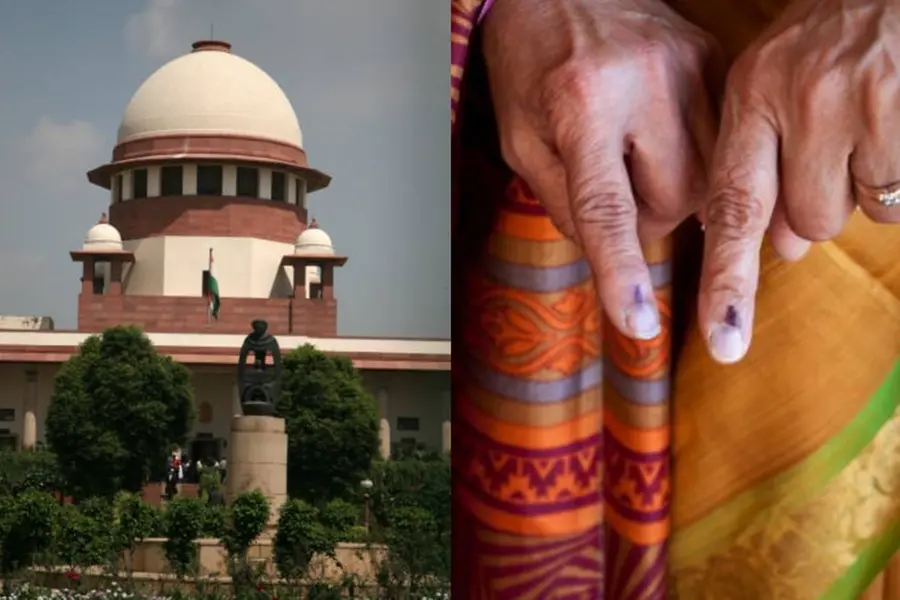
New Delhi: The Supreme Court on Tuesday fixed 14 May for hearing multiple petitions challenging a law passed by Parliament that excludes the Chief Justice of India (CJI) from the selection panel for appointing top officials of the Election Commission of India (ECI).
Advocate Prashant Bhushan, representing the NGO Association for Democratic Reforms, mentioned the matter for urgent listing. A bench led by Justice Surya Kant responded by stating the matter would be heard next month.
Earlier, on 19 March, the same bench had listed the case for 16 April, indicating it would prioritise the matter on the board by avoiding clashes with other urgent cases.
The constitutional issue at the centre of the case stems from a March 2023 Supreme Court Constitution Bench ruling, which directed that appointments of the Chief Election Commissioner (CEC) and other Election Commissioners should be made by the President based on recommendations from a three-member committee comprising the Prime Minister, the Leader of the Opposition in the Lok Sabha (or leader of the largest opposition party), and the CJI. This arrangement was to hold until Parliament enacted an appropriate law in accordance with Article 324(2) of the Constitution.
In response, Parliament passed the Chief Election Commissioner and Other Election Commissioners (Appointment, Conditions of Service and Term of Office) Act, 2023. The legislation replaced the CJI on the selection panel with a Union Cabinet Minister nominated by the Prime Minister. The new panel thus includes the PM, the Leader of the Opposition (or leader of the largest opposition party), and a Cabinet Minister.
This alteration prompted a series of public interest litigations (PILs) challenging the Act’s constitutional validity. One such plea, filed by a lawyer from Noida, calls for the quashing of the gazette notification issued on 28 December 2023. It demands the inclusion of the Chief Justice of India in the selection panel and the establishment of a more independent and transparent system for appointing Election Commissioners.
Petitioners argue that the exclusion of the judiciary from the process undermines the independence of the Election Commission, a body critical to the integrity of India’s democratic process.
The outcome of this hearing on 14 May could have significant implications for the autonomy and neutrality of future elections in the country.
Published: 16 Apr 2025, 08:47 pm IST
Disclaimer: Kindly avoid objectionable, derogatory, unlawful and lewd comments, while responding to reports. Such comments are punishable under cyber laws. Please keep away from personal attacks. The opinions expressed here are the personal opinions of readers and not that of Mathrubhumi.
