
The bench questioned the ban's effectiveness, noting pollution levels remain similar, with other sources like stubble burning contributing significantly
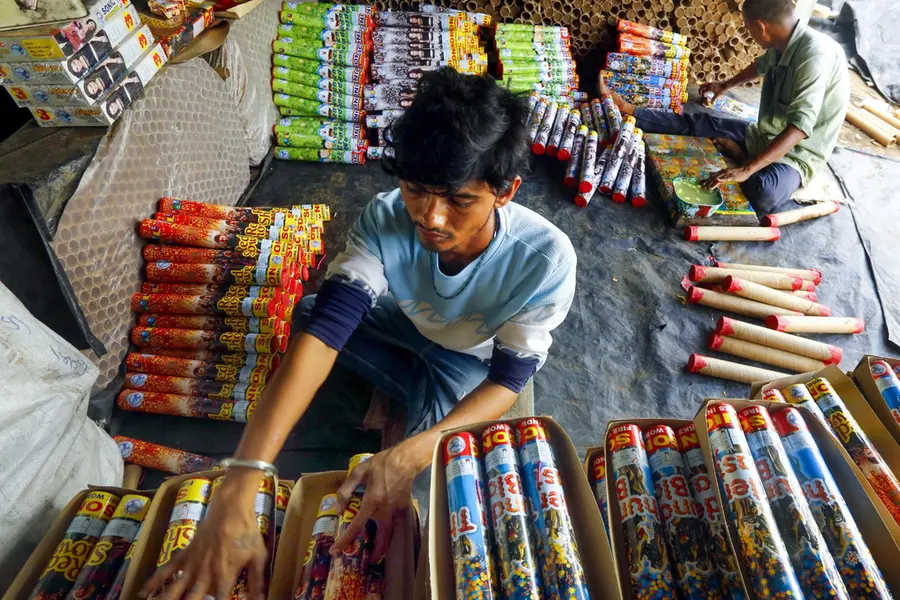
New Delhi: Ahead of Diwali, the Supreme Court on Friday indicated a potential relaxation of the firecracker ban in Delhi-NCR, stating that a complete prohibition is “neither practical nor ideal” given widespread violations and the need for balanced governance. The bench, led by Chief Justice B R Gavai and Justice K Vinod Chandran, reserved its verdict on a batch of pleas seeking permission to manufacture and sell “green” firecrackers in the region.
Court’s Observations on Ban Efficacy
The CJI questioned whether the blanket ban, in place since 2018, has led to any tangible improvement in air quality. Solicitor General Tushar Mehta, representing the Centre and NCR states, informed the court that pollution levels, as measured by the Commission for Air Quality Management (CAQM), have remained “more or less the same” except during the pandemic-induced lockdowns. This prompted the court to emphasise judicial propriety and the need for a balanced approach.
Proposal for Regulated Use
Mehta urged the court to allow children to celebrate Diwali, Gurpurab, Christmas, and New Year’s Eve without time restrictions, saying, “The child inside me is persuading the child in your Lordships.” However, he proposed a regulated framework:
- Only NEERI and PESO-certified green firecrackers can be manufactured and sold.
- Sales restricted to licensed traders; e-commerce platforms like Amazon and Flipkart barred from selling crackers.
- No joint firecrackers (‘laris’) allowed.
- PESO and NEERI to conduct periodic inspections; violators to face immediate sealing of units.
Industry and Environmental Concerns
Senior advocate K Parameshwar, representing green cracker manufacturers, argued that the ban was imposed without consultation and violated earlier court rulings from 2017 and 2018 that permitted eco-friendly crackers. He highlighted that manufacturers had invested heavily in NEERI-compliant facilities and were being unfairly penalised.
Lawyer J Sai Deepak added that the industry is already regulated and willing to cooperate with inspections, urging the court to identify and punish only offenders rather than impose a blanket ban.
Broader Pollution Context
Counsel for the petitioners noted that major pollution sources in Delhi include stubble burning and industrial emissions, not festive firecrackers. Amicus curiae Aparajita Singh highlighted that the poor suffer most from pollution, as elites often leave the city or use air purifiers.
Judicial History and Next Steps
The Supreme Court had permitted certified manufacturers to produce green crackers on September 26, 2025, but maintained the sales ban in Delhi-NCR. The current hearing sought a sustainable solution balancing environmental protection, cultural rights, and livelihoods. The bench questioned why the ban applies only to parts of Haryana and Uttar Pradesh within the NCR, suggesting a need for a uniform policy.
The court is expected to deliver a verdict that may allow limited, regulated use of green firecrackers during festivals, marking a shift from absolute prohibition to a more pragmatic, science-based approach.
With inputs from PTI
Published: 10 Oct 2025, 04:58 pm IST
Related Topics
Disclaimer: Kindly avoid objectionable, derogatory, unlawful and lewd comments, while responding to reports. Such comments are punishable under cyber laws. Please keep away from personal attacks. The opinions expressed here are the personal opinions of readers and not that of Mathrubhumi.
