
The Supreme Court has directed governments, universities and publicly funded institutions to cut all academic ties with three authors involved in drafting a controversial NCERT Class 8 chapter on “corruption in the judiciary”, saying they are unfit to contribute to educational material for future generations.
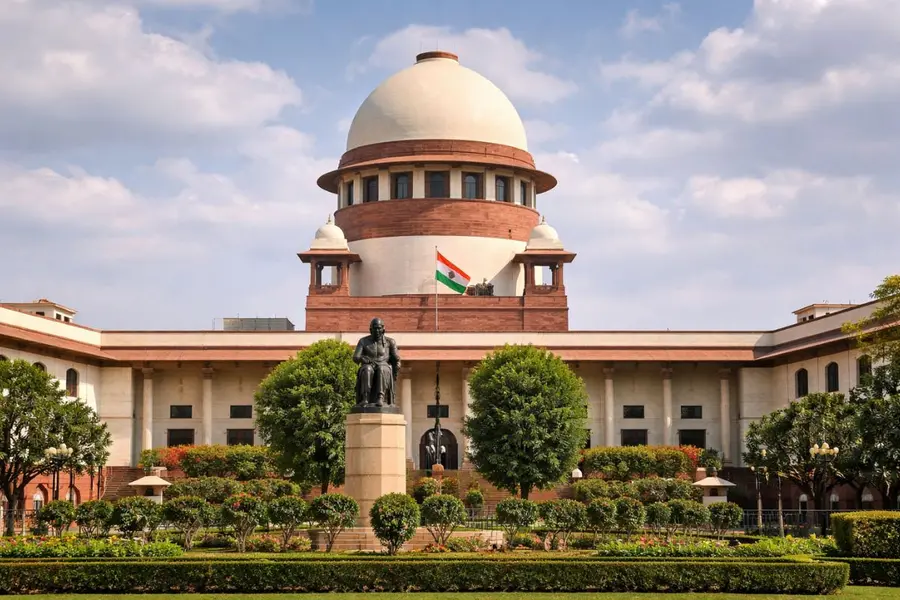
The Supreme Court has issued a strongly worded order against three academics involved in preparing a controversial chapter on “corruption in the judiciary” in a Class 8 NCERT political science textbook, stating that they are not suitable to contribute to educational material meant for future generations.
The individuals named by the court are Professor Michel Danino, Suparna Diwakar, and Alok Prasanna Kumar. The bench said that people who either lack a proper understanding of the functioning of the Indian judiciary or present distorted information should not be entrusted with preparing curriculum content for students.
In its order dated March 11, the Supreme Court directed the Union government, state governments, universities, and all institutions funded by public money to disassociate themselves from the three academics.
The court further instructed that they should not be appointed or engaged for any assignments that involve the use of public funds. It also said that they should not participate in textbook preparation or curriculum development in the future.
The matter came up before the court as part of a suo motu case relating to a section in the Class 8 NCERT political science textbook that discussed corruption in the judiciary.
The court examined whether the material presented an inaccurate portrayal of the judicial system and whether proper academic procedures were followed in drafting and approving the chapter.
During the proceedings, the bench also reviewed the steps taken by the National Council of Educational Research and Training (NCERT) to revise the controversial chapter.
The Supreme Court expressed dissatisfaction with the affidavit submitted by the NCERT director regarding the revision of the content. According to the affidavit, Chapter 8 of the textbook had already been rewritten, and the updated version would be introduced in the upcoming academic session.
However, the court observed that the affidavit failed to provide key details about the revision process. It did not specify who the experts were who rewrote the chapter, who approved the revised text, or the procedure followed before incorporating the updated version into the curriculum.
Calling the response “disturbing,” the bench said that such a significant academic change should have been carried out through a transparent and well-documented process. The judges also questioned how the revised chapter could be introduced without clarity on the experts involved or the approval mechanism used.
During the hearing, the Chief Justice of India also raised concerns about the potential long-term consequences of individuals associated with such work occupying influential academic positions.
The court noted that if such individuals were to be appointed to key roles such as vice-chancellors in universities, their influence could impact thousands of students. It therefore stressed the importance of ensuring that people involved in shaping educational content possess sound knowledge and a responsible approach toward constitutional institutions.
While passing the order, the bench clarified that the three academics have the liberty to approach the Supreme Court and request modification of the order after submitting their response.
The court also issued directions regarding the rewriting of the disputed chapter. It instructed NCERT to ensure that the revised content is prepared through a structured and expert-led process.
According to the order, the committee responsible for rewriting the chapter should include a retired judge, a practising advocate, and a senior academician.
The committee has also been asked to consult the National Judicial Academy in Bhopal to ensure accuracy and institutional balance in the revised material.
The Supreme Court further directed that the rewritten chapter should not be included in school textbooks unless it is reviewed and approved by such a panel of domain experts.
The court also examined how the controversial chapter had been drafted in the first place. It was informed that the textbook development team, chaired by visiting professor Michel Danino, had prepared the chapter that later sparked the dispute. Suparna Diwakar and Alok Prasanna Kumar were also part of the drafting process.
Submissions before the court indicated that the draft curriculum was meant to be reviewed by the 19-member National Syllabus and Textbook Committee (NSTC). However, the contentious chapter was never presented before the entire committee for discussion.
Instead, the draft was reportedly circulated digitally to a limited number of members, effectively bypassing the full committee review process.
The bench observed that such a deviation from established procedures raised serious concerns about transparency and accountability in the preparation of the school curriculum.
The Supreme Court ultimately emphasised that educational material provided to young students must be carefully prepared, factually accurate, and balanced.
Students at the middle-school level, the court said, are at a formative stage and should not be exposed to content that could present distorted views of constitutional institutions.
With its order, the court has underlined the importance of academic responsibility and proper review mechanisms in the development of school textbooks across the country.
Published: 11 Mar 2026, 02:37 pm IST
Related Topics
Disclaimer: Kindly avoid objectionable, derogatory, unlawful and lewd comments, while responding to reports. Such comments are punishable under cyber laws. Please keep away from personal attacks. The opinions expressed here are the personal opinions of readers and not that of Mathrubhumi.
