
As India celebrates Sardar Vallabhbhai Patel’s 150th birth anniversary, debate continues over the Statue of Unity
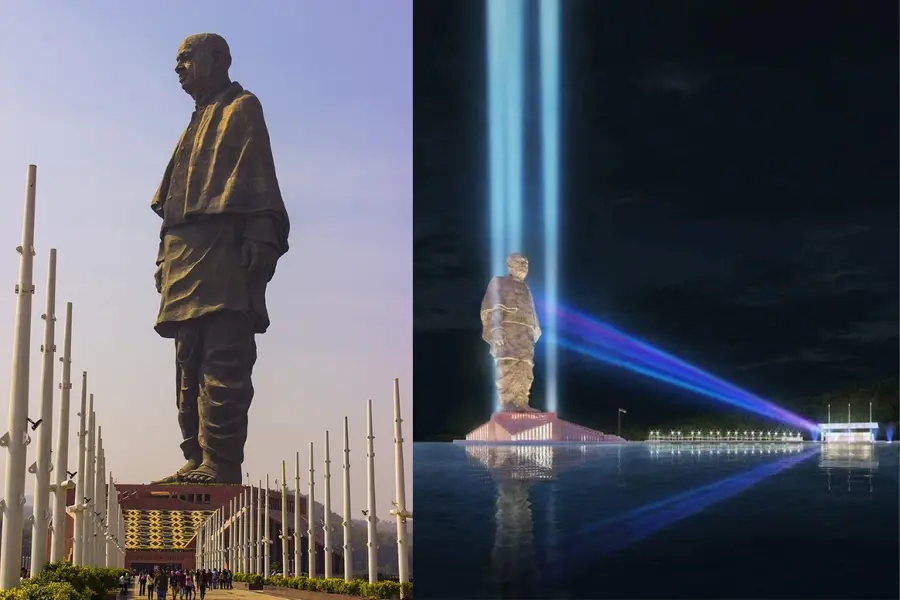
Ekta Nagar, Gujarat: The Statue of Unity, towering at 182 metres, is both a national symbol and a lightning rod for debate. Inaugurated on 31 October 2018 by Prime Minister Narendra Modi, it honours Sardar Vallabhbhai Patel, India’s first Home Minister and a key architect of the country’s political integration after independence.
The symbolism: Unity in steel and stone
Supporters see the monument as a rightful tribute to Patel, who persuaded more than 560 princely states to join the Indian Union in 1947. Built on the banks of the Narmada River, the statue represents Patel’s firm belief in unity, strength, and nation-building.
The government argues that such projects serve not just as memorials but as living symbols of national identity, reinforcing civic pride and reminding citizens of Patel’s underappreciated role in shaping India’s destiny. The site, now called Ekta Nagar, has also become a centre for cultural and educational activities linked to his ideals.
The making of the world’s tallest statue
Designed by Indian sculptor Ram V. Sutar and constructed by Larsen & Toubro, the statue cost around ₹3,000 crore. It was funded primarily by the Gujarat government, with contributions from public sector undertakings and citizen donations. Iron tools collected from villages across India were melted and used symbolically in the foundation — an act meant to reflect unity and collective participation.
The criticism: Cost, displacement, and priorities
Critics, however, question the necessity and timing of the project. Opponents argue that spending ₹3,000 crore on a statue was excessive in a state where issues like agrarian distress, rural infrastructure, and unemployment remain pressing.
Local tribal groups and activists have also raised concerns about land acquisition and environmental disruption, claiming that some communities were displaced during the project’s construction. Protests in Narmada district in 2018 highlighted demands for fair compensation and greater investment in local development rather than monumental projects.
Environmental experts have further criticised the project’s ecological footprint, pointing to deforestation, altered river flow, and the construction’s carbon cost.
Economic and tourism impact
Supporters counter that the Statue of Unity has boosted tourism and local employment. Gujarat Tourism data shows over 1 crore visitors in its first five years, generating hundreds of crores in revenue and creating jobs in hospitality and transport sectors. New infrastructure — including roads, hotels, and a railway link — has transformed the once-remote region into a tourism hub.
Economists note that, while tourism-led development is visible, long-term sustainability and equitable local benefit remain open questions.
What the statue means today
Every year, 31 October is observed as Rashtriya Ekta Diwas (National Unity Day) to honour Patel’s vision of a united India. PM Modi and other leaders visit the site to pay tributes, reinforcing the monument’s symbolic role in national politics and collective memory.
For many Indians, the statue remains a source of pride — a monumental reminder of Patel’s legacy. Yet for others, it stands as an emblem of political showmanship and misplaced priorities.
A symbol — and a question
Whether seen as a landmark of unity or an exercise in excess, the Statue of Unity continues to provoke discussion on how modern India chooses to remember its heroes — through living ideals or grand monuments.
As India evolves, that question may define the true legacy of the world’s tallest statue.
Published: 31 Oct 2025, 10:11 am IST
Disclaimer: Kindly avoid objectionable, derogatory, unlawful and lewd comments, while responding to reports. Such comments are punishable under cyber laws. Please keep away from personal attacks. The opinions expressed here are the personal opinions of readers and not that of Mathrubhumi.
