
This ongoing research is expected to lay the foundation for future space experiments and could potentially lead to new treatments for aggressive cancers.
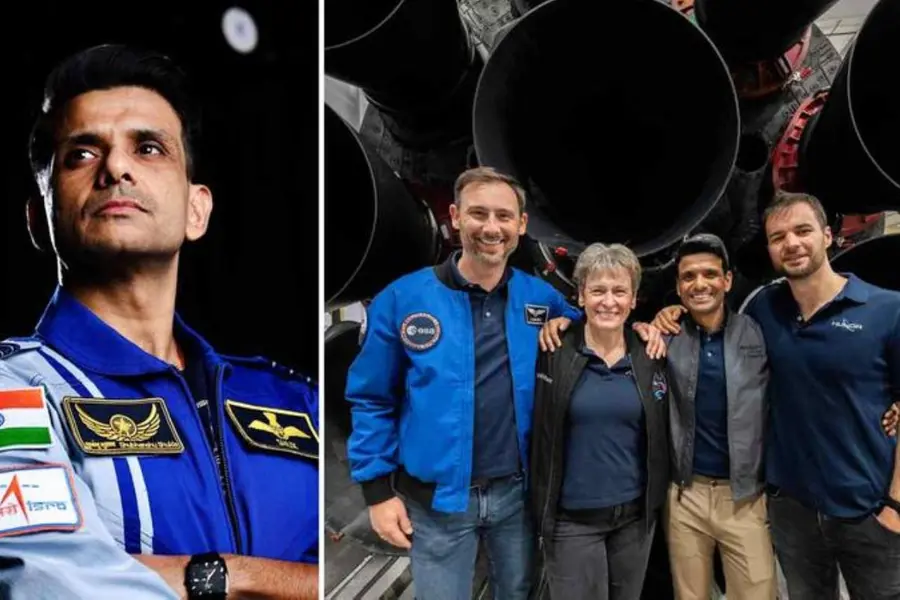
Bengaluru: Shubhanshu Shukla and his team have commenced crucial scientific experiments aboard the International Space Station (ISS). Monday marked the fifth day of their mission on the station.
The upcoming experiments on behalf of ISRO include the usability of electronic displays—like computer screens—in microgravity, studies on how microscopic aquatic organisms called water bears (tardigrades) respond to microgravity, the functioning of photosynthetic cyanobacteria in water, growth and leaf development of six types of seeds and seed germination experiments.
Another major study underway on the station aims to understand how cancer cells mutate under the pressures of microgravity. Mission Commander Peggy Whitson is overseeing these experiments.
The experiment is being conducted in collaboration with the Sanford Stem Cell Institute. The Axiom Space mission brief also mentions related research such as neuro-motion virtual reality studies in the medical sciences and AI-driven studies on telehealth.
The team has begun work on other projects including the TRIC Health AI study.
Mission Specialists Slawosz Uznanski and Tibor Kapu are also involved in various experiments. On Tuesday, Tibor Kapu is scheduled to interact with media professionals in Hungary.
Focus on microalgae
Shubhanshu is particularly focusing on a microalgae experiment aimed at designing a sustainable and nutrient-rich food source for future long-duration space missions. The study examines how edible microalgae respond to radiation in microgravity.
Samples of microalgae taken along were exposed and photographed as part of the study. This ongoing research is expected to lay the foundation for future space experiments and could potentially lead to new treatments for aggressive cancers.
Shubhanshu also recently launched an experiment to study how muscles change under microgravity—an effort that could shed light on muscular disorders commonly experienced by astronauts.
Published: 01 Jul 2025, 07:59 am IST
Related Topics
Disclaimer: Kindly avoid objectionable, derogatory, unlawful and lewd comments, while responding to reports. Such comments are punishable under cyber laws. Please keep away from personal attacks. The opinions expressed here are the personal opinions of readers and not that of Mathrubhumi.
