
According to the former diplomat, removing a strong leader in a fragile state does not naturally lead to liberalism, but instead creates a power vacuum
India's former foreign secretary Nirupama Menon Rao has said that Western nations prioritized democratic optics over the complex internal realities of Bangladesh.
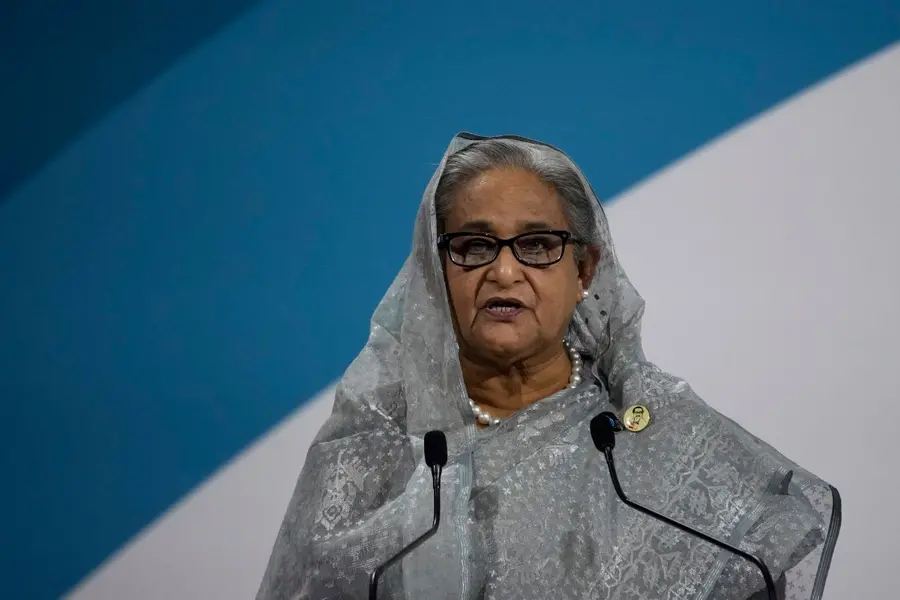
Taking to social media platform X, Rao observed that by focusing strictly on authoritarianism and human rights, international observers ignored Sheikh Hasina's role as a vital stabilizing force against radical Islamism and regional chaos.
She wrote: 'Her foreign opponents fixated on #SheikhHasina through a narrow lens: elections that didn't meet Western democratic aesthetics, long incumbency, centralised power, human rights reports. All real issues, but treated in isolation, stripped of context. Bangladesh was judged as if it were Denmark with a turnout problem, not a fragile, densely packed state with a violent Islamist history and a traumatised political culture.'
Tensions escalated across Bangladesh on Thursday night as a wave of vandalism and attacks erupted following Chief Adviser Muhammad Yunus's televised confirmation of the death of Inquilab Mancha leader, Hadi.
Hadi, a prominent figure of the "July Uprising" that led to the ouster of the Sheikh Hasina government, succumbed to injuries in a Singapore hospital after a six-day struggle. He had been a candidate for the upcoming February 12 general elections. Meanwhile, former Prime Minister Hasina remains in India following her departure from the country last August.
In Chattogram, demonstrators targeted the Assistant Indian High Commissioner's residence with stones, though no structural damage was reported; police utilized tear gas and baton charges to disperse the mob, resulting in 12 arrests.
In Dhaka, the unrest saw protesters vandalizing the remnants of 32 Dhanmandi—the historic home of founding father Sheikh Mujibur Rahman—and attacking two prominent media offices.
Rao, who served as India's top envoy to the United States (2011–2013), China (2006–2009), and Sri Lanka, further noted, 'In doing so, three hard realities were ignored. First, Hasina was a stabiliser, not a revolutionary hero, but a state-builder in a hostile environment. She kept Jamaat and its offshoots contained, maintained civil-military balance, protected minorities better than any realistic alternative, and kept Bangladesh economically and geopolitically predictable. Her western opponents knew this. They just chose to downplay it.'
'Second, they overestimated the "democratic opposition". There was no credible, unified, liberal alternative waiting in the wings. Removing pressure from Hasina didn't empower democrats. It empowered street power, radicals, and actors who thrive precisely when institutions weaken.'
'Third, there was the old habit of believing that toppling or delegitimising a strong incumbent automatically opens space for pluralism. History says the opposite. In divided societies, power vacuums don’t fill with moderates. They fill with the loudest, angriest, and most organised forces. Often religious, often violent,' Rao said.
According to the former diplomat, removing a strong leader in a fragile state does not naturally lead to liberalism, but instead creates a power vacuum for extremist elements to exploit.
She said, 'Chasing democratic optics ended up accelerating a counterrevolution that hollowed out politics, normalised persecution, and destabilised an entire country. This wasn't values-driven paternalism . It was context-blind activism masquerading as strategy. And Bangladesh will pay for it long after the policy memos have been forgotten.'
Published: 19 Dec 2025, 06:36 pm IST
Related Topics
Disclaimer: Kindly avoid objectionable, derogatory, unlawful and lewd comments, while responding to reports. Such comments are punishable under cyber laws. Please keep away from personal attacks. The opinions expressed here are the personal opinions of readers and not that of Mathrubhumi.
