
Supreme Court pulls up Justice Yashwant Varma for delay in challenging in-house probe report
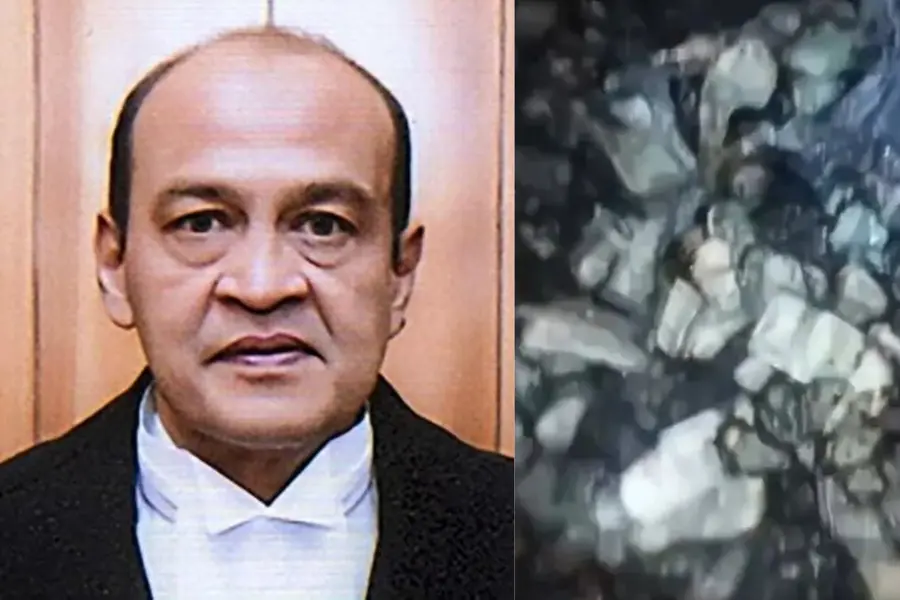
New Delhi: The Supreme Court on Tuesday pulled up Justice Yashwant Varma, a former judge of the Delhi High Court, for approaching the apex court only after an in-house inquiry committee confirmed allegations of misconduct against him, including the recovery of unaccounted cash from his official residence.
A Bench of Justices Dipankar Datta and A.G. Mashi, while hearing the petition, asked why Justice Varma had submitted himself to the inquiry process if he believed it to be unconstitutional. “Why didn’t you challenge the procedure earlier? Why did you appear before the committee if you considered it illegal?” the court questioned. “Your conduct does not inspire confidence.”
Also Read

Justice Varma, now facing a motion for removal in Parliament, has challenged the in-house inquiry process as a “parallel, extra-constitutional mechanism” that violates Articles 124 and 218 of the Constitution, which reserve the removal of judges exclusively for Parliament via the Judges Inquiry Act, 1968. His petition, filed under anonymity, argues that the internal process lacked procedural safeguards and transparency.
Appearing for Justice Varma, senior advocate Kapil Sibal contended that the in-house inquiry committee’s report — which reportedly formed the basis of the impeachment motion — was procedurally flawed and should not carry legal weight. He further argued that the judge had no way of knowing in advance that the outcome would be adverse and has only now approached the court due to the lack of a platform to defend himself within Parliament.
Justice Datta, however, expressed scepticism about the timing, asking, “Did Justice Varma not, in all reality, know that the process may culminate in impeachment?” The bench insisted that objections to the in-house process should have been raised at the outset.
The court also addressed the recent public circulation of tapes allegedly showing the recovery of cash from the judge’s residence. While agreeing with Sibal that such a leak undermines confidentiality, the bench questioned its legal impact. “How does it affect Parliament’s decision?” Justice Datta asked.
The Bench further observed that the in-house inquiry mechanism, established through Supreme Court precedent, constitutes part of the “law of the land” and is designed to allow the Chief Justice of India to verify serious allegations internally. In contrast, Sibal argued that such a mechanism cannot be equated with the formal judicial standards of the Judges Inquiry Act.
The court has asked Sibal to place the committee report on record and adjourned the hearing to a later date. Justice Varma’s case is likely to test the boundaries of judicial independence, parliamentary supremacy, and the constitutional legitimacy of in-house disciplinary mechanisms within the Indian judiciary.
The hearing is going on. More updates to follow.
(With PTI inputs)
Published: 30 Jul 2025, 12:36 pm IST
Disclaimer: Kindly avoid objectionable, derogatory, unlawful and lewd comments, while responding to reports. Such comments are punishable under cyber laws. Please keep away from personal attacks. The opinions expressed here are the personal opinions of readers and not that of Mathrubhumi.