
A deep-dive into how the RSS’s massive “Mission Trishul” campaign—with over 50,000 meetings and targeted voter mobilisation—played a key role in the NDA’s strong Bihar mandate and how the same strategy is being prepared for West Bengal 2026.
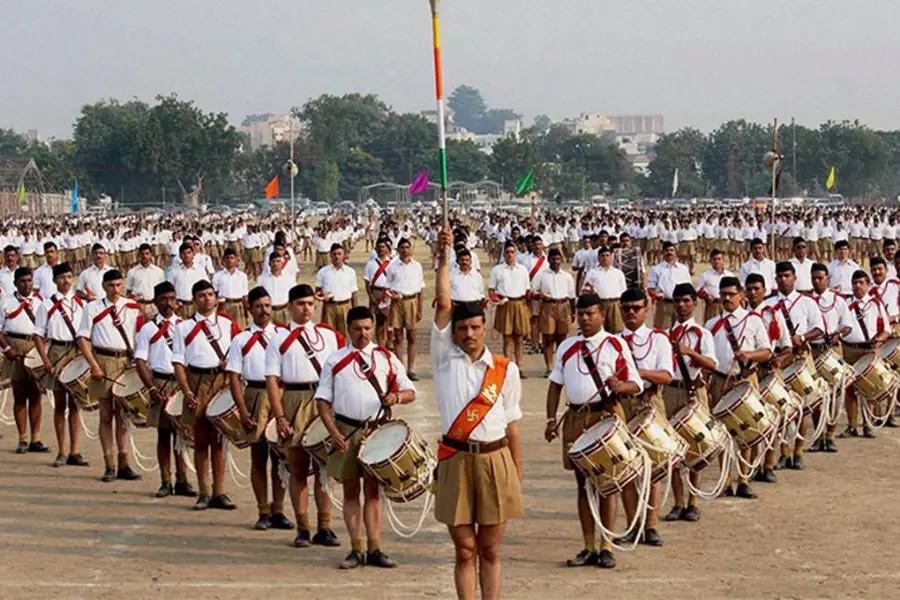
As early counting trends in the Bihar Assembly elections showed a decisive mandate for the National Democratic Alliance (NDA), attention quickly turned to the Rashtriya Swayamsevak Sangh (RSS) and its large-scale, behind-the-scenes operation—“Mission Trishul”—which is being credited with significantly boosting the NDA’s performance.
According to sources, the RSS conducted between 50,000 and 60,000 meetings across Bihar, averaging 200–300 meetings per constituency, in the months leading up to the polls.
The extensive campaign, launched in February and monitored by the RSS leadership with direct involvement from chief Mohan Bhagwat, aimed at reshaping voter sentiment and expanding the BJP’s outreach among communities traditionally seen as difficult for the NDA.
What Was Mission Trishul?
“Mission Trishul” was built on a three-step strategy:
A) Identifying Dissatisfied Voters:
RSS volunteers carried out deep grassroots surveys to locate voters frustrated with unemployment, slow development, local governance gaps, and infrastructure shortcomings.
B) Highlighting Local and National Issues:
The RSS amplified issues of livelihood, job creation, agriculture, and caste-based reservations while integrating them with the BJP’s broader narratives of development and cultural nationalism.
C) Consolidation of Bases:
The strategy deployed a strong identity-based approach aimed at unifying diverse Hindu groups under a nationalist umbrella. This consolidation reportedly created shifts in the Muslim-Yadav (MY) vote clusters that have traditionally backed rival parties.
Sources indicated that affiliated right-wing organisations — ABVP, Bajrang Dal, VHP, Mazdoor Sangh — also joined the coordinated campaign.
Volunteers classified booths as favorable or unfavorable to the BJP and focused on intense voter mobilisation efforts, which analysts say visibly altered voting patterns across the state.
The RSS has employed similar playbooks in states like Delhi, Haryana, and Maharashtra, but insiders say the scale and precision of Mission Trishul were unprecedented.
Next Target: West Bengal 2026
Buoyed by the Bihar outcome, the RSS has begun adapting Mission Trishul for West Bengal’s 2026 Assembly polls, with a plan centered on countering the Trinamool Congress (TMC).
Sources say the organisation will highlight issues such as corruption, “appeasement politics,” economic stagnation, and law-and-order concerns.
The RSS also intends to push large-scale religious events and “Ghar Wapsi” programmes to strengthen Hindu consolidation in minority-heavy regions.
With the NDA’s victory reinforcing its confidence, the RSS is now preparing for what it describes internally as a “silent ideological expansion” to boost the BJP in states where it is yet to gain dominance.
Published: 15 Nov 2025, 08:31 am IST
Related Topics
Disclaimer: Kindly avoid objectionable, derogatory, unlawful and lewd comments, while responding to reports. Such comments are punishable under cyber laws. Please keep away from personal attacks. The opinions expressed here are the personal opinions of readers and not that of Mathrubhumi.
