
Large flocks of Rosy Starlings have arrived in Thoothukudi as part of their winter migration from Europe and Asia, creating stunning aerial formations.
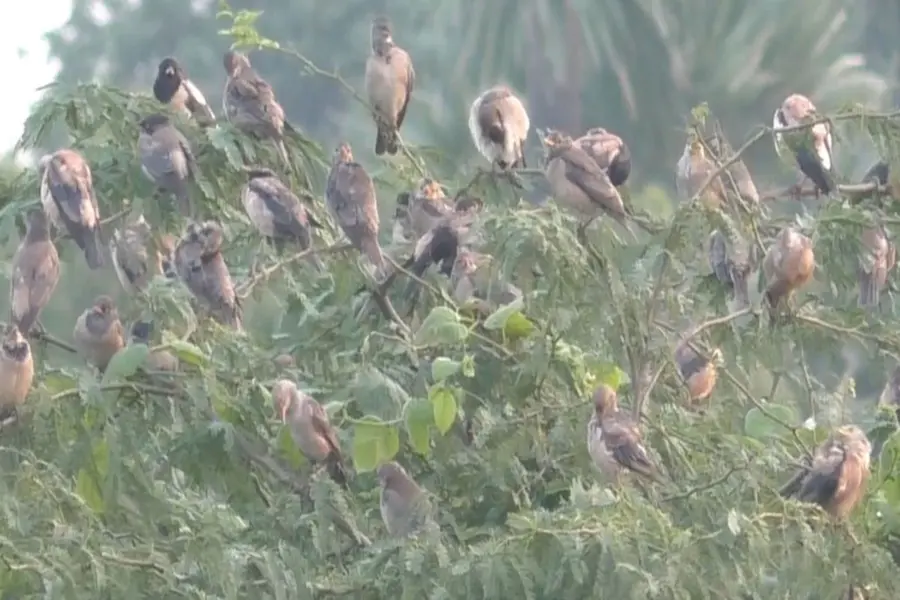
Thoothukudi(Tamil Nadu): Large flocks of Rosy Starling birds have been spotted across Thoothukudi district over the past few days, delighting residents with spectacular aerial formations during their annual winter migration.
Ornithologists said the Rosy Starlings arrive in southern districts such as Thoothukudi as part of their seasonal migration from Northwest Asia and Eastern Europe. The birds usually leave their breeding grounds between September and October and migrate to the Indian subcontinent, where they remain until March or April.
Apart from Tamil Nadu, Rosy Starlings are commonly sighted in Gujarat, Madhya Pradesh, Karnataka, Kerala, Telangana and several parts of North India during the winter months.
Experts attribute their migration to favourable weather conditions and the availability of food. The omnivorous birds are often found in grasslands and agricultural fields, where insects such as grasshoppers and other pests are abundant. Flocking behaviour during migration also helps protect them from predators, while their synchronised movements, known as murmurations, create a striking visual spectacle.
Rosy Starlings are easily identified by their light pink and black plumage and sharp beaks, which they use to feed on insects and crop pests.
Meanwhile, the winter migratory season has also brought a surge in bird activity at Chilika Lake in Odisha. The Chilika Wildlife Division reported that more than 87 migratory bird species had been sighted by late November, a significant increase compared to the same period last year.
Divisional Forest Officer Amlan Nayak said the total number of migratory birds at Chilika has crossed two lakh so far this season. “This year, the number of migratory birds has exceeded two lakhs. Eighty-seven species have been sighted, while only sixty species were reported by the same time last year. This can be taken as a positive sign,” he said.
To promote public awareness, outreach programmes have been planned near the Nalabana Bird Sanctuary, though only limited groups will be allowed entry due to administrative regulations. Chilika Lake typically hosts over 220 migratory bird species each winter, with numbers expected to rise further in the coming weeks.
The winter migration season continues until March–April, when the birds begin their return journey to their breeding habitats.
ANI
Published: 15 Dec 2025, 02:30 pm IST
Related Topics
Disclaimer: Kindly avoid objectionable, derogatory, unlawful and lewd comments, while responding to reports. Such comments are punishable under cyber laws. Please keep away from personal attacks. The opinions expressed here are the personal opinions of readers and not that of Mathrubhumi.
