
The report flags political uncertainty, the return of Islamist forces, and growing Chinese and Pakistani influence as long-term concerns for New Delhi
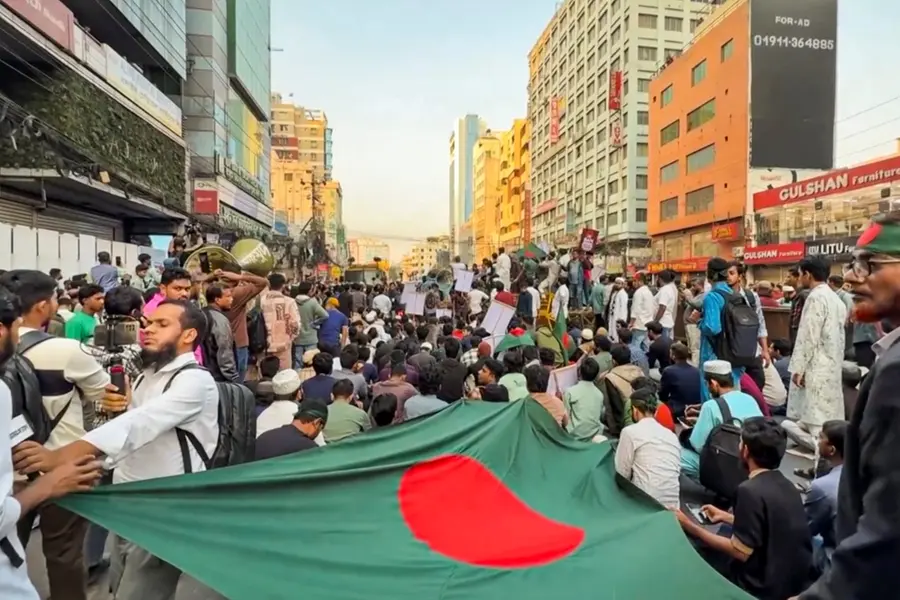
New Delhi: A Parliamentary Standing Committee on External Affairs has cautioned that the changing political situation in Bangladesh represents India’s most significant strategic challenge since 1971. The panel cited the return of Islamist forces, shifts within Bangladesh’s domestic political space, and the increasing influence of China and Pakistan as key areas of concern.
The findings are part of a report presented in Parliament by the committee chaired by Congress MP Shashi Tharoor. The assessment is based on inputs from non-governmental experts as well as government officials. The panel noted that while the challenge is no longer existential in nature, it is deeper and long-term, requiring sustained strategic attention from India.
Why does the panel call Bangladesh a long-term strategic test for India?
The committee observed that the present situation in Bangladesh is not comparable to 1971 in terms of immediate threat levels. However, it warned that the ongoing political transition and realignment of strategic interests in Dhaka could pose lasting challenges for India’s security framework and foreign policy priorities.
According to the report, Bangladesh’s evolving political landscape could reshape India’s neighbourhood dynamics over time, making it a critical long-term test rather than a short-term crisis.
What role has domestic political change played in the uncertainty?
The report pointed to the decline in the political dominance of the Sheikh Hasina-led Awami League as a major source of instability. It highlighted weakening institutional authority and a fall in public confidence, which the panel said had opened up political space for rival forces.
The committee also referred to Bangladesh’s January 2024 elections, in which the Awami League secured 224 out of 300 seats. However, voter turnout was estimated at around 40 per cent, a figure the panel said raises concerns about political legitimacy and levels of popular participation.
Is Bangladesh witnessing a return of Islamist forces?
The panel warned that youth-led nationalist sentiment is gaining momentum in Bangladesh and could become a major political force. It also flagged the resurgence of Islamist groups, stating that the combination of these trends could be destabilising.
According to the committee, such developments may have serious implications for Bangladesh’s internal security as well as for broader regional stability.
Why are China and Pakistan’s growing roles a concern for India?
The report identified the expanding presence of China and Pakistan in Bangladesh as a significant strategic challenge. It noted that shifting regional alignments could weaken India’s traditional influence in Dhaka and complicate its neighbourhood security calculations.
The panel said these changes could alter long-standing regional balances and demand a reassessment of India’s approach towards its eastern neighbour.
How has the Indian government responded to the developments?
The Ministry of External Affairs informed the committee that India has taken deliberate steps to prevent recent political changes in Bangladesh from affecting bilateral relations. The government said it remains engaged with the Interim Government in Dhaka and continues to support the aspirations of the Bangladeshi people.
Did India miss warning signs of the political crisis?
The committee questioned why Indian authorities failed to foresee the political developments in Bangladesh, despite what it described as warning signals and widespread media reporting before the situation unfolded.
In response, the government told the panel that developments in Bangladesh are being monitored on a priority basis and that assessments are being carried out on a continuous basis.
What does the committee say about the road ahead?
The panel concluded that Bangladesh’s changing political direction and its evolving external partnerships will demand sustained focus from India. Given Bangladesh’s importance to regional stability and India’s wider neighbourhood policy, the committee said New Delhi would need to closely track and respond to developments over the long term.
(With agency inputs)
Published: 18 Dec 2025, 08:19 pm IST
Related Topics
Disclaimer: Kindly avoid objectionable, derogatory, unlawful and lewd comments, while responding to reports. Such comments are punishable under cyber laws. Please keep away from personal attacks. The opinions expressed here are the personal opinions of readers and not that of Mathrubhumi.
