
He warned that any defence cooperation allowing Pakistan a physical presence in Bangladesh would have serious consequences.
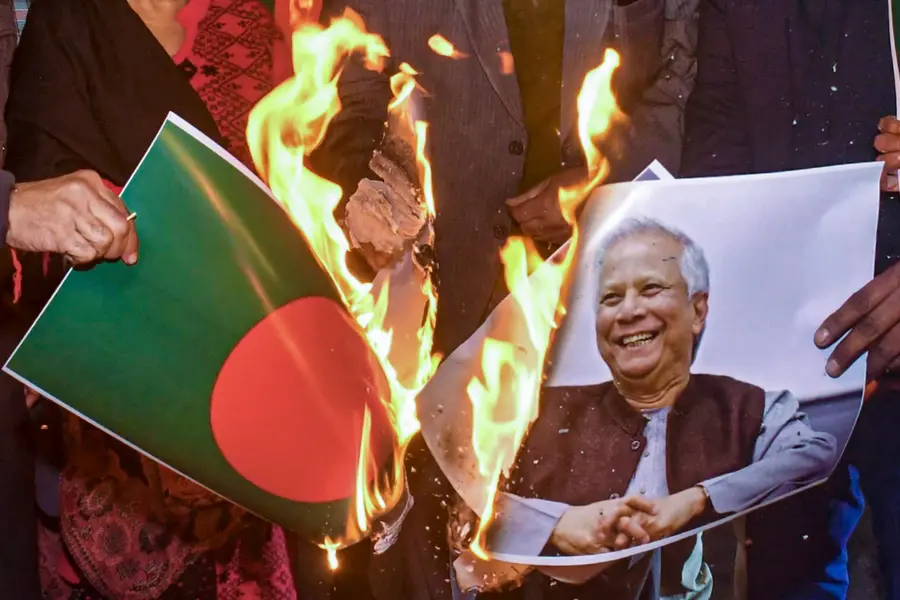
New Delhi: Foreign affairs expert Sushant Sareen has said that Bangladesh is increasingly following what he described as the “Pakistani playbook”, amid growing unrest, protests and reports of violence against minorities in the country.
Speaking on the recent protests and the broader political situation in Bangladesh, Sareen said the country appears to be “rediscovering its Pakistani roots” by overreacting to demonstrations and aligning more closely with Pakistan.
Also Read: Bangladesh summons Indian High Commissioner over security of its missions in India
"Well, I think Bangladesh is rediscovering its Pakistani roots, because this is the Pakistani playbook that they are following. So, quite clearly, the regime in Bangladesh, which is an illegal, illegitimate regime, unelected, is now totally in the Pakistani pocket. It's quite clear that that is what is happening," he said.
Sareen criticised what he called the interim government’s excessive response to small protests, drawing parallels with Pakistan’s approach to dissent.
"For them to overreact to a bunch of 15-20 people with some posters shouting some slogans and act as though some kind of an invasion of the High Commission has taken place. It's utterly ridiculous. It's absurd, this kind of an overreaction, but to be expected, because absurdity in Pakistan is the same thing, and Bangladesh, now rediscovering its East Pakistan roots, is going that line," he said.
Also Read: ‘Our missiles are not far away’: Pakistan leader warns India over Bangladesh unrest
Referring to violence against minorities, Sareen said the situation was far more serious than the protests themselves.
"For them to overreact to a small demonstration by 15-20 people who obviously felt very strongly about the cross-persecution of minorities, it's much worse, and the brutal killing which is taking place in Bangladesh," he said.
Sareen also flagged reports suggesting possible Pakistani involvement in Bangladesh’s administration.
"There are also very disturbing reports coming in of, for example, some people are claiming that there are people from the Pakistani establishment who are sitting in government offices in Bangladesh and directing them what they should do and not do," he said.
He warned that any defence cooperation allowing Pakistan a physical presence in Bangladesh would have serious consequences.
"There are reports coming of Pakistan and Bangladesh trying to enter into some kind of a defence deal, which means that there could soon be Pakistani boots on the ground or some other kind of assistance being given to Bangladesh, and Bangladesh becomes an outpost to attack India," he said.
"And if that were to happen, then all bets are off. It will be a classic case of Bangladesh cutting its, not just its nose, but its neck and two of its necks to spite India's face," Sareen added.
Despite his criticism, Sareen said he believed there were still voices of reason in Bangladesh.
"I would still imagine there are people of goodwill in Bangladesh, people who understand how important it is for both countries to have good relations. And we did have very good relations," he said.
Calling the situation ironic, Sareen noted that Bangladesh has accused India of interference even as India granted refuge to former prime minister Sheikh Hasina.
Also Read: Shocking evidence in Bangladesh’s Osman Hadi killing: BNP leader says Jamaat helped shooter get bail
"This is the Pakistani mindset. Simple logic fails these people. I think that is where we are," he said.
Sareen said India would need to reassess its engagement strategy with Bangladesh in light of the developments.
"It's not a very happy situation to have this kind of an atmosphere in a neighbouring country, but it is what it is. So I think India will need to start rethinking how it plans to deal with Bangladesh," he said.
He also questioned whether India’s approach amounted to restraint or inaction.
"A lot of people consider what India is doing or not doing as a strategic restraint, but I sometimes wonder whether it's restraint or it's strategic paralysis," he said.
"I think we need to do certain things, and it should serve as a lesson for India, even for other countries in the neighbourhood and the extended neighbourhood and the rest of the world," Sareen added.
Emphasising the need for leverage in foreign policy, Sareen said peace could not be assumed indefinitely.
"That, this notion that we have that we will be living in peace with a particular country for all times to come. I think it's a fallacious notion. It needs to be re-examined," he said.
"You need to have equities and leverage, very deep knowledge of every country, which is critical to India's interest, rather than be caught like a deer in headlights, which is what seems to have happened to some extent as far as India is concerned," Sareen added.
Published: 24 Dec 2025, 09:41 am IST
Related Topics
Disclaimer: Kindly avoid objectionable, derogatory, unlawful and lewd comments, while responding to reports. Such comments are punishable under cyber laws. Please keep away from personal attacks. The opinions expressed here are the personal opinions of readers and not that of Mathrubhumi.
