
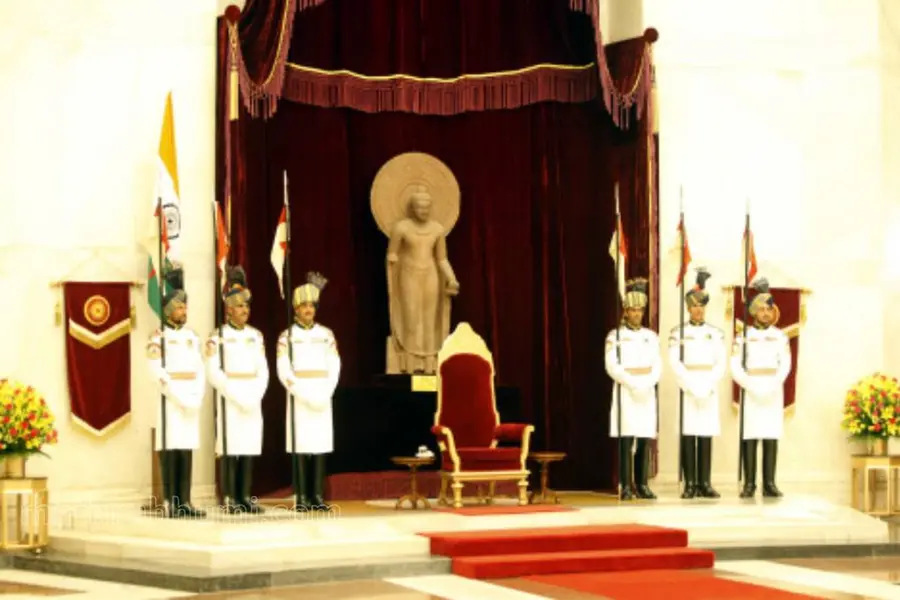
New Delhi: In a significant move aimed at preserving Indian cultural values, Rashtrapati Bhavan has renamed two of its iconic ceremonial halls. The renowned 'Durbar Hall', situated beneath the central dome of Rashtrapati Bhavan, has been renamed 'Ganatantra Mandap'. This hall, historically used for important ceremonies such as the presentation of national awards, now reflects India's transition to a republic with the term 'Ganatantra', rooted deeply in Indian societal traditions since ancient times.
Adjacent to the Durbar Hall, the former 'Ashok Hall' has been rechristened as 'Ashok Mandap'. This change aims to remove anglicized influences and align with the ethos associated with the word 'Ashok', symbolizing freedom from suffering and the unity epitomized by Emperor Ashok. The hall is adorned with the national emblem of India, the lion capital of Ashok from Sarnath, and features significant artworks that reflect India's rich cultural heritage.
Also Read

President Droupadi Murmu initiated these changes as part of ongoing efforts to make Rashtrapati Bhavan more accessible and culturally resonant. The Mughal Gardens on the premises were previously renamed 'Amrit Udyan' last year, emphasizing a broader endeavor to enrich the estate's historical and cultural significance.
The corridors of Ganatantra Mandap showcase busts of former Indian presidents sculpted by renowned artists across the country. Adorned with six tall banners bearing India's national emblem in gold on a deep red background, the hall creates a dignified setting for state ceremonies. A fifth-century AD statue of Lord Buddha, set against a crimson velvet backdrop, enhances the hall's spiritual ambiance.
Ashok Mandap, originally designed as a ballroom, now serves as a venue for diplomatic credential presentations by heads of missions from foreign countries. It also hosts formal introductions for visiting delegations before state banquets hosted by the president. The hall's wooden floor, cushioned with springs, and ceilings adorned with oil paintings, highlight its architectural grandeur.
Six Belgian glass chandeliers illuminate Ashok Mandap, offering visitors a captivating visual experience. The hall also features a loft initially intended for orchestral performances, repurposed for playing the national anthem during significant national events.
Art pieces of historical significance, including a British-made long case clock and a Persian-style carpet measuring 32 meters by 20 meters, adorn Ashok Mandap. The carpet, crafted over two years by five hundred weavers, underscores the hall's opulence and historical importance.
President Murmu's decision to rename these halls underscores a commitment to uphold India's cultural ethos and ensure that Rashtrapati Bhavan remains a symbol of national pride and heritage. These changes reflect a concerted effort to preserve and celebrate India's rich cultural tapestry within the historic confines of Rashtrapati Bhavan. PTI
Published: 25 Jul 2024, 07:01 pm IST
Related Topics
Disclaimer: Kindly avoid objectionable, derogatory, unlawful and lewd comments, while responding to reports. Such comments are punishable under cyber laws. Please keep away from personal attacks. The opinions expressed here are the personal opinions of readers and not that of Mathrubhumi.