
Photo of delivery agents from Zomato to Flipkart triggers debate on India’s quick commerce boom.
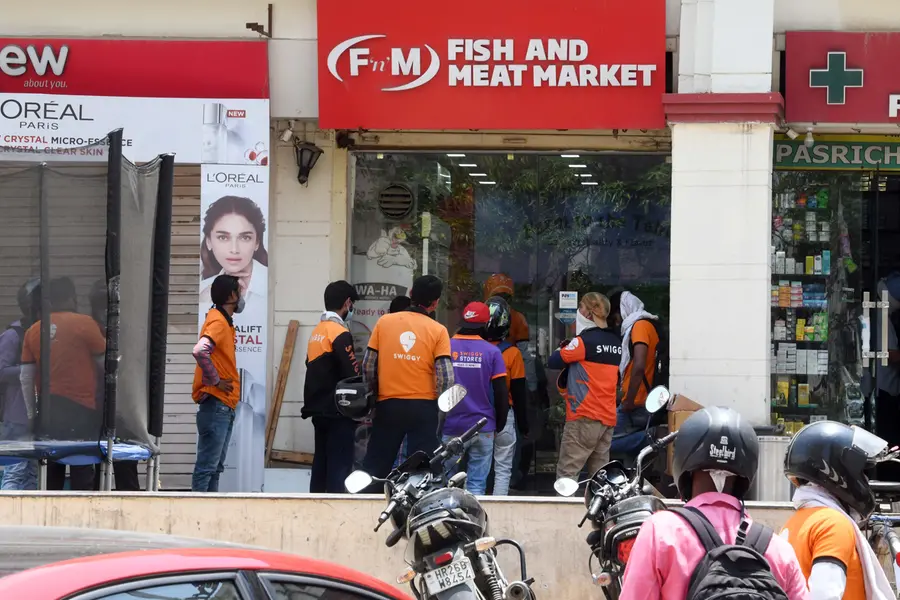
A photograph circulating widely on social media showing delivery agents from multiple e-commerce platforms—Zomato, Zepto, Blinkit, Swiggy, and Flipkart—waiting together at a bustling junction has ignited fresh discussions on the state and future of quick commerce in India.
Among the first to respond was Paytm CEO Vijay Shekhar Sharma, who posted the photo on X (formerly Twitter) on Friday, captioning it: “India’s quick commerce revolution in a click.”
The image, which captures the growing presence of delivery workers from various platforms, has become symbolic of the rapid transformation of urban logistics and commerce in the country.
A silent solution to food adulteration?
While some users raised concerns about the sustainability of this delivery-driven model, others highlighted its positive impact. One user remarked, “Why is everyone so focused on the downside of quick commerce? Can we talk about the upside for once?”
They pointed out that quick commerce may be addressing one of India’s long-standing health challenges—food adulteration—by removing middlemen and enabling direct brand-to-consumer transactions. This, they argued, helps ensure product authenticity and better quality.
Citing past examples, the user noted that counterfeit goods—like fake baby food packets in Delhi—were often sold undetected due to unregulated retail networks. Quick commerce platforms such as Blinkit and Instamart, which work only with verified brands and authorised distributors, are seen as bringing transparency and accountability to the supply chain.
“So yes, safety filters for children are important. But don’t ignore the revolution quick commerce has started — in quality, speed, and trust,” the post concluded.
Employment generation and structural impact
Others echoed similar sentiments, highlighting how the sector is contributing to job creation in urban logistics, warehousing, and the gig economy. One comment said simply: “Quick Commerce brings producers and consumers face-to-face. That’s power.”
Another added: “Local brands, fewer steps, more trust. That’s Quick Commerce.”
However, not all views were optimistic. A cautionary note was raised by a user who likened the industry’s trajectory to that of telecom: “This industry will go the same route as telecom. 7–8 players market will become unsustainable. Money will run out. Acquisitions / Exits will lead to 2–3 players remaining — eyeing for profitability.”
Are regulations keeping pace?
Some also questioned whether India’s regulatory framework is evolving fast enough to keep up with the pace of change in the quick commerce sector. “Should regulations catch up to the new Quick Commerce era? Or are they already here?” asked one post.
As the debate continues, the viral image stands as a snapshot of India’s shifting consumer culture, propelled by speed, convenience—and increasingly—trust.
Published: 18 Jul 2025, 12:21 pm IST
Related Topics
Disclaimer: Kindly avoid objectionable, derogatory, unlawful and lewd comments, while responding to reports. Such comments are punishable under cyber laws. Please keep away from personal attacks. The opinions expressed here are the personal opinions of readers and not that of Mathrubhumi.
