
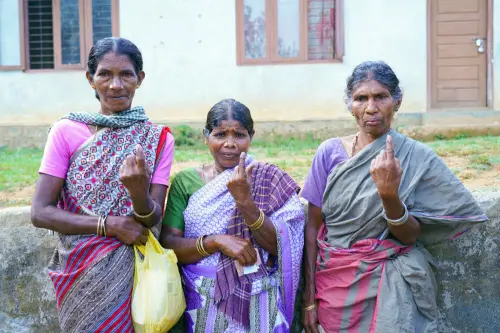
New Delhi: As several state governments mark one year in office following the 2024 assembly elections, OneIndia, in partnership with political analytics firm Political Vibe, has launched an ambitious, multilingual survey aimed at capturing the public mood across India. The initiative is not just a poll on popularity, it’s a deeper probe into how governance is perceived across regions, classes, and communities, one year after voters handed over power to new administrations.
This survey, one of the most expansive of its kind in recent years, will offer a data-driven assessment of government performance in key areas such as delivery on election promises, administrative responsiveness, infrastructure development, welfare schemes, and leadership trustworthiness.
What makes this survey different?
Unlike conventional approval ratings, the OneIndia–Political Vibe survey is designed to reflect the diversity of India’s electorate in both voice and experience. It will collect insights from urban centres and rural belts, while factoring in variations across caste, class, gender, and age groups, making it one of the most inclusive efforts to date in understanding political sentiment.
The timing of the survey is also significant. The first anniversary of a government typically serves as an informal checkpoint for performance evaluation. With future electoral battles looming in 2025 and 2026, understanding voter sentiment now could offer critical clues into shifting political currents.
Focus on governance over popularity
The survey places governance, not just political popularity, at its core. As voters become more informed and issue-driven, their expectations from elected governments have evolved. Experts suggest that poor governance could lead to significant shifts in voter loyalty, even within a year of an election. This makes structured surveys like this one essential for gauging public expectations and political accountability.
In a nod to India’s linguistic and cultural diversity, the survey results will be published state-by-state and in multiple Indian languages. Each report will go beyond numbers to provide a narrative, offering insights into how voters feel, what they demand, and whether the new governments are delivering.
The first phase of the survey will concentrate on states that experienced a regime change in 2024, offering a sharp analysis of how these new administrations have fared so far.
As India prepares for its next wave of elections, this initiative promises to be more than just a snapshot of opinion, it may serve as an early indicator of political trends.
Published: 23 May 2025, 08:21 pm IST
Related Topics
Disclaimer: Kindly avoid objectionable, derogatory, unlawful and lewd comments, while responding to reports. Such comments are punishable under cyber laws. Please keep away from personal attacks. The opinions expressed here are the personal opinions of readers and not that of Mathrubhumi.
