
PM Modi gained around one million Instagram followers after his NEET paper leak video and urged ministers to create Reels. The move has drawn criticism over the timing, with opposition parties and CJP protesters demanding accountability alongside legal reforms.
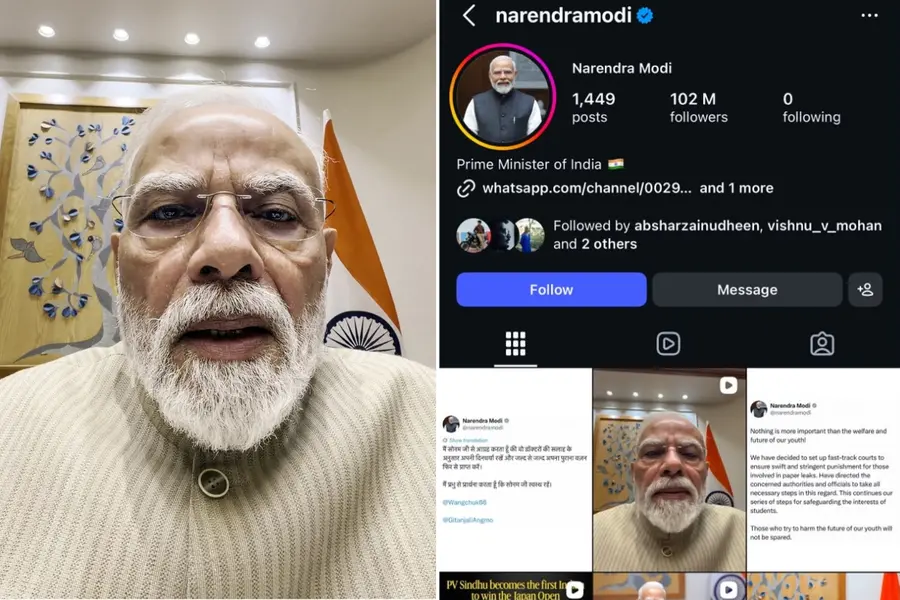
New Delhi: Prime Minister Narendra Modi reportedly gained around one million Instagram followers overnight after posting a selfie video addressing the NEET paper leak controversy.
The video, in which he described paper leaks as a serious issue affecting lakhs of students and their families, received massive engagement online. According to reports, the Prime Minister's Instagram account crossed 102 million followers, while the video attracted hundreds of millions of views, millions of likes and over a million comments.
In the video, Modi announced that the government would introduce tougher measures against paper leaks and said those responsible had been arrested.
'Create reels': PM's message to ministers
During Friday's Cabinet meeting, the Prime Minister reportedly asked Union ministers how many of them were actively using Instagram.
According to sources, he encouraged ministers to go beyond posting official updates and instead create Reels and interactive content to communicate directly with young audiences.
The advice came as Instagram and other social media platforms have become central spaces for political communication, especially among younger users.
Timing draws political criticism
The government's renewed digital outreach has also drawn criticism from opposition leaders and sections of the protesting students.
Critics argued that the Prime Minister's direct address came only after weeks of sustained protests, mounting political pressure and widespread social media campaigns led by the Cockroach Janta Party (CJP) and students demanding action over alleged examination irregularities.
They questioned why the Prime Minister remained publicly silent during the early weeks of the crisis and why the government's first direct outreach came after the protests had become a nationwide political issue.
Opposition leaders have also maintained that tougher laws alone do not address demands for political accountability, including calls for Union Education Minister Dharmendra Pradhan's resignation and action over the alleged use of force against protesters.
Government defends reform measures
The Centre has rejected allegations that it ignored the issue, saying investigations have already led to arrests and that systemic reforms are underway.
On Friday, the Union Cabinet approved amendments to strengthen the Public Examinations (Prevention of Unfair Means) Act, 2024. The proposed changes include increasing the minimum punishment for paper leaks to five years in prison, with organised rackets facing up to 10 years in jail and fines of up to ₹10 crore.
Government sources have also reiterated that there is no question of Dharmendra Pradhan resigning, arguing that legal action against those responsible and institutional reforms are the appropriate response.
CJP protest keeps pressure on the Centre
Meanwhile, the youth-led CJP movement has continued its protests, insisting that legislative changes cannot replace accountability.
The group has maintained that its key demand remains the resignation of the Education Minister, alongside action against those responsible for alleged police excesses during the July 20 protest and broader reforms to restore trust in the examination system.
The movement has relied heavily on Instagram, X and other social media platforms to mobilise supporters, share updates and document events on the ground.
Social media becomes the new political battleground
The episode highlights how social media has become central to modern political communication.
While the government is encouraging ministers to strengthen their online presence and engage directly with young audiences, protesters have used the same platforms to amplify their demands, organise demonstrations and shape public opinion.
As both sides compete for attention online, the debate has increasingly shifted from the streets to smartphone screens, with digital influence becoming almost as important as parliamentary politics.
Published: 24 Jul 2026, 08:47 pm IST
Disclaimer: Kindly avoid objectionable, derogatory, unlawful and lewd comments, while responding to reports. Such comments are punishable under cyber laws. Please keep away from personal attacks. The opinions expressed here are the personal opinions of readers and not that of Mathrubhumi.
