
Parliament’s Winter Session from December 1–19 is set to take up key constitutional, electoral, and economic reforms amid rising political heat.
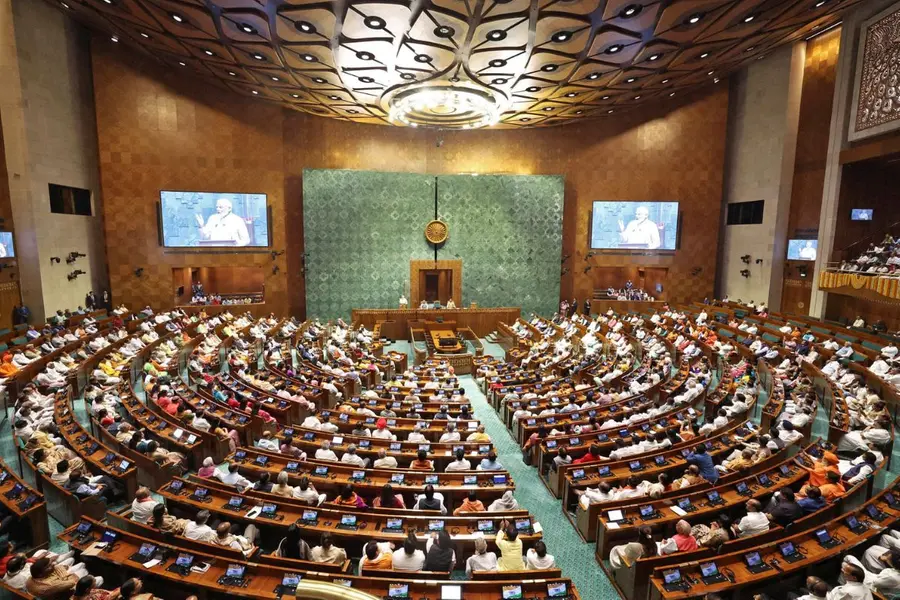
New Delhi: The Winter Session of Parliament will be held from December 1 to 19, Parliamentary Affairs Minister Kiren Rijiju announced on Saturday.
President Droupadi Murmu has approved the government’s proposal to convene the session, which is expected to see intense political debate and the tabling of major legislative proposals ahead of the 2026 Budget Session.
With just 15 sittings scheduled, the government plans to prioritise key constitutional and economic bills, while the Opposition has indicated it will press for debates on voter roll revisions, alleged irregularities in elections, and governance issues following recent state polls.
Voter-List Revision and Election Integrity in Focus
A major flashpoint is expected over the Special Intensive Revision (SIR) of Electoral Rolls, currently underway across 12 states and union territories.
Opposition parties have alleged irregularities and exclusion of voters in several regions, calling for parliamentary scrutiny.
The issue assumes added significance following the Bihar Assembly Elections 2025, where several opposition leaders accused the Election Commission of bias.
The government, on its part, is expected to defend the process as a step toward transparent and updated electoral data.
Constitutional Amendment Bills on the Table
Two major constitutional amendments are expected to headline the session’s legislative business.
- First, the Constitution (One Hundred and Thirtieth Amendment) Bill, 2025, which seeks to automatically disqualify ministers — including chief ministers and the prime minister — if they remain in custody for 30 consecutive days.
- Second, the One Nation, One Election Bill, which proposes synchronising Lok Sabha and state assembly polls.
Both are politically sensitive measures. While the government has signalled its intent to introduce them, opposition parties are likely to demand extensive debate, calling the proposals far-reaching and requiring broad consensus.
Economic and Regulatory Legislation
On the economic front, the government is expected to introduce the Insurance Amendment Bill, allowing 100% FDI in the insurance sector, a move aimed at attracting global investors and strengthening capital inflows.
Another key bill proposes a new levy on tobacco products, replacing the existing compensation cess that funds GST shortfalls.
These measures align with the government’s larger reform agenda, combining fiscal rationalisation with investment liberalisation.
Political Temperature and Legislative Pressure
The session will also address procedural matters such as the long-pending election of a Deputy Speaker in the Lok Sabha.
However, with multiple contentious issues at hand, the 19-day session is likely to witness frequent adjournments and sharp exchanges between the treasury and opposition benches.
The Winter Session traditionally closes the parliamentary calendar, but this year it is expected to set the tone for an election-charged 2026, blending legislative action with high political drama.
Published: 09 Nov 2025, 10:54 am IST
Related Topics
Disclaimer: Kindly avoid objectionable, derogatory, unlawful and lewd comments, while responding to reports. Such comments are punishable under cyber laws. Please keep away from personal attacks. The opinions expressed here are the personal opinions of readers and not that of Mathrubhumi.
