
Opposition MPs attacked the Centre in the Lok Sabha during the Budget Session, raising concerns over state funding, MGNREGA allocations, railway projects and India’s response to the West Asia crisis.
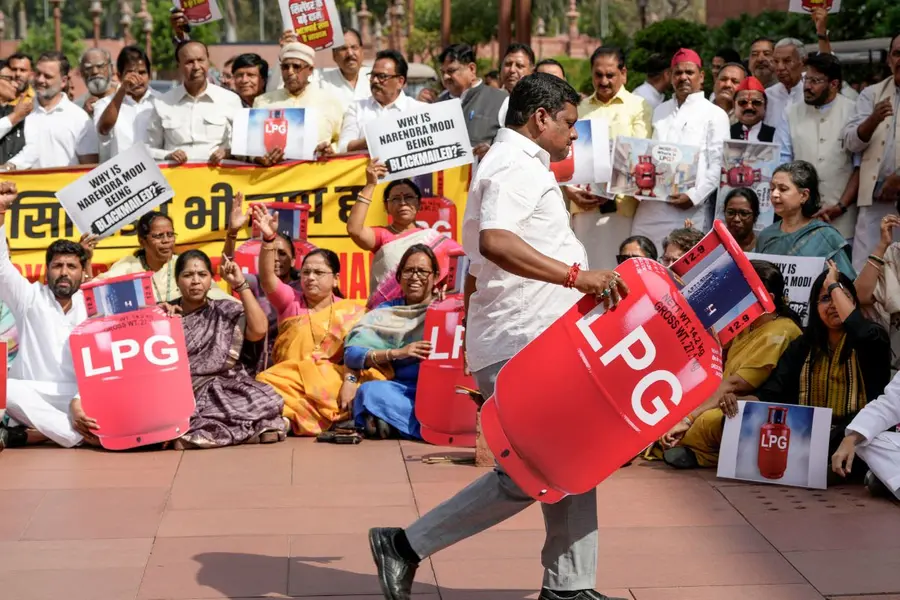
The Parliament Budget Session on Thursday saw a sharp exchange over India’s fuel situation as Leader of Opposition Rahul Gandhi warned that the ongoing LPG crisis triggered by unrest in West Asia could worsen, while the government insisted that there is no shortage of petroleum products in the country.
Speaking about the impact of the escalating conflict in the Middle East on India’s energy supplies, Gandhi said the emerging LPG crisis was only the beginning, and the situation could deteriorate if the geopolitical tensions continue.
“The LPG crisis is just the beginning,” Gandhi said, warning that the hardship faced by people could increase in the coming days if the supply disruptions intensify.
His remarks came amid concerns that the ongoing conflict in West Asia could affect global energy routes and push up fuel prices, potentially disrupting supply chains for cooking gas and petroleum products.
The issue was also raised in the Lok Sabha during the ongoing Budget Session, where the Opposition pressed the government to clarify its preparedness to deal with any fuel shortages arising from the geopolitical situation.
Responding to the concerns, Petroleum and Natural Gas Minister Hardeep Singh Puri assured Parliament that India currently faces no shortage of petrol or diesel and that the government has taken steps to ensure uninterrupted energy supply.
“There is no dearth of petrol and diesel in India,” Puri said, adding that the country’s energy security remains stable despite global uncertainties.
He said the government has diversified crude oil procurement and currently imports crude from around 40 countries to reduce dependence on any single region. Puri also said the government is ensuring an uninterrupted supply of compressed natural gas across the country.
“Hundred percent CNG supply is being ensured,” he said, emphasising that India’s diversified sourcing strategy has helped shield the country from major disruptions in global oil markets.
Officials have indicated that India’s strategy of sourcing crude oil from multiple countries has helped maintain stable supplies even as the West Asia crisis affects major shipping routes and global energy markets.
The debate over fuel availability took place against the backdrop of a broader discussion in the Lok Sabha on supplementary demands for grants during the Budget Session, where Opposition MPs also raised concerns over funding allocations, welfare schemes and parliamentary procedures.
Several members criticised the Centre over what they described as inadequate financial support for states and reductions in key welfare programmes.
DMK MP Dr. Ganpathy Rajkumar alleged that Tamil Nadu continues to receive low allocations for railway projects despite being one of the country’s major economic contributors. He also criticised the rejection of proposed metro rail projects in Madurai and Coimbatore, calling it a “stepmotherly attitude” towards the state.
Earlier in the day, Rahul Gandhi had alleged that he was denied an opportunity to speak in the Lok Sabha on the emerging fuel supply situation linked to the escalating conflict in West Asia.
Speaking to reporters outside Parliament, the leader of the Opposition said he had sought permission to address the House regarding the potential impact of the conflict on India’s LPG, gas, and oil supplies but was not allowed to do so.
“Normally, there is a procedure where you can ask to speak. I had asked to be allowed to make a statement about the situation in the country regarding LPG, gas, and oil,” Gandhi said.
“This is just the beginning, and I wanted to speak about it, but a new procedure seems to have started. A minister will decide first, then I will speak, and then the minister will reply. So let’s see what happens,” he added.
The remarks came as concerns over global energy supply disruptions grow amid the ongoing crisis in West Asia, which has affected major shipping routes and heightened volatility in international oil markets.
Later in the day, Petroleum and Natural Gas Minister Hardeep Singh Puri is expected to brief Parliament on India’s overall energy supply situation and the government’s preparedness to manage potential disruptions.
Government officials have said that India’s crude supply remains secure due to diversified procurement strategies despite the geopolitical tensions affecting global energy routes.
Meanwhile, the Lok Sabha debate on supplementary demands for grants also saw several Opposition members raising concerns about parliamentary procedure, economic conditions and funding allocations to states.
“In this crisis, silence is not diplomacy; it is complete surrender,” Parambil said during the debate, urging the government to clarify its efforts to ensure the safety of Indian citizens caught in the conflict zone. He also accused the government of neglecting parliamentary procedures, alleging that detailed supplementary grant demands were circulated only hours before the discussion began.
“The rules of procedure do not only apply to the Opposition,” Parambil said, adding that members were given little time to review the proposals before debate.
Several MPs also raised economic concerns, with Parambil claiming that the Indian rupee had become “the worst-performing currency in Asia,” and calling on the government to address the economic impact of global geopolitical tensions.
Concerns over alleged procedural lapses were echoed by NK Premachandran of the Revolutionary Socialist Party, who said members had not received the detailed demands for grants in advance as required by parliamentary rules.
“According to the Speaker’s directions, the documents must be circulated two days before discussion. How can this debate take place without circulation?” Premachandran asked.
Responding to the criticism, Parliamentary Affairs Minister Kiren Rijiju attributed the delay to disruptions in Parliament earlier in the week. He said discussions resumed only after the House stabilised.
“The communication gap occurred due to the state of Parliament over the past two days. Once the House stabilised, we took up the discussion,” Rijiju said.
Meanwhile, Opposition members from different states accused the Centre of unfair financial treatment and inadequate support for regional development projects.
Dr Ganpathy Rajkumar of the DMK alleged that Tamil Nadu had been repeatedly sidelined in railway allocations despite making significant contributions to the national economy.
He cited the rejection of proposed metro rail projects in Madurai and Coimbatore as evidence of what he described as a “stepmotherly attitude” towards the state.
“Despite our contribution, Tamil Nadu consistently receives low railway allocations,” Rajkumar said, questioning why key infrastructure proposals from the state had not been approved.
Similar allegations were raised by Azad Kirti Jha of the Trinamool Congress, who accused the Centre of withholding financial support from West Bengal following natural disasters.
“Why are you treating us in a stepmotherly manner?” Jha asked, claiming that the Centre released only about seven per cent of the funds requested by the state for cyclone relief efforts.
He said the West Bengal government had been forced to conduct relief operations using its own resources due to the limited assistance provided by the Centre.
The debate also turned to welfare spending, with Congress MP Shaktisinh Gohil criticising the government over the implementation of social assistance schemes and funding for rural employment.
Quoting findings from the Comptroller and Auditor General (CAG), Gohil alleged that several beneficiaries of an additional social assistance programme were ineligible due to the absence of proper social audits.
“Those who were deserving of benefits did not receive their dues,” he said, arguing that the lack of oversight had led to irregularities in the programme.
Gohil also raised concerns about reductions in allocations for the Mahatma Gandhi National Rural Employment Guarantee Act (MGNREGA), which he said had historically provided crucial employment opportunities in rural India.
Quoting Mahatma Gandhi’s famous statement that “the soul of India lives in its villages,” Gohil warned that reducing funds for MGNREGA would place additional financial burdens on state governments and weaken rural livelihoods.
Amid the ongoing debate, Lok Sabha Speaker Om Birla defended the functioning of the House and emphasised that parliamentary discussions must adhere strictly to established rules.
“No member in this House possesses any privilege to speak outside the framework of these rules,” Birla said, thanking members who had expressed confidence in him during the recent debate over a no-confidence motion against the Speaker.
He reiterated that the Lok Sabha would continue to function according to its rules and procedures, regardless of political disagreements.
Meanwhile, Petroleum and Natural Gas Minister Hardeep Singh Puri is expected to brief Parliament later in the day on India’s energy supply situation amid disruptions caused by the West Asia conflict.
Government officials have stated that India’s crude oil supply remains secure due to diversified procurement strategies, even as global shipping routes face uncertainty.
The developments come as the Budget Session continues to witness intense political confrontation, with the Opposition pressing the government on issues ranging from federal funding and welfare spending to India’s diplomatic response to global conflicts.
Published: 12 Mar 2026, 04:14 pm IST
Related Topics
Disclaimer: Kindly avoid objectionable, derogatory, unlawful and lewd comments, while responding to reports. Such comments are punishable under cyber laws. Please keep away from personal attacks. The opinions expressed here are the personal opinions of readers and not that of Mathrubhumi.
