
Two-wheelers account for 43 per cent of workplace journeys nationwide, rising to 53 per cent in urban centres.
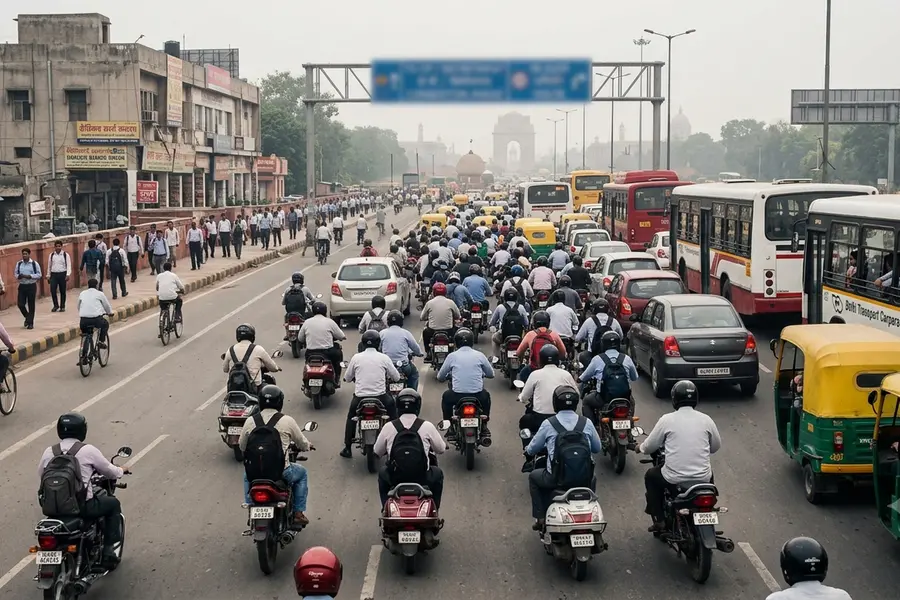
New Delhi: Persistent congestion across Indian cities may stem directly from everyday commuting habits, as nearly half the workforce shuns public transport in favour of private vehicles, official figures show.
According to the inaugural National Household Travel Survey (NHTS) published by the National Statistics Office (NSO), just 15 per cent of workers rely on public transit—such as buses, trains, trams, or auto-rickshaws. By contrast, 46 per cent depend on motorbikes, scooters, or cars.
Two-wheelers account for 43 per cent of workplace journeys nationwide, rising to 53 per cent in urban centres. Cars carry a further 5.7 per cent of city commuters and 3 per cent nationally.
Walking remains remarkably prevalent, serving as the second most common mode of transport. Nationally, 28.3 per cent of workers travel on foot, though rural workers (36 per cent) are far more reliant on walking than their urban counterparts (14 per cent). Bicycles account for 10.7 per cent of journeys.
The survey, which tracked trips longer than one kilometre between July 2025 and June 2026, found the average workplace journey takes 25 minutes (27 minutes in urban areas; 23 in rural regions). Peak congestion is exacerbated by timing: almost 95 per cent of workers set off before 10.00 am.
On average, commuters spend ₹785 per month on travel. A sharp gender divide exists, with men spending ₹835 compared to ₹533 for women—a gap that doubles in rural districts.
Student travel presents a stark contrast: 37 per cent walk to school or university, 29.5 per cent take buses, and 15.8 per cent cycle.
The NSO expects the findings to help authorities optimise routes, adjust schedules, and refine public transit infrastructure. (Compiled)
Published: 06 Oct 2026, 03:12 pm IST
Related Topics
Disclaimer: Kindly avoid objectionable, derogatory, unlawful and lewd comments, while responding to reports. Such comments are punishable under cyber laws. Please keep away from personal attacks. The opinions expressed here are the personal opinions of readers and not that of Mathrubhumi.
