
Akbar's temple destruction, Babur's towers of skulls, and Aurangzeb's edicts feature prominently in NCERT's updated Class 8 history book
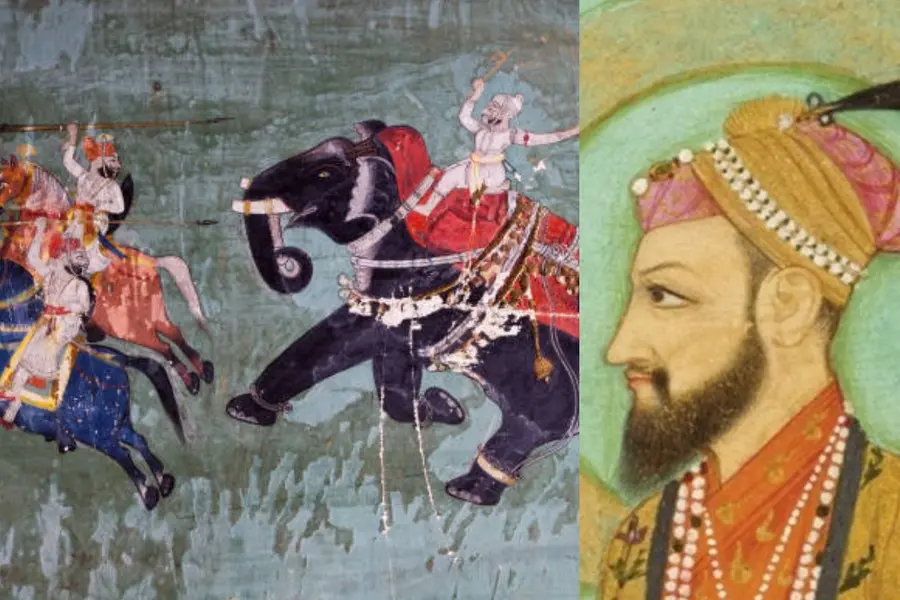
New Delhi: The National Council of Educational Research and Training (NCERT) has released a revised Class 8 Social Science textbook titled ‘Exploring Society: India and Beyond’, marking a structural shift in the way Indian history is introduced to middle school students.
This textbook is the first aligned with the National Curriculum Framework for School Education (NCF-SE) 2023 and repositions the Delhi Sultanate and Mughal periods entirely within the Class 8 syllabus.
How are Mughal rulers presented in the new textbook?
The textbook adopts a more explicit tone in describing historical figures from the Mughal era.
- Babur, founder of the Mughal empire in India, is described as a “brutal and ruthless conqueror.” The book mentions he ordered mass killings, enslaved civilians, and built symbolic “towers of skulls” after battles.
Contemporary Persian sources like Baburnama and later Mughal chronicles acknowledge the extreme violence used during conquests, a norm in medieval warfare. However, the interpretation of pride or brutality can vary by source and context. - Akbar’s reign is portrayed as a mix of tolerance and violence. The book cites the massacre following the siege of Chittorgarh in 1568, where some estimates mention thousands were killed. It also notes Akbar’s orders to destroy temples and promote Islam.
While the siege of Chittorgarh is historically documented (e.g. Abul Fazl’s Akbarnama), Akbar is also widely noted by scholars for religious tolerance policies such as the abolition of jiziya and his founding of the syncretic Din-i Ilahi. - Aurangzeb is described in relation to his religious policies, including edicts that ordered temple demolitions in cities such as Banaras, Mathura, and Somnath. The book also notes that Jain and Sikh places of worship were targeted.
Multiple farmans from Aurangzeb’s reign do reference temple destruction orders, but scholars continue to debate whether these were politically motivated or strictly religious. The broader administrative record also includes instances where Aurangzeb granted land to temples.
How is the jiziya tax represented?
The book calls the jiziya — a tax historically levied on non-Muslims in Islamic states — “a source of public humiliation and an incentive for conversion to Islam.”
Jiziya was reintroduced by Aurangzeb in 1679 after Akbar had abolished it. While many contemporaries viewed it as discriminatory, others regarded it as a standard Islamic governance practice. Its impact and intent remain debated among historians.
Why does the textbook begin with a note on darker periods in history?
A notable addition is the textbook’s introductory note titled "Note on Some Darker Periods in History", which provides context for discussing historical violence, religious conflict, and conquests. It encourages students to understand “the historical origin of cruel violence, abusive misrule or misplaced ambitions of power” without applying modern moral judgment.
The note explicitly states:“No one should be held responsible today for events of the past.”
This sentiment is repeated later in the book, reminding students that past atrocities should not influence present-day social or communal attitudes.
Does the book include resistance and resilience?
Alongside accounts of conquests and temple destruction, the textbook includes chapters on resistance movements and the resilience of society.
- Leaders such as Chhatrapati Shivaji Maharaj, Tarabai, and Ahilyabai Holkar are highlighted. Shivaji is portrayed as a skilled strategist who protected Hindu religious institutions while respecting other faiths.
- The Sikh Gurus, especially during Aurangzeb’s time, are credited with resisting religious persecution.
- The book notes that Indian society frequently rebuilt towns, temples, and institutions after invasions — a testament to cultural resilience.
Is the new textbook interdisciplinary?
Yes. In line with the NCF-SE 2023 vision, Exploring Society: India and Beyond integrates history, geography, and civics into a single curriculum. Key elements include:
- A chapter on India’s electoral process
- An illustrated tour of the new Parliament building
Civic engagement activities focused on voter participation and democratic rights
The textbook makes space for tribal and regional resistance movements such as the Santhal Rebellion, Kol Rebellion, and Indigo Revolt. These uprisings are presented as part of broader social struggles and responses to colonial or regional oppression.
The textbook incorporates QR codes linking to supplementary digital content and educational videos, encouraging students to explore historical material through multimedia formats.
Published: 16 Jul 2025, 02:40 pm IST
Related Topics
Disclaimer: Kindly avoid objectionable, derogatory, unlawful and lewd comments, while responding to reports. Such comments are punishable under cyber laws. Please keep away from personal attacks. The opinions expressed here are the personal opinions of readers and not that of Mathrubhumi.
