
These aim to boost connectivity around Delhi-NCR, linking to Haryana's industrial hubs.
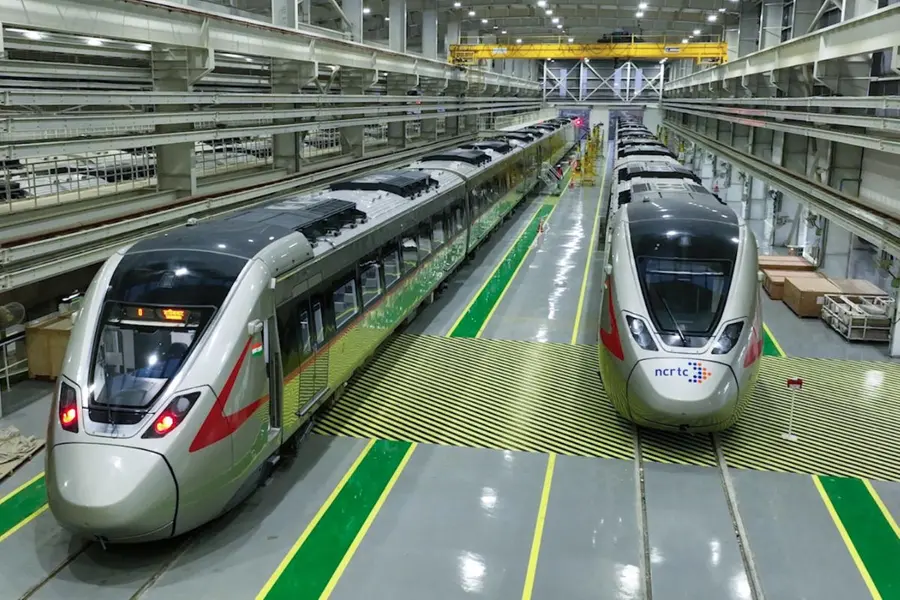
New Delhi: The Public Investment Board (PIB) has approved two new rapid rail transit corridors under the Namo Bharat RRTS project, earmarked at a combined cost of Rs 65,000 crore, aimed at transforming regional connectivity around the National Capital Region (NCR).
The approved corridors are the 93-km Sarai Kale Khan to Bawal route, costing Rs 32,000 crore, and the 136-km Sarai Kale Khan to Karnal corridor at Rs 33,000 crore, both connecting Delhi to key urban and industrial centres in Haryana. The approvals now move to the Union Cabinet for final clearance.
The approvals resolve a long-standing deadlock triggered by funding disputes between the central government and the Delhi government under the previous Aam Aadmi Party administration. The Delhi government was directed by the Supreme Court in 2023 to contribute after resisting funding its share.
As part of the project implementation strategy, Delhi and Haryana will adopt value capture financing, which leverages increased land values near the transit corridors to fund infrastructure development. Urban Metropolitan Transport Authorities are also planned for coordinated regional transit governance.
The Sarai Kale Khan–Bawal corridor targets industrial hubs including Manesar and Bawal, with 22 stations planned, while the Sarai Kale Khan–Karnal corridor will pass through key towns including Sonipat and Panipat. Trains on these corridors will travel up to 180 km/h, significantly reducing travel times.
Prime Minister Narendra Modi highlighted the political alignment of the BJP governments across NCR states as a catalyst for accelerated infrastructure development and enhanced regional mobility.
The National Capital Region Transport Corporation has already begun preparatory work on the Delhi-Panipat corridor, with utility diversion underway on a 22-km stretch between Narela and Murthal.
These corridors are set to ease road congestion, boost economic integration, and modernise commuter travel across Delhi and Haryana, marking a major milestone in the broader vision for regional rapid transit transformation in India.
Published: 13 Nov 2025, 08:05 am IST
Related Topics
Disclaimer: Kindly avoid objectionable, derogatory, unlawful and lewd comments, while responding to reports. Such comments are punishable under cyber laws. Please keep away from personal attacks. The opinions expressed here are the personal opinions of readers and not that of Mathrubhumi.
