
As the Trinamool Congress grapples with its biggest internal rebellion in years, one name has unexpectedly emerged at the centre of the storm. From an Andhra businessman to a BJP powerbroker, who is CM Ramesh and why do TMC leaders believe he helped bring together the party's rebel MPs?
Politics, it is often said, is a game of numbers. In Bengal today, it increasingly resembles a game of phone contacts.
One leader hosts a meeting, another arranges a dinner, a third makes a discreet call. By the time the headlines appear, the real action has already taken place behind closed doors.
That appears to be the story of the Trinamool Congress (TMC), which has spent the past six weeks battling one political crisis after another.
Since May 4, the party led by former West Bengal chief minister and TMC supremo Mamata Banerjee has found itself under pressure both in Kolkata and Delhi.
What began as a difficult political phase for the party has now evolved into its biggest internal challenge in years, with rebel MPs openly questioning the leadership and exploring alternatives.
From political setbacks to a rebellion
The troubles began in the aftermath of the Murshidabad violence and the political controversy that followed.
The Bharatiya Janata Party (BJP) intensified its attacks on the state government, accusing it of failing to maintain law and order. The issue gave the opposition fresh momentum and put the TMC leadership on the defensive.
However, while the party was fighting political battles in Bengal, another challenge was emerging in the national capital. Discontent among a section of TMC parliamentarians gradually became visible.
Meetings were held away from the public eye, conversations intensified and rumours of a breakaway faction gained strength.
The crisis deepened dramatically in June when several prominent TMC MPs were linked to efforts to align themselves with the Nationalist Congress Party of India (NCPI).
Names such as Sudip Bandopadhyay, Satabdi Roy, Kakoli Ghosh Dastidar and Saayoni Ghosh surfaced repeatedly in discussions surrounding the rebel camp.
The developments coincided with a series of meetings involving West Bengal Chief Minister Suvendu Adhikari (CM Adhikari), now one of the BJP's most influential leaders in the state.
Reports suggested that CM Adhikari held discussions with disgruntled TMC MPs in Delhi as the rebellion gathered momentum.
Union minister Bhupender Yadav was also seen as playing a key role in the negotiations. By mid-June, the possibility of a formal split within the TMC parliamentary party had become impossible to ignore.
Enter Ramesh
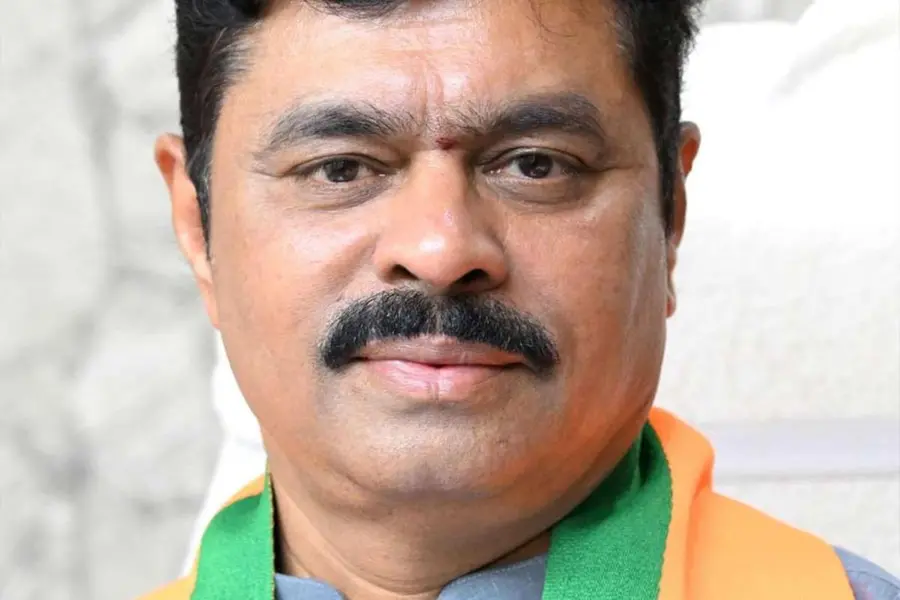
As the crisis unfolded, one name suddenly emerged at the centre of the political storm: Chintakunta Munuswamy Ramesh, better known as C.M. Ramesh.
The 61-year-old BJP MP from Andhra Pradesh stands accused by TMC leaders of helping bring together dissatisfied parliamentarians and encouraging the rebellion.
According to multiple accounts, Ramesh contacted several TMC MPs over the phone and used long-standing personal relationships to build bridges between members of the dissident camp.
Significantly, Ramesh has not denied speaking to TMC leaders. Instead, he has openly acknowledged his close ties with parliamentarians across party lines.
In media interactions, he has argued that he has known many TMC MPs for years through Parliament and maintains friendly relations with them. He has even described persuasion as one of his political strengths.
Born in Potladurthi village in Andhra Pradesh's Kadapa district, Ramesh first rose to prominence as a businessman.
In 1999, he founded Rithwik Projects Pvt Ltd, an infrastructure company that grew rapidly through projects in roads, irrigation, housing and energy. Within little more than a decade, the firm's revenues crossed the ₹1,000-crore mark.
His business success eventually paved the way for a political career. Ramesh joined the Telugu Desam Party (TDP), served two terms in the Rajya Sabha and became a prominent political figure in Andhra Pradesh.
However, his career took a dramatic turn in 2019 when he left the TDP and joined the BJP following the party's electoral collapse in Andhra Pradesh.
That episode also cemented a reputation that follows him to this day: that of a political organiser capable of navigating defections, managing networks and building alliances across ideological lines.
According to political insiders, those skills are precisely why his name is now being linked to the ongoing TMC rebellion.
Years of interaction in Parliament, personal friendships and social connections reportedly allowed him access to leaders who are now at odds with the party leadership.
Not everyone, however, believes Ramesh is the chief architect of the crisis. Some analysts argue that the most significant roles have been played by CM Adhikari, Bhupender Yadav and other BJP strategists.
Even TMC MP Mahua Moitra has mocked suggestions that Ramesh is masterminding the operation, describing him as someone who stays politically relevant through networking rather than organisational influence.
Yet whether he is the mastermind, the messenger or merely a facilitator, one fact is undeniable.
As the TMC faces its most serious internal upheaval in recent years, the political spotlight has unexpectedly fallen on a businessman-turned-politician from Andhra Pradesh whose phone calls have become almost as important as the rebellion itself.
Published: 16 Jun 2026, 01:57 pm IST
Related Topics
Disclaimer: Kindly avoid objectionable, derogatory, unlawful and lewd comments, while responding to reports. Such comments are punishable under cyber laws. Please keep away from personal attacks. The opinions expressed here are the personal opinions of readers and not that of Mathrubhumi.
