
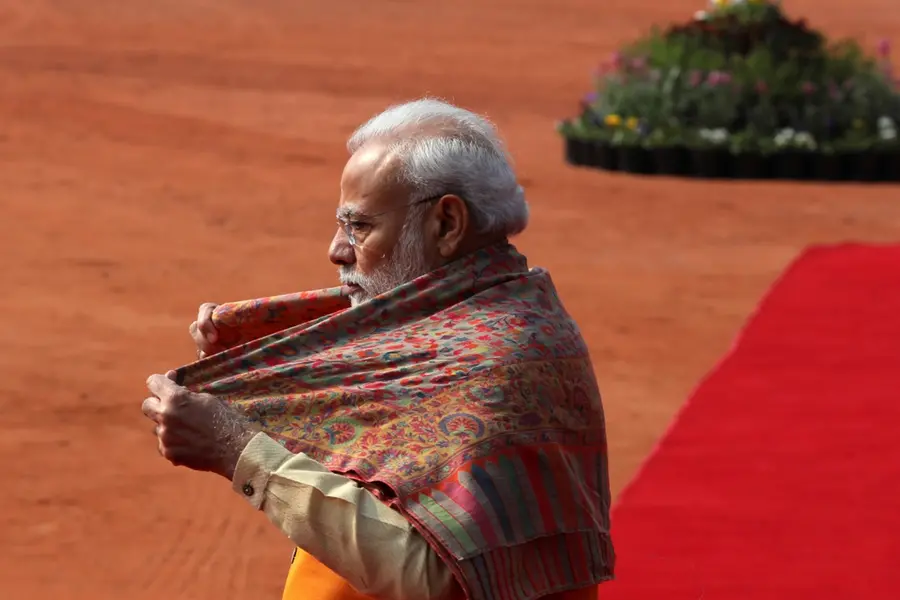
New Delhi: Millions of voters are casting their ballots in the state elections of Maharashtra and Jharkhand on Wednesday, with results to have a massive impact on the popularity of Prime Minister Narendra Modi and the BJP. The elections are being closely watched as a measure of the BJP’s standing, both in Maharashtra, India’s wealthiest state, and in Jharkhand, a mineral-rich region in the east.
Maharashtra, home to Mumbai, India’s financial and entertainment hub, is currently governed by a coalition between Modi's BJP and a Hindu nationalist ally. The opposition alliance, including the Congress party, is in power in eastern Jharkhand state. Modi has held several large rallies in both states, trying to strengthen his party’s hold. The elections come at a critical time for the BJP, just months after a narrow national victory and the formation of a government with the support of regional partners.
Also Read
Modi, in a post on social platform X ahead of the state elections, wrote: "On this occasion, I appeal to all the youth and women voters to vote in large numbers.”
Political analysts predict high stakes for Modi
Political analyst Nilanjan Mukhopadhyay, who authored a biography of Modi, stated that a loss in these state elections could negatively affect Modi's leadership and political influence. “It will have repercussions for the BJP in coming elections in Delhi and Bihar states next year," he said. Election results in both states will be counted on Saturday.
After a setback in national elections, the BJP found renewed momentum with a win in Haryana’s state elections in October, defying predictions of a Congress victory. The Congress party did secure a win in Jammu and Kashmir's local elections after a decade-long gap, in alliance with the regional National Conference.

Controversial slogans and religious tensions
In Jharkhand, a state rich in coal and iron ore, the BJP aims to wrest control from the Congress and its allies. The BJP has faced accusations of trying to polarise voters along religious lines, with slogans such as “If you divide, then you will die” and “If we are united, then we are safe” targeting Hindu voters. In Maharashtra, where Hindus make up nearly 80 percent of the population and Muslims 11.5 percent of Maharashtra state’s estimated 131 million people, the BJP’s efforts have raised concerns about religious divisions.
Mukhopadhyay saw a tendency from top BJP leaders to communalize the elections, saying, "It shows the growing desperation of the party, and it looks like their reading is they are not doing very well in Maharashtra and Jharkhand states."
Opposition alliance gains momentum
Pre-election surveys suggest the opposition alliance, including Congress and regional parties like Shiv Sena and Nationalist Congress Party, could have the edge over the BJP in Maharashtra. The Congress defeated the BJP in June's national elections, winning 30 out of 48 seats, with the BJP securing just 17 seats. The opposition hopes to capitalise on public dissatisfaction with unemployment, inflation, and low crop prices under the BJP's rule.
The BJP is hoping to win over women voters with a new scheme providing 1,500 rupees a month to over 20 million women aged 21-65, whose annual family income is under 2,50,000 rupees. In contrast, Congress has promised to double the amount and offer free government bus transportation if they win.
Agency
Published: 20 Nov 2024, 10:32 am IST
Disclaimer: Kindly avoid objectionable, derogatory, unlawful and lewd comments, while responding to reports. Such comments are punishable under cyber laws. Please keep away from personal attacks. The opinions expressed here are the personal opinions of readers and not that of Mathrubhumi.