
New analysis reveals potential system failures seconds after takeoff in the Air India Flight 171 crash
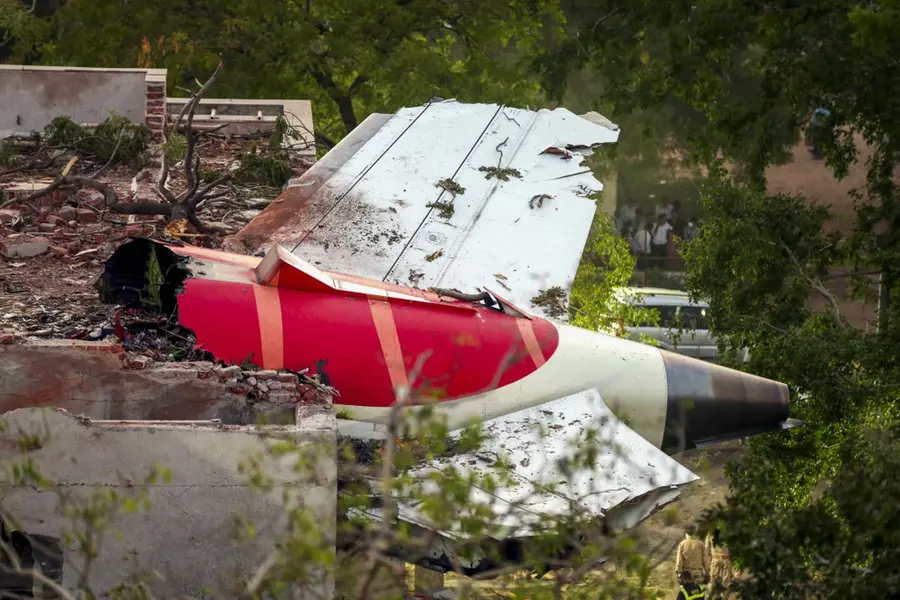
A new analysis of photos, videos, and expert consultations from India's deadliest plane crash in three decades, the Air India Flight 171 disaster on June 12, has suggests critical system failures likely occurred mere seconds after the aircraft left the runway. While definitive conclusions remain months away, The New York Times analysis offers key insights into the tragic incident.
The examination, reviewed with aviation safety experts, including former pilots, crash investigators, and an audio forensics expert, indicates that the Boeing 787-8 Dreamliner likely extended its wing flaps and slats correctly before takeoff, utilized adequate runway distance, and took off from a typical point with a relatively normal initial ascent. However, problems seem to have emerged almost immediately once airborne.
Landing Gear Malfunction
Within seconds of liftoff, the analysis points to an apparent failure in the landing gear retraction process. Video footage from a nearby rooftop shows the landing gear visibly in a front-wheel-down position after takeoff, suggesting the retraction sequence was initiated but failed to complete.
"The landing gear must be positioned correctly in order to fit back into the airplane’s fuselage," John Goglia, a former member of the National Transportation Safety Board, told The NYT. He suggested this could be due to issues like an electrical failure causing a loss of hydraulic power.
Further evidence indicates the plane's emergency power generator, known as the ram air turbine (RAT), was likely deployed. This alternative power source automatically deploys from the bottom of jets like the Dreamliner if they suffer an abrupt loss of electrical, hydraulic, or engine power. While it doesn't power all aircraft functions, it can provide enough energy for emergency landings.
An audio analysis, conducted with media forensics expert Cesar Lamschtein, found the distinct sound audible in the crash video was over 97 percent consistent with other instances of emergency turbine deployment.
Possible dual engine failure
The analysis also points to additional indications that the aircraft may have experienced a loss of dual engine power shortly after takeoff. Experts noted the absence of typical signs associated with a single engine failure, such as swerving or asymmetric thrust.
"You don't see any kind of indication of asymmetric thrust. You don't see yawing, you don't see rudder deflection, you don't see smoke, or puffs of flame from either engine," Jeff Guzzetti, a former accident investigator for the Federal Aviation Administration told The NYT, adding, "That all adds up to me to be a symmetrical loss of power."
This suggests that issues causing both engines to fail might have occurred almost simultaneously -- a highly unusual scenario, according to experts. Possible explanations include contamination of the fuel source affecting both engines or an issue stemming from incorrect flight parameter inputs before takeoff.
Ongoing Investigation
The plane's initial trajectory in the air was found to be largely consistent with previous Air India Flight 171 departures from Ahmedabad. "Once the airplane gets airborne, the initial climb rate looks pretty normal," said John Cox, a former airline pilot.
However, the rapid descent shortly after takeoff raised concerns about the position of the wing's slats and flaps, which are deployed for lift during takeoff. A photo from the wreckage shows the right wing slats extended, and soot and burn marks further suggest they were deployed at impact.
"The burn marks indicate that the slats were deployed prior to impact, or at least when the explosion occurred on the ground," said Shawn Pruchnicki, a former accident investigator at the Air Line Pilots Association. He added that on Boeing 787-8 aircraft, slats automatically extend when flaps are activated.
While gaps in available flight tracking data raised questions about the aircraft using the back half of the runway, CCTV footage analysis by The NYT suggests the plane did backtrack, placing its takeoff point in line with previous departures.
Official investigators will continue to assess these possibilities and more as they retrieve and analyze additional details from the plane's black boxes in the coming days and weeks.
Published: 04 Jul 2025, 11:49 am IST
Disclaimer: Kindly avoid objectionable, derogatory, unlawful and lewd comments, while responding to reports. Such comments are punishable under cyber laws. Please keep away from personal attacks. The opinions expressed here are the personal opinions of readers and not that of Mathrubhumi.
