
From home decoration and fasting to midnight puja, Panchamrit abhishekam and traditional bhog, here is a complete guide to Krishna Janmashtami rituals and celebrations.
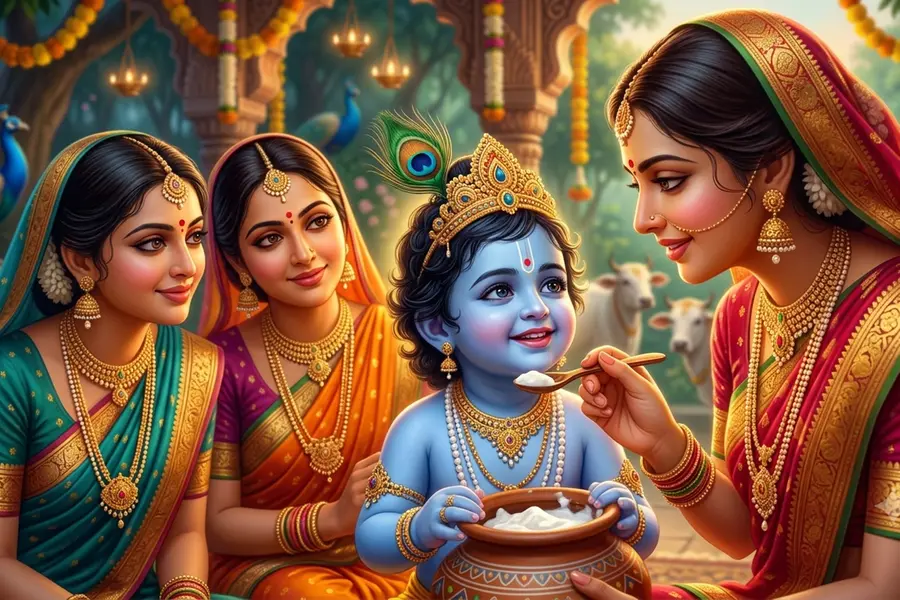
Krishna Janmashtami marks the birth of Lord Krishna and is observed with fasting, prayers, midnight rituals, devotional singing and traditional offerings. Here is a step-by-step guide to common home puja preparations, vrat practices and celebrations.
Devotees generally begin preparations by cleaning their homes and arranging a dedicated space for worship. The puja room or home altar can be cleaned and decorated before the main rituals begin.
Also Read

Draw Krishna's footprints
A traditional practice in some households is to create small footprints using rice flour mixed with water. The footprints are drawn from the entrance towards the puja area and symbolically represent baby Krishna entering the home.
Decorate the jhula
A small swing, or jhula, can be placed in the shrine for the Laddu Gopal idol. Devotees may decorate it with flowers, silk fabric and mango leaves.
Keep puja items ready
Common items used for Janmashtami worship include the Laddu Gopal idol, Gangajal, a clean vessel for bathing the deity, sandalwood paste, kumkum, new clothes, a small flute and a peacock feather.
Janmashtami fasting rules
Fasting is an important part of Janmashtami observance for many devotees. The fast is generally observed during the day and is traditionally broken after the midnight birth celebration, although practices vary between households and traditions.
Some devotees observe Nirjala Vrat, avoiding both food and water, while others follow a Phalahar Vrat, consuming permitted fruits and fasting foods.
ALSO READ | Parandur is out, CM Vijay’s airport hunt narrows to these 2 sites
Foods commonly consumed during a fast
Fresh fruits and fruit juices
- Milk, curd, paneer and ghee
- Sabudana
- Kuttu
- Rajgira
- Potatoes and arbi
- Makhana
- Rock salt, or sendha namak
- Foods generally avoided
- Rice and wheat
- Other grains
- Pulses and legumes
- Onion and garlic
- Regular table salt
Fasting practices can differ according to regional customs, family traditions and individual circumstances.
Sankalpa: beginning the vrat
Devotees who observe a Janmashtami fast may take a sankalpa, or religious resolve, in the morning.
A traditional practice involves holding water, a flower and uncooked rice in the right hand while offering a prayer and making a personal commitment to observe the fast.
Midnight Janmashtami puja vidhi
The central worship associated with Janmashtami takes place around midnight, known as Nishita Kaal, as Krishna's birth is traditionally celebrated at midnight.
1. Birth ritual
In some traditions, a cucumber known as kheera is used in a symbolic birth ritual. The stem is separated using a coin or thread to represent the cutting of the umbilical cord and Krishna's birth.
2. Abhishekam
The Laddu Gopal idol is placed on a clean plate or vessel and given a ceremonial bath.
The Panchamrit ritual commonly involves bathing the idol with ingredients such as milk, curd, honey, sugar and ghee. Gangajal may also be used before or after the ritual.
Devotees may chant prayers or mantras and ring a bell during the abhishekam.
3. Shringaar and jhula
After the bath, the idol is gently dried and dressed in new clothes.
A small crown, peacock feather and flute may be placed with the deity as part of the traditional decoration. The idol is then placed in the decorated swing.
4. Bhog and aarti
Devotees offer food as bhog after the midnight rituals. Tulsi leaves are traditionally placed on offerings in many Vaishnav traditions.
A ghee lamp and camphor may be lit during the aarti, while devotees sing devotional prayers.
Traditional Janmashtami bhog
Food offerings form an important part of Janmashtami celebrations, with dairy products, sweets and fasting-friendly dishes commonly prepared.
- Makhan mishri: Makhan mishri is made using fresh white butter and sugar crystals and is traditionally associated with Krishna's childhood love of butter.
- Dhaniya panjiri: Dhaniya panjiri is a fasting preparation made using roasted coriander powder, ghee, sugar and ingredients such as melon seeds and dry fruits.
- Charanamrit: Charanamrit, also called Panchamrit in some contexts, refers to the sacred mixture associated with the ceremonial bathing of the deity. It is traditionally distributed to devotees after the puja.
- Makhana kheer: Makhana kheer is a sweet dish prepared with foxnuts, milk, cardamom and dry fruits. Saffron and almonds may also be added.
- Chhappan bhog: In elaborate celebrations, devotees may offer Chhappan Bhog, a traditional offering consisting of 56 different food preparations. The practice is particularly associated with some Krishna traditions and regional celebrations.
Janmashtami celebrations beyond the home
The festival is also marked through community events, cultural performances and devotional gatherings.
- Dahi Handi: Dahi Handi celebrations recreate stories associated with Krishna's childhood. Participants form human pyramids to reach and break an elevated earthen pot, traditionally associated with butter and curd.
- Ras Leela: Ras Leela performances use dance, music and theatre to depict episodes from Krishna's life and are particularly prominent in regions associated with Krishna traditions.
- Scriptures and kirtan: Devotees may listen to or recite passages from the Srimad Bhagavatam and Bhagavad Gita. Group devotional singing, known as kirtan, is another common part of celebrations.
- Children dressed as Krishna and Radha: Many families dress children as Krishna or Radha during Janmashtami celebrations. Traditional costumes may include yellow clothing, crowns, peacock feathers and other decorative accessories.
Why Janmashtami is celebrated
Krishna Janmashtami commemorates the birth of Lord Krishna, who is revered in Hinduism as the eighth avatar of Lord Vishnu.
The festival is observed through worship, fasting and devotional activities, with midnight celebrations symbolically marking Krishna's birth.
What devotees should keep in mind
Janmashtami rituals and fasting practices vary across regions and religious traditions. The exact timing of the midnight puja, fasting rules and the method of breaking the fast can therefore differ.
Those observing the festival should follow the customs of their family or religious tradition and check the locally applicable tithi and Nishita Kaal timings for their location.
Janmashtami wishes and greetings
Janmashtami is also an occasion for devotees to share messages of peace, happiness and devotion with family and friends. Short greetings can be used as WhatsApp statuses, SMS messages or social media posts, while devotional wishes can focus on Lord Krishna’s teachings and blessings.
Short and sweet Janmashtami wishes
- May the melody of Krishna’s flute fill your life with peace, happiness and joy. Happy Janmashtami!
- Wishing you and your family love, happiness and Lord Krishna’s blessings. Jai Shri Krishna!
- May Little Kanha take away your worries and fill your life with sweetness and smiles.
- Radhe Radhe! May your home be blessed with health, harmony and happiness this Janmashtami.
- May Lord Krishna guide you towards success and give you strength at every step of your journey.
Devotional and inspirational Janmashtami messages
Devotional greetings can also draw on Krishna’s teachings and stories from Hindu scriptures. Messages often focus on faith, righteousness, courage and the importance of following the path of dharma.
“Wherever there is Krishna, the master of all mystics, and wherever there is Arjuna, the supreme archer, there will also certainly be opulence, victory, extraordinary power, and morality.” — Bhagavad Gita
- May the divine grace of Shri Krishna remain with you and your family today and always. Wishing you a peaceful and spiritually uplifting Janmashtami.
- Just as Krishna protected Gokul, may His blessings give your family strength, peace and courage to overcome difficulties.
Janmashtami AI image ideas and prompts
Festive images are widely used for Janmashtami greetings, wallpapers, social media posts and digital invitations. AI image-generation tools can be used to create visuals featuring Krishna, traditional decorations, Dahi Handi celebrations and other elements associated with the festival.
Little Krishna with butter pot
A popular Janmashtami visual theme is baby Krishna, or Laddu Gopal, with a butter pot. The image can feature Krishna in traditional yellow clothing, a peacock feather crown and gold ornaments, surrounded by temple lamps and marigold garlands.
AI image prompt: A detailed 3D digital artwork of baby Lord Krishna, or Laddu Gopal, with soft blue skin and a joyful expression, holding a small earthen pot filled with fresh white butter. He is wearing a vibrant yellow silk dhoti, a crown decorated with a peacock feather and traditional gold jewellery. Warm temple lamps, marigold garlands and soft cinematic lighting create a festive atmosphere.
Krishna on a decorated jhula
The decorated jhula is another traditional visual associated with Janmashtami. A festive image can show a small Krishna idol placed on an ornate swing surrounded by flowers, diyas and traditional decorations.
AI image prompt: An elegant festive scene featuring an ornate golden jhula decorated with fresh marigold and jasmine garlands. A small brass idol of Lord Krishna rests on a velvet cushion. Glowing diyas, subtle incense smoke and a softly blurred background create a warm devotional atmosphere with detailed traditional decorations.
Dahi Handi celebration
Dahi Handi is one of the most recognisable public celebrations associated with Krishna’s childhood stories. Images can capture participants forming human pyramids as they attempt to reach and break a decorated earthen pot suspended above them.
AI image prompt: A dynamic festive scene of a Dahi Handi celebration in Mumbai, with young participants forming a large human pyramid to reach a decorated earthen pot suspended between buildings. A cheering crowd, colourful decorations and water spraying through the air create an energetic festival atmosphere.
Flute and peacock feather wallpaper
The flute and peacock feather are closely associated with Krishna and can be used in minimalist Janmashtami greeting designs and wallpapers. A simple composition can create a more understated devotional aesthetic.
AI image prompt: A minimalist Janmashtami wallpaper featuring a polished wooden bansuri placed diagonally beside a glowing peacock feather. Lotus flowers float on dark water, with subtle blue and golden highlights, soft lighting and a peaceful devotional atmosphere.
These festive visuals can be adapted for WhatsApp statuses, Instagram posts, Facebook greetings, digital invitations and Janmashtami wallpapers. When creating AI-generated religious imagery, prompts can specify the desired setting, clothing, decorations, lighting and artistic style to produce a consistent festive look.
Published: 01 Sept 2026, 03:07 pm IST
ABOUT THE AUTHOR
Disclaimer: Kindly avoid objectionable, derogatory, unlawful and lewd comments, while responding to reports. Such comments are punishable under cyber laws. Please keep away from personal attacks. The opinions expressed here are the personal opinions of readers and not that of Mathrubhumi.