
The proposed selection of Israel as the theme country for the 2027 Kolkata Book Fair has triggered a wider debate over cultural pluralism, Gaza and the representation of Palestinian voices.
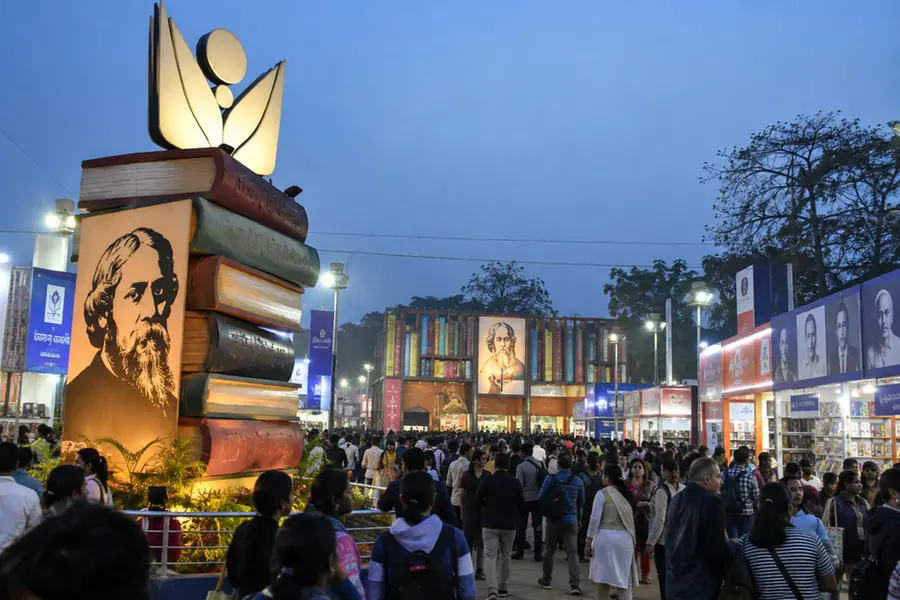
A book fair built on the idea that literature can bring different worlds into the same public space now faces an uncomfortable question: what happens when one of those worlds is at the centre of a devastating war?
The 50th International Kolkata Book Fair, scheduled from January 22 to February 3, 2027, will be centred on the 150th anniversary of Bankim Chandra Chattopadhyay’s Vande Mataram. Israel is also being considered as the theme country, though the proposal is yet to receive final government approval.
The juxtaposition is significant. The Kolkata Book Fair, or Boi Mela, has spent decades presenting itself as a celebration of books, ideas and cultural plurality.
The proposed Israeli theme-country status therefore raises a question that extends beyond the presence of one country at a literary event: how does an institution committed to cultural exchange respond when the country receiving that prominence is facing intense international scrutiny over its actions in Gaza?
The fair was established in 1976 by the Publishers and Booksellers Guild.
Unlike a conventional trade exhibition, it grew into a major public cultural institution, with its identity increasingly tied to international publishers, writers, guest countries and cross-border literary engagement.
Its theme-country tradition has been an important part of that international outlook.
France, Britain, Bangladesh, Cuba, Chile, Mexico, Italy, Germany and Argentina are among the countries that have occupied the position over the years.
The designation carries significance beyond a commercial pavilion, bringing a country into the fair’s literary, artistic and cultural programming.
An invitation to Israeli literature, therefore, need not amount to an endorsement of the Israeli government. Writers, publishers and artists should not automatically be treated as representatives of state policy.
Literature has its own language, and literary exchange cannot simply be equated with foreign policy. Yet culture does not exist entirely outside history or politics.
That distinction has become particularly difficult to ignore since October 2023, when Israel launched its military campaign in Gaza following the October 7 attacks by Hamas.
Tens of thousands of Palestinians have been killed, while large parts of Gaza’s civilian infrastructure have been devastated.
The international legal scrutiny surrounding Israel's conduct has also intensified.
The International Criminal Court has issued an arrest warrant for Israeli Prime Minister Benjamin Netanyahu in connection with alleged war crimes and crimes against humanity.
Separately, the International Court of Justice continues to consider South Africa’s case alleging violations of the Genocide Convention by Israel.
Those proceedings are ongoing, while the Court has already issued provisional measures.
In September 2025, the UN Independent International Commission of Inquiry went further, concluding that Israeli authorities and forces had committed genocide against Palestinians in Gaza.
Israel rejects the allegation and has repeatedly denied that its military campaign amounts to genocide, maintaining that it is fighting Hamas after the October 7 attacks.
The distinction between the conclusion of an investigative commission and a final judicial ruling remains important.
But the commission's finding is nevertheless part of the international record surrounding the conflict.
For the Kolkata Book Fair, the war's cultural consequences add another layer to the debate.
UNESCO has verified damage to 164 cultural sites in Gaza since October 7, 2023.
These include religious sites, historic and artistic buildings, museums, archaeological locations and repositories of cultural property.
UNESCO has also reported that more than 80 per cent of Gaza’s higher-education campuses have been damaged or destroyed, with damage to tertiary education and technical and vocational education facilities estimated at $379 million.
That reality creates an uneasy parallel with what the Boi Mela itself represents.
A book fair is fundamentally about preserving and circulating knowledge. Universities, libraries, museums, archives and cultural institutions perform a similar function over much longer periods: they allow communities to preserve memory and pass it from one generation to another.
When such institutions are destroyed, the loss is therefore not limited to buildings.
For the Kolkata Book Fair, the central issue need not be whether Israeli literature should be excluded. There is a strong argument against such exclusion.
A fair committed to pluralism can reasonably argue that Israeli writers and publishers should be allowed to participate, including during a period of conflict.
However, genuine pluralism also demands that the other side of that conflict is not made invisible.
If Israel is given the prominence of a theme country, what space will Palestinian writers and publishers receive? Will Palestinian literature be given a comparable platform?
Will the fair address the damage to Gaza’s universities and cultural institutions?
Can it create room for discussions about Palestinian displacement, cultural heritage and the destruction of knowledge infrastructure?
These questions become even more relevant because the 2027 edition is expected to draw heavily on Bengal’s own relationship with history and memory.
Alongside the 150th anniversary of Vande Mataram, the proposed programme is expected to engage with Partition, the formation of West Bengal and the Bengal Renaissance.
The centenary of Uttam Kumar and the centenary of Rabindranath Tagore’s Raktakarabi are also among the subjects being considered.
Kolkata, perhaps more than most cities, understands that literature cannot always be separated from displacement, borders and political upheaval.
The Boi Mela's importance has never rested solely on selling books.
It emerged within a city where poetry, political argument, translation, little magazines and public discussion became part of everyday cultural life.
Its enduring appeal lies in making books a means of encountering unfamiliar histories and perspectives.
That makes the Israel proposal less a question of choosing sides than a test of what cultural openness actually means.
There is a credible case for welcoming Israeli literature without endorsing the Israeli state.
However, the same commitment to openness should make room for Palestinian voices and the realities surrounding them.
The Kolkata Book Fair could, in fact, turn the controversy into an opportunity. It could host Israeli writers while making clear that their presence is not an endorsement of government policy.
It could simultaneously provide Palestinian writers and publishers a prominent platform and create space for conversations on occupation, displacement, war, heritage and the destruction of cultural institutions.
That approach would allow the fair to uphold literary exchange without confusing cultural engagement with political approval.
Ultimately, the challenge before the 50th Boi Mela is larger than the choice of a theme country.
A book fair decides, in part, which voices receive attention and which histories are placed before its audience.
If Israel becomes the theme country in 2027, the defining question may therefore not be whether Israeli books have a place in Kolkata.
It will be whether Palestinian stories are given enough space beside them, and whether a celebration of cultural plurality can remain meaningful when an entire culture's institutions and repositories of memory are under such profound strain.
Published: 09 Sept 2026, 05:51 pm IST
ABOUT THE AUTHOR

Related Topics
Disclaimer: Kindly avoid objectionable, derogatory, unlawful and lewd comments, while responding to reports. Such comments are punishable under cyber laws. Please keep away from personal attacks. The opinions expressed here are the personal opinions of readers and not that of Mathrubhumi.