
Maharashtra artisans defend Kolhapuri chappals after Prada ‘inspiration’; LIDCOM boosts identity with GI tags and QR-code verification
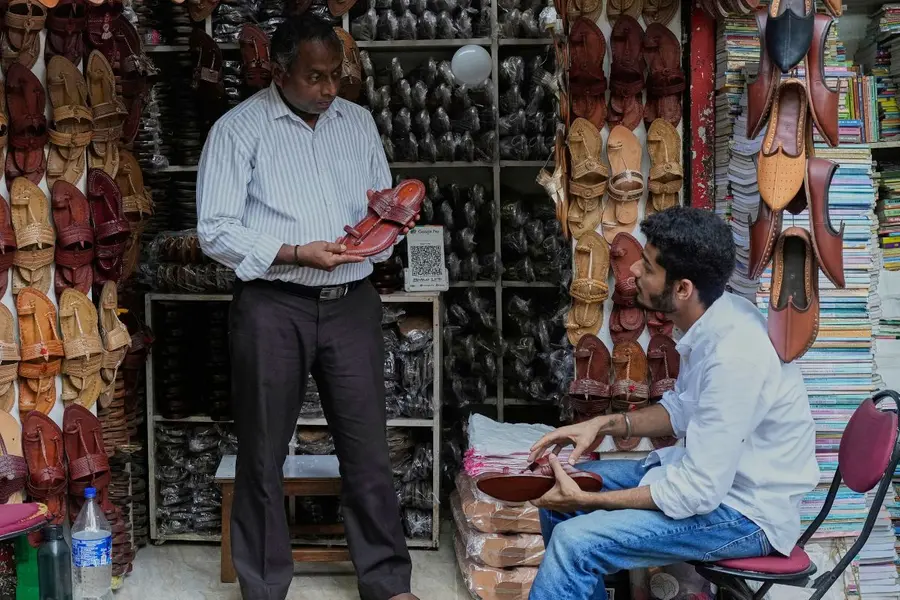
Kolhapur: The Kolhapuri chappal, one of India’s most iconic traditional crafts, is experiencing a resurgence not only in domestic fashion circles but also on international platforms, following controversy over luxury Italian brand Prada’s alleged appropriation of the footwear.
The handmade flat leather sandals, recognised by their Geographical Indication (GI) tag and renowned for their intricate craftsmanship and cultural significance, now come equipped with QR codes to enhance protection and authenticity, thanks to recent technological and legal innovations.
This initiative aims to combat counterfeiting, highlight the identity of the artisan behind each pair, boost consumer confidence, and strengthen the market presence of traditional craftsmen, according to officials from the government-run Leather Industries Development Corporation of Maharashtra (LIDCOM).
Recently, artisans raised objections after footwear resembling Kolhapuri chappals appeared in Prada’s new men’s collection, alleging a breach of GI rights. In response, Prada acknowledged that the sandals showcased during its 2026 men’s fashion show were “inspired” by traditional Indian handcrafted footwear. The brand clarified in a statement to the Maharashtra Chamber of Commerce that the featured designs remain in the conceptual stage and have not yet been confirmed for commercial production.
Earlier this month, a team of experts from Prada visited Kolhapur to interact with local artisans and study the traditional footwear-making process.
Dating back to the 12th century, Kolhapuri chappals have been primarily crafted in Maharashtra’s Kolhapur, Sangli, and Solapur districts. Their distinctive design, made from naturally tanned leather and featuring handwoven straps, has been preserved by generations of artisans.
A significant turning point came in the early 20th century, when the visionary ruler Chhatrapati Shahu Maharaj actively promoted the chappals as a symbol of self-reliance and Swadeshi pride. His support elevated the coarse village slipper into a respected cottage industry and emblem of national identity.
In 2019, the Maharashtra and Karnataka governments jointly secured the GI tag to protect the legacy of the craft and ensure artisans received rightful recognition.
Under international trade rules such as the TRIPS agreement, this GI status legally reserves the rights to manufacture and market Kolhapuri chappals to artisans from designated districts in both states. The certification mandates the use of handmade techniques and natural leather, with open-toe construction, explicitly prohibiting synthetic materials and mechanised processes.
Taking a step further, LIDCOM has now introduced QR-coded certification for each pair of chappals.
“This digital initiative aims to combat counterfeiting and highlight the identity of the artisan or self-help group behind each product,” the corporation said in a statement.
By scanning the QR code, buyers can access details such as the name and location of the artisan or production unit, district of manufacture, crafting techniques, raw materials used, and the validity and status of the GI certification.
“This initiative not only boosts consumer trust but also strengthens the market position of traditional craftsmen,” LIDCOM stated.
The corporation has appealed to consumers, designers, and the general public to stand in solidarity with India’s indigenous craft traditions.
“Kolhapuri chappals are not just fashion accessories. They are a powerful expression of traditional skill, identity, and the dignity of small artisan communities,” said LIDCOM Managing Director Prerna Deshbhratar.
Founded in 1974, LIDCOM, also known as the Sant Rohidas Charmodyog and Charmakar Vikas Mahamandal, has played a key role in empowering rural leather artisans across Maharashtra. Through training programmes, market development, design innovation, and financial support, the organisation has helped transform traditional footwear-making into a symbol of cultural pride and economic resilience.
Kolhapuri chappals have re-entered the global spotlight, seamlessly blending heritage with modern relevance.
More than mere traditional footwear, they now represent skilled craftsmanship and indigenous pride.
Since 1974, LIDCOM has been instrumental in preserving and promoting this heritage craft. The organisation has empowered thousands of rural artisans through skill development, fostering innovation, expanding markets, and ensuring sustainable livelihoods.
Speaking on the organisation’s vision, Deshbhratar said, “Kolhapuri chappals are not merely utilitarian items. They embody stories of self-reliance, national pride, and a living cultural tradition. Through our efforts, we aim to strengthen the hands that preserve this legacy and inspire generations to come.”
In addition to economic uplift, the corporation is also committed to cultural preservation.
LIDCOM continues to implement a broad range of initiatives, from establishing training centres and supporting self-help groups to building strong linkages between buyers and suppliers in both domestic and international markets, to ensure this time-honoured craft not only survives but thrives in an evolving economic landscape.
PTI inputs
Published: 27 Jul 2025, 12:21 pm IST
Related Topics
Disclaimer: Kindly avoid objectionable, derogatory, unlawful and lewd comments, while responding to reports. Such comments are punishable under cyber laws. Please keep away from personal attacks. The opinions expressed here are the personal opinions of readers and not that of Mathrubhumi.
