
Union Minister JP Nadda said the government heard the student movement's demands during a nearly two-hour meeting and will respond after internal discussions on Saturday.
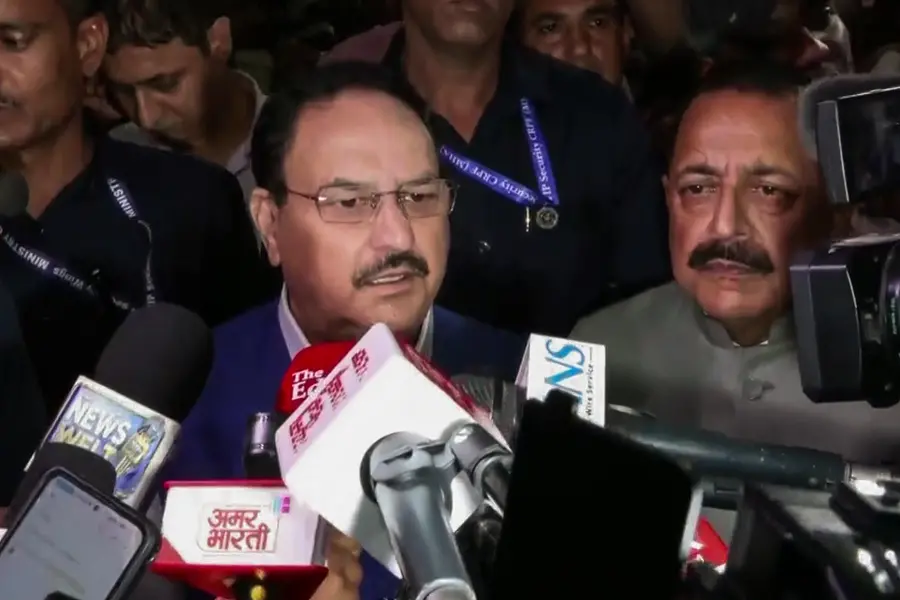
Union Health Minister JP Nadda on Friday said the government has heard the three main demands and five suggestions for examination reforms put forward by the Cockroach Janta Party (CJP), but the biggest political question remains unanswered — whether Education Minister Dharmendra Pradhan will resign, one of the movement's key demands.
After a nearly two-hour meeting with CJP representatives, Nadda said the government would hold further discussions internally and return with its response during another meeting scheduled for Saturday afternoon.
"The meeting went on for almost 2 hours. We listened to their concerns, and the issues were discussed from various perspectives. We heard their demands. They had 3 main demands and 5 reform suggestions for exams. We have told them that we will meet them again tomorrow afternoon and tell them about the discussion we had among the Government," Nadda told reporters.
The minister, however, did not indicate whether the Centre had accepted any of the demands, including the CJP's call for the resignation of Education Minister Dharmendra Pradhan.
The issue is expected to be a major point of discussion when both sides meet again on Saturday.
CJP says two demands accepted, but seeks action on Pradhan
Earlier, CJP representatives said the government had agreed to two of their conditional demands — that peaceful protesters would not face legal action and that compensation would be provided to families of students affected by examination irregularities.
The movement, however, has maintained that its principal demand remains the resignation of Education Minister Dharmendra Pradhan, holding him responsible for the government's handling of examination-related controversies.
The government has not officially confirmed that any demand has been accepted.
Another round of talks amid exam paper leak protests
Friday's meeting between Nadda, Union Minister Jitendra Singh and CJP representatives Saurav Das and Ashutosh Ranka took place at Vithal Patel House amid mounting pressure over examination paper leaks and alleged irregularities.
The discussions came after days of protests demanding changes in India's competitive examination system, greater accountability and reforms to prevent future leaks.
The CJP delegation had earlier agreed to talks after receiving assurances from the government on some of their concerns, according to the movement.
Wangchuk's hunger strike ends after government assurance
The negotiations followed social activist Sonam Wangchuk ending his 26-day hunger strike after receiving written assurances from the Union government on examination reforms and accountability.
Wangchuk said Union Ministers JP Nadda and Jitendra Singh met him and provided the required guarantees, after which he decided to end his protest.
He said he had earlier insisted on receiving a formal written assurance instead of only verbal commitments, which delayed the conclusion of his hunger strike.
Modi announces stricter action against paper leaks
The Centre's outreach to protesters also came after Prime Minister Narendra Modi announced steps to introduce tougher measures against examination paper leaks.
In a late-night message, Modi said the Union Cabinet would consider a draft Bill providing for stricter punishment and fast-track courts for those involved in examination-related offences.
He said paper leaks cause serious distress to students and their families and added that action had already been taken against those accused in such cases.
The Prime Minister also said the government had prioritised conducting pending examinations quickly so that students did not lose an academic year.
With ANI inputs
Published: 24 Jul 2026, 03:57 pm IST
Related Topics
Disclaimer: Kindly avoid objectionable, derogatory, unlawful and lewd comments, while responding to reports. Such comments are punishable under cyber laws. Please keep away from personal attacks. The opinions expressed here are the personal opinions of readers and not that of Mathrubhumi.
