
Authorities are now tracing the network's financial structures and interstate facilitators. Further arrests are expected.
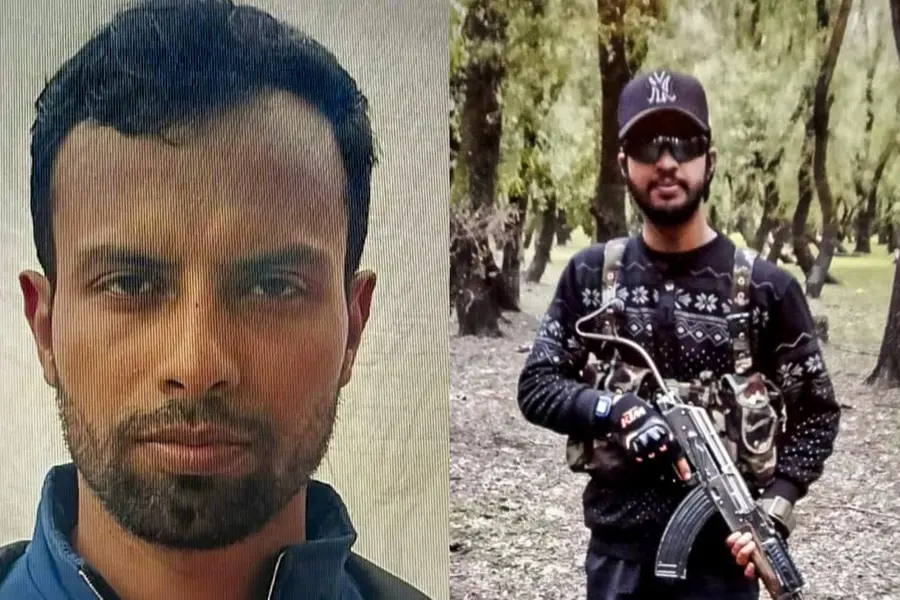
Srinagar: Authorities in Jammu and Kashmir announced on Tuesday the dismantling of a "deep-rooted" interstate Lashkar-e-Taiba (LeT) cell, resulting in the apprehension of five individuals, including a Pakistani terrorist who had evaded capture for 16 years.
The high-stakes operation led to the arrest of Abdullah, known by the alias Abu Hureira, and another Pakistani national, Usman, also known as Khubaib. Officials stated that Abdullah had successfully established operational bases beyond the Union Territory during his more than 1.5 decades on the run. The breakthrough comes six months after security forces neutralised a "white-collar" terror module linked to Al Falah University in Faridabad.
Multi-State Coordination
The crackdown, which commenced on March 31, was personally overseen by Director General of Police Nalin Prabhat from a command centre in Srinagar. The investigation has provided security agencies with a detailed map of the LeT’s financial structures and funding methods.
Officials revealed that the terrorists utilised sophisticated forgeries to build a network spanning several Indian states. Over recent days, Srinagar police, in coordination with central agencies and law enforcement from other states, executed raids at 19 sites across Jammu and Kashmir, Rajasthan, and Haryana.
The searches yielded a significant arsenal, including:
- Small Arms and Rifles: Three AK-47s, one AK-Krinkov, and several pistols.
- Explosives: Multiple hand grenades.
- Technology: Various electronic gadgets and communication equipment.
Logistical Support and Infiltration
In addition to the two Pakistani nationals, police arrested three Srinagar residents: Mohammad Naqeeb Bhat, Adil Rashid Bhat, and Ghulam Mohammad Mir, alias Mama. These men are accused of providing the terrorists with food, shelter, and critical logistical coordination.
The two foreign terrorists are classified as "A+" grade insurgents. Investigators say they infiltrated India approximately 16 years ago and commanded an estimated 40 foreign terrorists over the years, the majority of whom have been killed in previous encounters.
The recovery of forged documents with addresses from various Indian states suggested the duo used false identities to move freely across the country. Findings also indicate that at least one foreign member of the cell managed to flee India using a valid passport obtained through these fraudulent means.
Unravelling the Network
The investigation gained momentum on March 31 following the arrest of Naqeeb Bhat in the Pandach area. During interrogation, Bhat admitted his affiliation with the LeT and directed police to his associates, Adil Rashid and Ghulam Mohammad Mir. This led to the discovery of several forested hideouts on the outskirts of Srinagar.
Police officials noted that this module shared similarities with the "Al Falah operation" uncovered in November 2025. That previous cell consisted of radicalised, highly educated professionals, including Dr Umer-un Nabi. Nabi was the driver of an explosives-laden vehicle that detonated outside the Red Fort on Nov. 10, an attack that claimed more than a dozen lives.
Authorities emphasised that the current investigation remains active, with further arrests expected as they continue to trace the module's financiers and interstate facilitators.
With inputs from PTI
Published: 07 Apr 2026, 08:03 pm IST
Related Topics
Disclaimer: Kindly avoid objectionable, derogatory, unlawful and lewd comments, while responding to reports. Such comments are punishable under cyber laws. Please keep away from personal attacks. The opinions expressed here are the personal opinions of readers and not that of Mathrubhumi.
