
The GSLV-F16 placed the 2,392 kg satellite into a Sun Synchronous Polar Orbit, a first for the GSLV. The $1.5 billion mission will image Earth every 12 days for five years, using advanced radar technology to study land, ice, and ocean changes
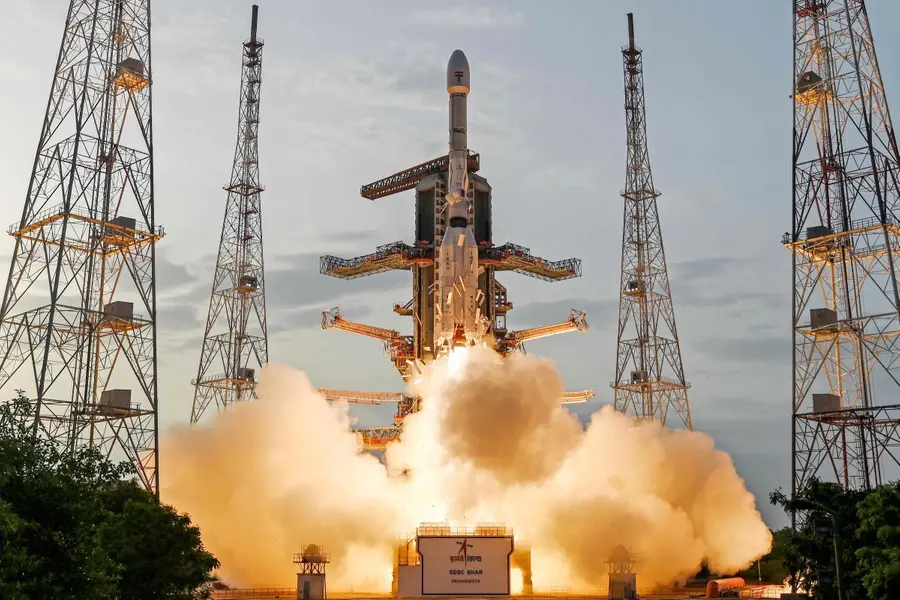
The Indian Space Research Organisation (ISRO) on Wednesday successfully launched the NASA-ISRO Synthetic Aperture Radar (NISAR) satellite, a sophisticated Earth observation mission developed jointly with NASA, from the Satish Dhawan Space Centre in Sriharikota, Andhra Pradesh. WATCH VIDEO HERE
The launch took place at 17:40 IST, with the satellite being placed into orbit by Geosynchronous Satellite Launch Vehicle (GSLV-F16). This marks a significant first, as a GSLV was used to inject a satellite into a Sun Synchronous Polar Orbit—a task usually performed by the PSLV.
A decade-long joint effort
The NISAR mission, which has taken more than a decade to come to fruition, represents a joint investment of over USD 1.5 billion. The satellite weighs 2,392 kg and will orbit the Earth once every 97 minutes, imaging land, ice surfaces, and selected parts of the ocean every 12 days. Its expected mission life is five years.
Advanced technology with global applications
NISAR features a unique dual-band Synthetic Aperture Radar using an advanced SweepSAR technique, which allows for high-resolution and wide-swath imaging. It will observe global land and ice-covered surfaces, including islands, sea-ice, and selected oceanic regions, on a 12-day cycle.
The satellite is designed to study land and ice deformation, land ecosystems, and oceanic regions, key areas of interest to both Indian and American science communities.
NISAR mission will help to:
- Measure the woody biomass and its changes
- Track changes in the extent of active crops
- Understand the changes in wetlands’ extent
- Map Greenland’s and Antarctica’s ice sheets, dynamics of sea ice and mountain glaciers
- Characterise land surface deformation related to seismicity, volcanism, landslides, and subsidence and uplift associated with changes in subsurface aquifers, hydrocarbon reservoirs, etc.
According to ISRO, the first 90 days post-launch will be dedicated to In-Orbit Checkout (IOC) to prepare the satellite for full scientific operations.
(With agency inputs)
Published: 30 Jul 2025, 05:45 pm IST
Related Topics
Disclaimer: Kindly avoid objectionable, derogatory, unlawful and lewd comments, while responding to reports. Such comments are punishable under cyber laws. Please keep away from personal attacks. The opinions expressed here are the personal opinions of readers and not that of Mathrubhumi.
