
CEA Nageswaran predicts US tariff impact on India to lessen within two quarters. Private sector urged to address long-term challenges.
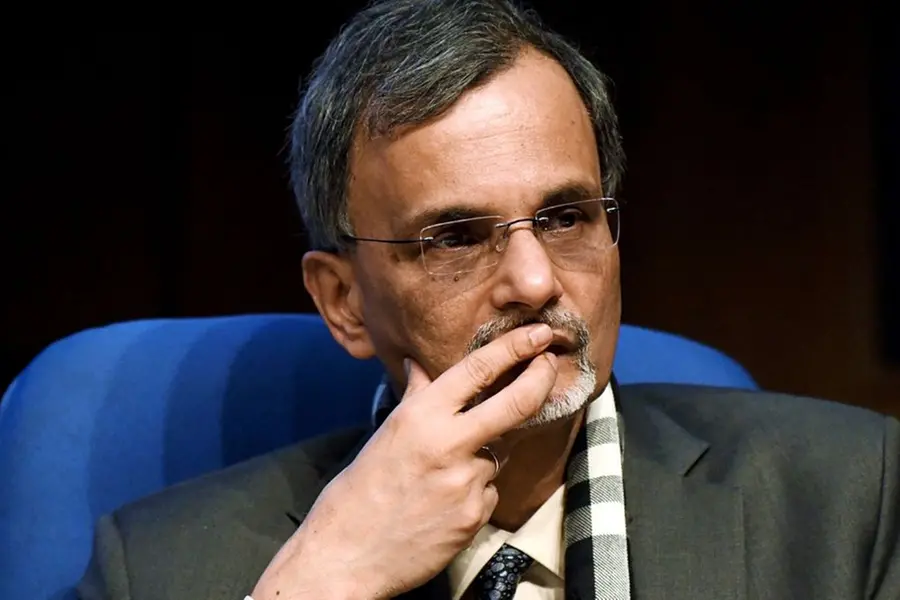
New Delhi: Chief Economic Advisor (CEA) V Anantha Nageswaran expressed confidence that the recent challenges arising from US tariffs on Indian exports will ease in the next one or two quarters. Speaking at a public event on Wednesday, he called on India’s private sector to play a stronger role in addressing the nation’s long-term strategic and economic challenges.
US tariff impact likely to fade soon
Nageswaran said that while the initial impact of high US tariffs has already hit sectors such as gems and jewellery, shrimps, and textiles, the secondary and tertiary effects may be harder to manage. However, he reassured that the situation is being monitored closely and that government dialogue with affected industries has already begun.
"I do believe that the current situation will ease out in a quarter or two. I don't think that from a long-term picture, the India impact will be that significant, but in the short run, there will be some impact," he said.
He also suggested that the reasoning behind the tariffs, imposed by US President Donald Trump, might be linked to larger geopolitical considerations like Operation Sindoor or other strategic moves.
Growth slowdown and agriculture's potential
He attributed the growth slowdown in FY25, which saw a deceleration to 6.5 per cent from FY24's 9.2 per cent, to tight credit conditions and liquidity issues. The right agriculture policies can add 25 per cent to real GDP growth, Nageswaran added.
With speculation on whether US officials will visit India for trade talks later this month, as reported, Nageswaran said the upcoming meeting in Alaska between US President Donald Trump and his Russian counterpart, Vladimir Putin, is likely to influence the outcome.
Declining to spell out any details on the trade negotiations between India and the US, the academic-turned-advisor said things are very fluid at the world stage right now, with relations swinging from cooperation to stalemate, and he spelt out his expectation of the impact of a 50 per cent US tariff on Indian exports.
Call to the private sector: Think long-term
However, the CEA said the focus on tariff-related issues should not blind us to more "important challenges", including the impact of artificial intelligence, reliance on one country for critical minerals, and their processing and strengthening of supply chains.
He exhorted the private sector to do more "as we navigate these longer-term challenges, promising that public policy will play the facilitator's role".
"Private sector also has a lot of thinking to do, given the massive strategic challenges we face in the coming years... the private sector also has to think about the long-term rather than the next quarter, which is what might have led to many of the challenges we are currently beginning to face," he said in the comments aimed at India Inc.
He, however, did not elaborate on the subject any further.
Stating that the government has allocated money towards research purposes, he said it is now for the private sector to up their investments in the area.
Youth health and mental well-being a rising concerns
The Indian youth is staring at both physical and health issues arising from excess screen use, consumption of ultra-processed food, etc, which is leading to anxieties and even suicidal thoughts among people, the CEA said, seeking the private sector's help to tackle the challenge.
Positive signs in consumption and investments
He welcomed the capital expenditure put in by the private sector in FY26, and the data to be released in February next year will attest to the same.
The consumption story is "quite healthy", the CEA said, pointing to the data on UPI usage. Specifically on urban consumption, he rued that there is no proper data source to capture service consumption, and added that drawing from listed companies' earnings may also not be the right measure, as consumption is moving to the unlisted space.
The overall resource mobilisation in the economy is not showing any slackening, the CEA said, asking all to look at banks’ credit growth, commercial paper issuances, and IPO fundraising together.
Diversifying imports and reducing dependence on China
On the issue of trade with China, Nageswaran emphasised the need to look beyond the $100 billion trade deficit and understand its security implications. He stressed the urgency of reducing reliance on one country for critical mineral supplies, which are crucial for technologies like semiconductors and AI.
"We cannot go from crude oil import dependence to critical minerals and ladders import dependence. Understand that crude oil (sources) at least is more diversified," he said.
"Indian policy makers must choose between accepting permanent strategic dependence on adversaries or committing the resources necessary for genuine support to independence," Nageswaran said.
Stating that AI will cause labour displacement, Nageswaran pitched for caution in AI adoption and added that "we will have to choose the areas in which we allow AI to be deployed and harnessed, and also the speed with which we do so".
There is a need to create at least 80 lakh new jobs per annum in the next 10-12 years, he added.
With PTI inputs
Published: 13 Aug 2025, 10:28 pm IST
Related Topics
Disclaimer: Kindly avoid objectionable, derogatory, unlawful and lewd comments, while responding to reports. Such comments are punishable under cyber laws. Please keep away from personal attacks. The opinions expressed here are the personal opinions of readers and not that of Mathrubhumi.
