
Key highlights include plans for a second nuclear power plant site in India, expanded space collaboration between ISRO and Roscosmos, and a memorandum for long-term fertilizer supply.
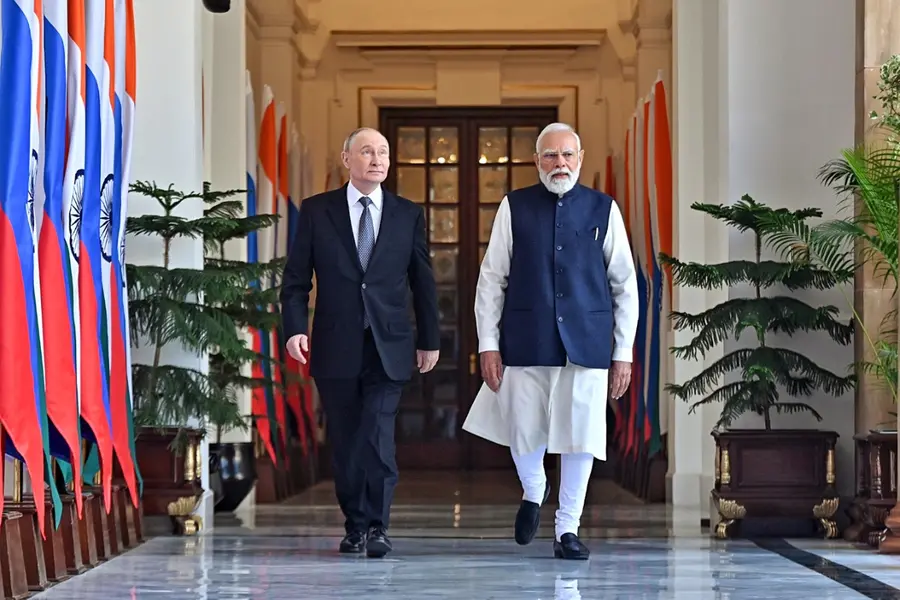
New Delhi: India and Russia have taken steps to strengthen their 'Special and Privileged Strategic Partnership' by expanding cooperation across sectors, including trade, nuclear energy, defence, and science and technology, according to a joint statement released by the Ministry of External Affairs following the 23rd India-Russia Annual Summit with Prime Minister Narendra Modi and President Vladimir Putin.
The leaders emphasised progressing discussions on a second nuclear power plant site in India, and Russia pledged to fully operationalise the Kudankulam Nuclear Power Plant. Currently, two of the six reactors at Kudankulam in Tamil Nadu are online, with the remaining four under construction. Putin described it as a flagship effort significantly contributing to India's energy needs.
The joint statement highlighted plans to finalise the formal allotment of the second site and broaden cooperation in nuclear endeavours, including fuel cycles and life cycle support for Kudankulam, along with non-power applications. Both nations seek to accelerate technical and commercial talks on Russia’s VVER reactor technology, joint development, localisation, and manufacturing of nuclear equipment for large-capacity plants.
In space collaboration, the statement welcomed the growing partnership between ISRO and Russia’s Roscosmos in peaceful space uses such as human spaceflight programs, satellite navigation, planetary exploration, and rocket engine development.
The two sides signed a memorandum for long-term fertiliser supply to India involving JSC UralChem, Rashtriya Chemicals and Fertilisers Limited, National Fertilisers Limited, and Indian Potash Limited.
To enhance transport infrastructure, an MoU on specialist training for ships operating in polar waters was signed, aiming to boost logistics and infrastructure supporting the International North-South Transport Corridor, Chennai-Vladivostok Eastern Maritime Corridor, and Northern Sea Route.
Trade and investment cooperation will intensify in Russia’s Far East and Arctic zones, guided by a program spanning 2024-29 focusing on agriculture, energy, mining, manpower, diamonds, pharmaceuticals, maritime transport, and more.
Both governments stressed regular bilateral consultations on Arctic issues and acknowledged progress on cooperation through the Northern Sea Route. Russia welcomed India’s observer role commitment for the Arctic Council and noted India’s participation in the 6th International Arctic Forum.
In military cooperation, the nations will promote joint manufacturing in India of Russian-origin defence components under the Make-in-India program, fostering technology transfer and joint ventures aimed at Indian Armed Forces needs and exports to friendly third countries.
Military contacts remain robust, with appreciation for the June 2025 Defence Ministers’ meeting in Qingdao and the INDRA joint military exercises, with commitments to sustain and expand military cooperation and delegation exchanges.
Financial cooperation includes ongoing joint development for bilateral trade settlements in national currencies and consultations to interoperate national payment, financial messaging, and central bank digital currency systems.
President Putin concluded his two-day visit to Delhi on Friday night, underscoring the strength and breadth of India-Russia ties across strategic, economic, military, and technological domains.
With inputs from ANI
Published: 06 Dec 2025, 08:07 am IST
Disclaimer: Kindly avoid objectionable, derogatory, unlawful and lewd comments, while responding to reports. Such comments are punishable under cyber laws. Please keep away from personal attacks. The opinions expressed here are the personal opinions of readers and not that of Mathrubhumi.
