
India plans to expand nuclear power capacity to 100 GW by 2047 to strengthen energy security.
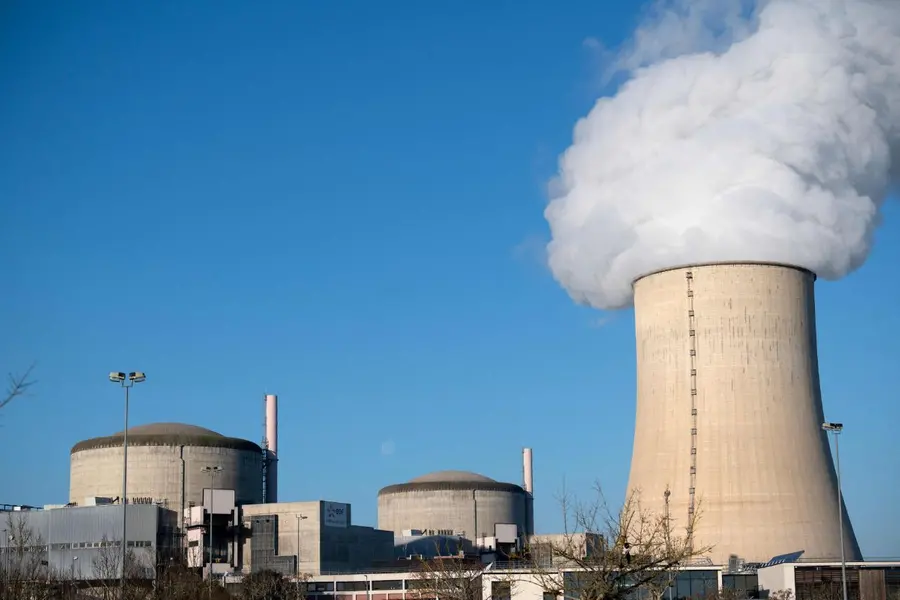
New Delhi: India is set to significantly expand its nuclear power capacity to 100 GW by 2047, aligning with the centenary of independence, as part of a long-term strategy to strengthen energy security and reduce fossil fuel dependence, according to a report.
Citing a report by Khaleej Times, India currently operates 24 nuclear reactors with a combined capacity of 8,780 MWe, while eight additional reactors (6,028 MWe) are under construction.
Nuclear capacity is expected to rise sharply by the 2030s
Government projections indicate that India’s installed nuclear capacity will increase to around 22 GW by the early 2030s, before accelerating towards the ambitious 100 GW nuclear energy target by 2047.
This expansion is a key component of India’s clean energy transition strategy, aimed at reducing carbon emissions and ensuring stable baseload power.
Two-pronged strategy: Large reactors and SMRs
To achieve this scale-up, India is adopting a dual approach focused on both large and small reactor technologies.
This includes the development of 700 MWe pressurised heavy water reactors (PHWRs) and imported large-capacity reactors at greenfield sites, alongside Bharat Small Modular Reactors (BSMRs) of 200 MWe and SMR-55 units.
The combination of large nuclear reactors and small modular reactors (SMRs) is expected to enhance flexibility, efficiency and scalability in India’s nuclear energy programme.
Also Read| More power to people! Prepaid electricity meters no longer mandatory
Kalpakkam PFBR milestone boosts indigenous technology
A major breakthrough was achieved on April 6, 2026, when the 500 MWe Prototype Fast Breeder Reactor (PFBR) at Kalpakkam attained first criticality, marking the start of a controlled nuclear fission reaction.
This milestone is seen as a significant advancement in India’s indigenous nuclear technology development and long-term fuel sustainability.
The PFBR uses uranium-plutonium mixed oxide (MOX) fuel and liquid sodium as a coolant, enabling it to generate more fissile material than it consumes—an essential feature of fast breeder reactor technology.
The reactor is capable of supplying electricity to around five lakh homes, contributing to India’s growing clean energy capacity.
Three-stage nuclear programme to leverage thorium reserves
India’s nuclear power programme is based on a long-term three-stage strategy designed to optimise limited uranium resources while utilising abundant thorium reserves.
- Stage 1: PHWRs using natural uranium to produce plutonium
- Stage 2: Fast breeder reactors using plutonium to generate more fissile material
- Stage 3: Thorium-based reactors producing uranium-233 for sustainable energy generation
This approach positions India uniquely in the global thorium-based nuclear energy landscape.
Also Read| Will India have to pay $2 million to cross the Strait of Hormuz? | EXPLAINED
Nuclear energy key to India’s clean energy goals
The planned expansion of nuclear power in India is expected to play a crucial role in achieving long-term energy security, low-carbon power generation and net-zero goals.
With a mix of advanced reactor technologies and indigenous innovation, India is aiming to emerge as a global leader in sustainable nuclear energy development.
IANS
Published: 11 Apr 2026, 03:34 pm IST
Related Topics
Disclaimer: Kindly avoid objectionable, derogatory, unlawful and lewd comments, while responding to reports. Such comments are punishable under cyber laws. Please keep away from personal attacks. The opinions expressed here are the personal opinions of readers and not that of Mathrubhumi.
