
The LCA Mark II will boast improved range and payload, while the AMCA aims to be India's first fifth-generation stealth fighter.
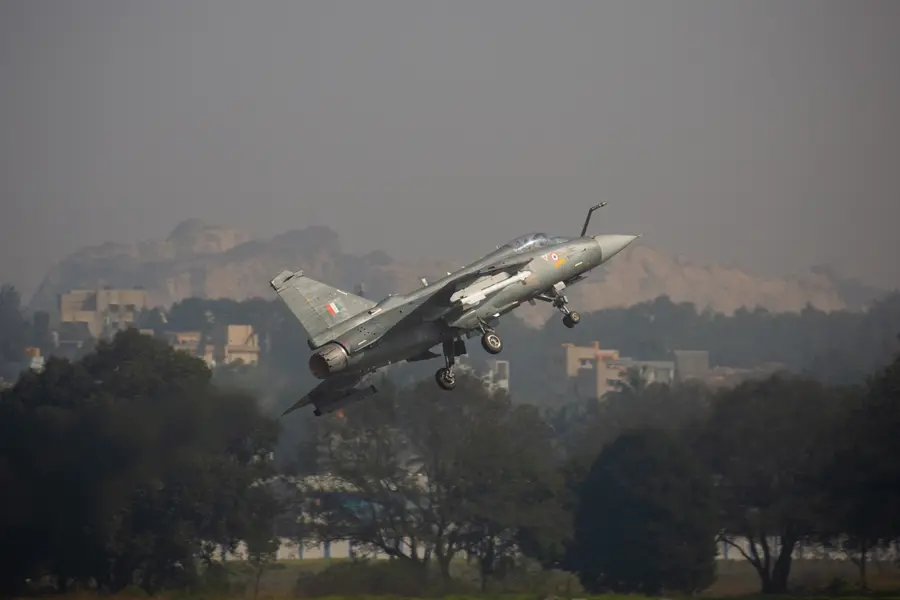
New Delhi: Defence Research and Development Organisation announced an accelerated timeline for its next-generation fighter programs on Sunday, as the country's indigenous Tejas Light Combat Aircraft completed 25 years since its maiden flight.
DRDO Chairman Dr Samir V Kamat told reporters at a national seminar in Bengaluru that the Light Combat Aircraft Mark II is expected to take its first flight by June 2026, while the Advanced Medium Combat Aircraft will be rolled out by the end of 2028, with its maiden flight planned for early 2029. "Both these programs are now on schedule, and we hope to deliver our commitments to the Air Force," Kamat said at the two-day Aeronautics 2047 seminar hosted by the Aeronautical Development Agency.
Urgent Need for Modernisation
The announcements come as the Indian Air Force operates 31 fighter squadrons against a sanctioned strength of 42, creating pressure for the timely induction of new aircraft. Air Chief Marshal Amar Preet Singh, who inaugurated the seminar on Saturday, emphasised the critical importance of adhering to delivery timelines to maintain operational readiness.
"It is an exceptional milestone that we achieved in 2001, and that has changed the history of our defence aviation and defence designing," Singh said. "We are looking forward very eagerly to the further programs, Mark II and AMCA, and I'm sure they're going to be more successful than what Tejas was and with better timelines."
The Tejas program, which began in 1983 to replace the IAF's ageing fleet, achieved its first flight on January 4, 2001, when Wing Commander Rajiv Kothiyal piloted the Technology Demonstrator from Bengaluru. Since then, the aircraft has completed more than 5,600 successful flight trials, and 38 Tejas aircraft have been inducted into two IAF squadrons.
Next-Generation Capabilities
The LCA Mark II represents a major technological leap over the current Mark I variant, featuring enhanced range, payload capacity of 6,500 kg, and advanced avionics including an upgraded Uttam active electronically scanned array radar. The aircraft will be powered by a GE F414 engine and will feature stealth capabilities, infrared search and track sensors, and network-centric warfare systems.
The AMCA is designed as India's first fifth-generation stealth fighter, featuring advanced coatings, internal weapons bays, and artificial intelligence-powered systems. The 25-tonne twin-engine aircraft is expected to reach speeds of Mach 2.15 with a combat range of 1,620 kilometres.
Dr Kamat underscored the strategic importance of developing indigenous cutting-edge technology to minimise dependence on imports and realise the vision of Viksit Bharat by 2047. The programs bring together more than 100 design work centres, including government laboratories, academic institutions, and private industries.
Published: 05 Jan 2026, 12:28 pm IST
Related Topics
Disclaimer: Kindly avoid objectionable, derogatory, unlawful and lewd comments, while responding to reports. Such comments are punishable under cyber laws. Please keep away from personal attacks. The opinions expressed here are the personal opinions of readers and not that of Mathrubhumi.
