
India & EU finalize landmark Free Trade Agreement! Discover how this deal boosts trade, investment, and market access. Click to learn about benefits & next steps!
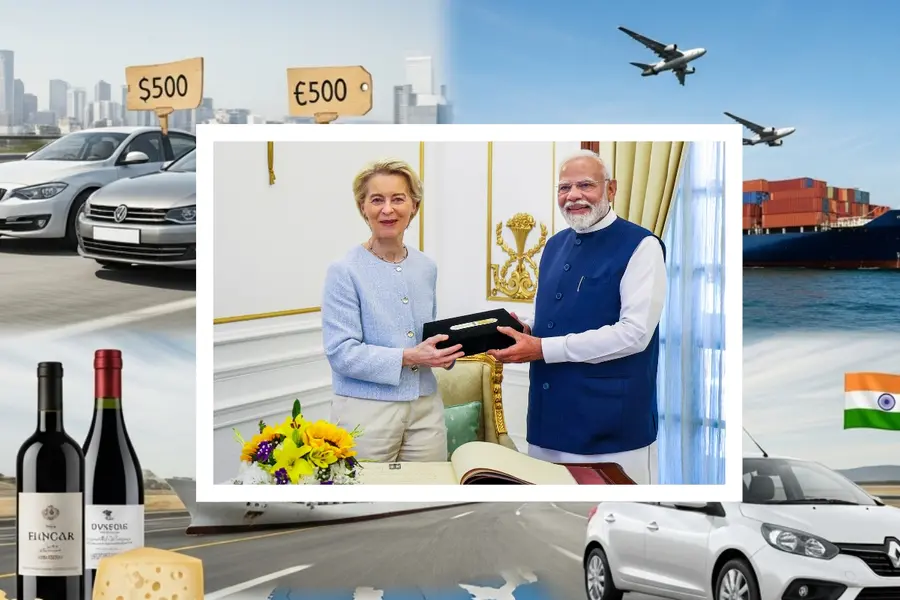
India and the European Union (EU) have officially concluded negotiations for a long-awaited Free Trade Agreement (FTA), marking a major breakthrough in economic ties after nearly 18 years of talks, Commerce Secretary Rajesh Agrawal announced on Monday.
Both sides are expected to formally announce the successful conclusion of negotiations at the India-EU Summit on January 27, where Prime Minister Narendra Modi will meet European Commission President Ursula von der Leyen and European Council President Antonio Costa.
Calling it a “balanced and forward-looking” pact, Agrawal said the agreement would significantly boost trade, investment, and economic integration between India and the 27-nation bloc.
What happens next after India-EU FTA talks end?
The legal vetting of the agreement text is currently underway. Officials aim to sign the pact later this year, with implementation expected in early 2027 after approvals from the EU Parliament and India’s Union Cabinet.
Commerce and Industry Minister Piyush Goyal has described the deal as “the mother of all trade agreements” signed by India so far.
Why is the India-EU trade deal so important right now?
The agreement comes at a critical time when global trade flows are being disrupted by rising tariffs, particularly from the United States. India is facing steep duties on some exports, and the FTA is expected to help diversify markets, reduce reliance on China, and boost labour-intensive sectors like textiles, footwear, chemicals, and gems and jewellery.
Once implemented, the pact will eliminate or reduce tariffs on over 90 per cent of traded goods and ease regulations in key services sectors such as IT, telecom, transport, accounting, and auditing.
How big is India-EU trade today?
The EU is currently India’s largest trading partner in goods.
Total goods trade (2024–25): USD 136.53 billion
Exports: USD 75.85 billion
Imports: USD 60.68 billion
Services trade (2024): USD 83.10 billion
India’s trade surplus: USD 15.17 billion
The EU accounts for nearly 17 per cent of India’s exports, while India represents about 9 per cent of EU exports globally.
Which sectors will benefit the most?
The FTA is expected to provide duty-free access to Indian products such as:
- Textiles and garments
- Leather and footwear
- Gems and jewellery
- Electronics and electrical machinery
- Chemicals and pharmaceuticals
India’s major exports to the EU also include petroleum products, smartphones, machinery, iron and steel, auto components, and pharmaceuticals, while imports from Europe are dominated by machinery, electronics, aircraft, medical devices, and chemicals.
What else are India and the EU negotiating?
Alongside the FTA, both sides are also working on:
An Investment Protection Agreement
A pact on Geographical Indications (GI)
The India-EU FTA covers 24 chapters, including trade in goods, services and investment.
Published: 26 Jan 2026, 11:56 pm IST
Related Topics
Disclaimer: Kindly avoid objectionable, derogatory, unlawful and lewd comments, while responding to reports. Such comments are punishable under cyber laws. Please keep away from personal attacks. The opinions expressed here are the personal opinions of readers and not that of Mathrubhumi.
