
Jaishankar also pushed for UN Security Council reform and positioned India as a key player in maritime security and global logistics.
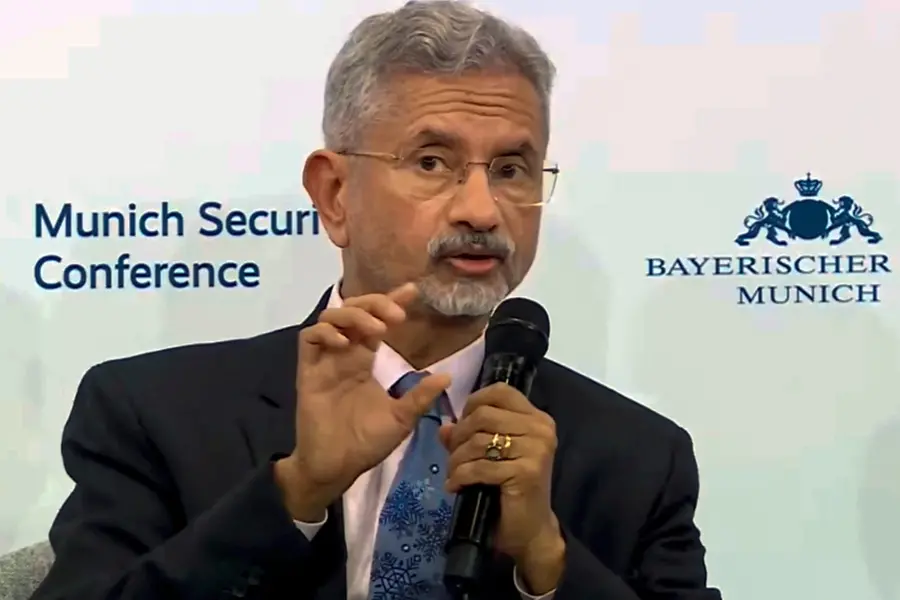
Munich: External Affairs Minister S. Jaishankar on Saturday urged for a shift in international diplomacy toward "comfort building," arguing that enduring global partnerships require deep-seated trust rather than just the optics of high-level summits.
Speaking at the Munich Security Conference alongside German Foreign Minister Johann Wadephul, Jaishankar described a world moving toward a "highly multipolar order" where independent centres of power, particularly a resurgent Europe, are asserting strategic autonomy.
"I would say the world is heading towards greater multipolarity, that there will be many more independent or autonomous centres of decision making. Probably the most interesting for many of us is Europe, because we have seen in some ways a sort of strategic reawakening of Europe in the last few years," Jaishankar said during a session titled 'Navigating Uncertainty: India and Germany in a World in Disarray'.
The minister emphasised that relationships must be cultivated beyond "episodic engagement" or media headlines. "Relationships don't happen just by visits and agreements and headline news or even discussions here. They need a lot of comfort building," he noted. "We need India and Europe and India and Germany to work to build that level of comfort."
Maritime Security and Global Governance
On the sidelines of the conference, Jaishankar engaged with G7 counterparts to advocate for the "UN80" agenda—a reform initiative marking the United Nations' 80th anniversary in 2026. He reiterated India’s commitment to modernising the U.N. Security Council to reflect contemporary geopolitical realities.
Jaishankar also positioned India as a pivotal player in global logistics and security, highlighting New Delhi's role in:
- Sea Lines of Communication: Protecting vital trade routes in the Indo-Pacific.
- Crisis Response: Acting as a "first responder" during humanitarian and regional emergencies.
- Critical Infrastructure: Strengthening port security and the resilience of submarine cable networks that power the global internet.
The "Mother of All Deals"
The discussions took place against the backdrop of the landmark India-EU Free Trade Agreement (FTA), finalised in January 2026 after nearly two decades of negotiation. The pact, widely dubbed the "Mother of All Deals," has dramatically reshaped trade between the two regions by removing tariffs on over 90% of goods.
A recent analysis by the credit rating agency ICRA indicates that the agreement grants India duty-free access for nearly 99.5% of its export value to the EU.
- Agriculture & Marine Gains: Indian exports of tea, coffee, spices, and marine products now enjoy preferential access, with marine duties slashed by up to 26%.
- Manufacturing Boost: Labour-intensive sectors like leather, footwear, and furniture are expected to see significant growth.
- Safeguards: To protect domestic interests, the agreement maintains protective barriers for Indian farmers in sensitive sectors such as dairy, poultry, and cereals.
With inputs from ANI
Published: 14 Feb 2026, 10:36 pm IST
Related Topics
Disclaimer: Kindly avoid objectionable, derogatory, unlawful and lewd comments, while responding to reports. Such comments are punishable under cyber laws. Please keep away from personal attacks. The opinions expressed here are the personal opinions of readers and not that of Mathrubhumi.
