
Concerned about Income Tax Dept accessing your social media & emails from April 1, 2026? PIB fact-checks this viral claim. Discover the truth about ITD`s digital surveillance powers & protect your privacy!
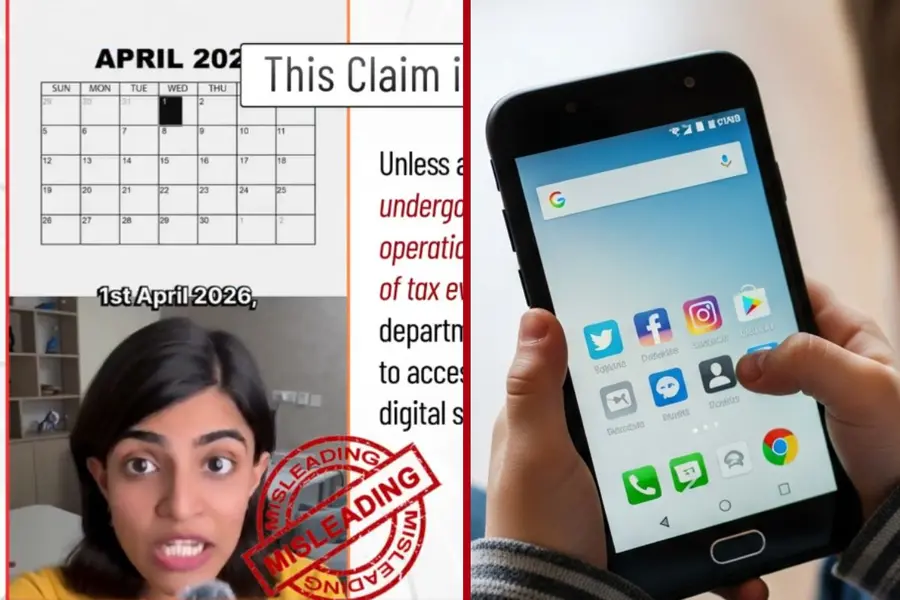
A message circulating widely on social media has triggered concern among taxpayers by claiming that the Income Tax Department (ITD) will be able to access social media accounts, emails, trading apps and other digital platforms from April 1, 2026 to curb tax evasion.
The claim quickly gained traction across platforms like Instagram, WhatsApp and X, prompting confusion about whether taxpayers’ online activity will come under government surveillance.
The Press Information Bureau (PIB) has now stepped in to clarify the facts and label the claim as misleading.
What is the viral claim about income tax surveillance?
Several social media posts, including one shared by handles such as IndianTechGuide and bingewealth, allege that new provisions under tax laws will allow the Income Tax Department to track personal digital activity, including:
- Social media usage
- Emails and private messages
- Online shopping and digital payments
- Trading apps and lifestyle spending
The posts suggest that these powers will come into force from April 1, 2026.
What did the government and PIB fact check say?
The PIB Fact Check unit has categorically denied these claims, calling them false and misleading.
According to the government:
- The Income Tax Department does not monitor or track social media accounts, emails, online shopping, digital payments or app-based transactions.
- There is no system or mechanism in place to track an individual’s digital behaviour or lifestyle spending.
- Tax authorities do not conduct online surveillance of law-abiding citizens.
- The PIB clarified that routine tax compliance does not involve monitoring personal digital activity.
Does the Income Tax Department track online spending or transactions?
The government explained that reporting under Section 285BA of the Income Tax Act, 1961 only requires specified entities such as banks, mutual funds and registrars to report high-value financial transactions under the Statement of Financial Transactions (SFT) framework.
This system existed many years ago and covers a limited high-value transactions
Published: 02 Jan 2026, 04:04 pm IST
Related Topics
Disclaimer: Kindly avoid objectionable, derogatory, unlawful and lewd comments, while responding to reports. Such comments are punishable under cyber laws. Please keep away from personal attacks. The opinions expressed here are the personal opinions of readers and not that of Mathrubhumi.
