
The MiG-21, India's first supersonic fighter, will be replaced by the indigenous Tejas LCA Mark 1A, marking a significant step towards self-reliance in defence
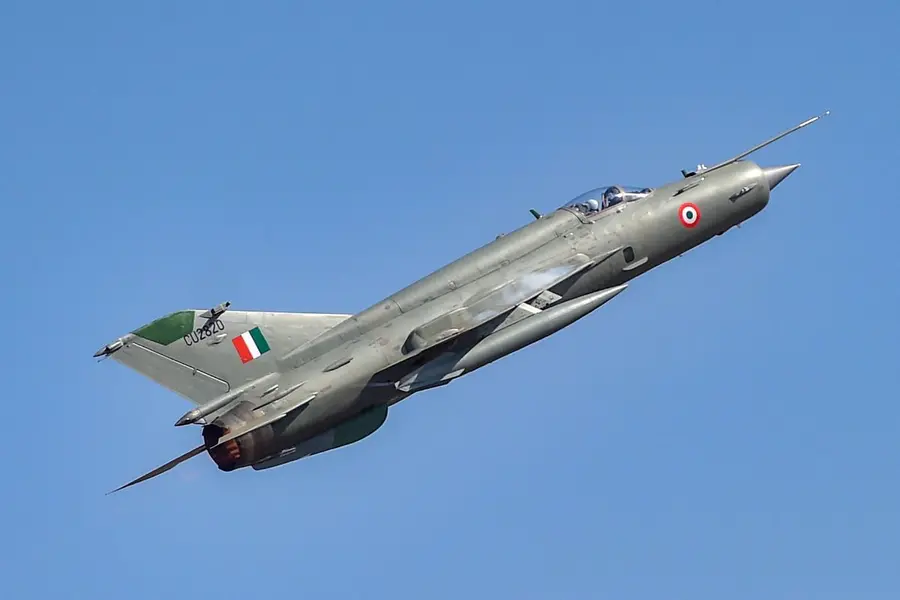
New Delhi: The Indian Air Force (IAF) has paid a stirring tribute to the legendary MiG-21 fighter jet, ahead of its scheduled retirement on September 26. In a heartfelt post on X, the IAF released a video montage lauding the aircraft as a "warhorse that carried the pride of a nation into the skies," underlining its unmatched legacy over nearly six decades of service.
With the MiG-21's retirement, the IAF closes a historic chapter in Indian military aviation. The aircraft leaves behind a record of unmatched service and a legacy that will be remembered as India transitions to a new generation of fighter jets. The IAF is set to replace the MiG-21 with the indigenous Tejas Light Combat Aircraft (LCA) Mark 1A, marking a significant step in India’s quest for self-reliance in defence technology.
A supersonic legacy
Inducted in 1963, the MiG-21 was India's first supersonic fighter, with its inaugural squadron, the 28 Squadron "First Supersonics," raised in Chandigarh. For nearly 60 years, it has remained the backbone of the IAF, shaping air power through both combat performance and pilot training.
The aircraft saw extensive action across multiple operations, establishing itself as one of the most versatile and battle-hardened jets in IAF history. From the 1971 war with Pakistan, where MiG-21s bombed the Governor’s House in Dhaka to hasten surrender, to its recent combat role in 2019, where it downed a Pakistani F-16, the fighter has proven its combat effectiveness across generations.
Battle-hardened and dependable
During the 1971 war, MiG-21s not only shifted the balance of aerial superiority but also ushered in a new era of supersonic warfare for India. It continued to serve with distinction during the 1999 Kargil conflict, where its agility and quick turnaround times made it a first choice for commanders. Its reputation as a flexible, powerful, and dependable workhorse earned it respect across multiple generations of pilots, technicians, and engineers.
The MiG-21 provided unique attributes of high agility, fast acceleration, and operational flexibility, making it indispensable to IAF planners. Many pilots recall it as one of the most challenging yet rewarding jets to master, defining their combat readiness and skill.
Driving technological evolution
Beyond combat, the MiG-21 also spurred advancements in India's aerospace sector. Its induction and indigenous maintenance infrastructure paved the way for leaps in domestic defence manufacturing capabilities. Its influence on Indian strategic aviation thinking, training patterns, and industrial capacity remains profound.
Closing an illustrious chapter
With the MiG-21’s retirement, the IAF will bid farewell to an aircraft that not only defined an era but also left an imprint on India’s military history like few others. The phasing out of the MiG-21 FL variant, once feared in the skies, symbolises the end of a relentless era of performance, precision, and combat dominance.
As the IAF transitions to modern platforms such as the Tejas Mark 1A, the Rafale, and the upcoming AMCA, the MiG-21 will continue to be remembered as a warhorse that forged India’s aerial power and safeguarded its skies for more than half a century.
Published: 20 Sept 2025, 02:22 pm IST
Related Topics
Disclaimer: Kindly avoid objectionable, derogatory, unlawful and lewd comments, while responding to reports. Such comments are punishable under cyber laws. Please keep away from personal attacks. The opinions expressed here are the personal opinions of readers and not that of Mathrubhumi.
