
India to introduce bills for automatic removal of key public officials, including PM and Ministers, arrested for serious crimes.
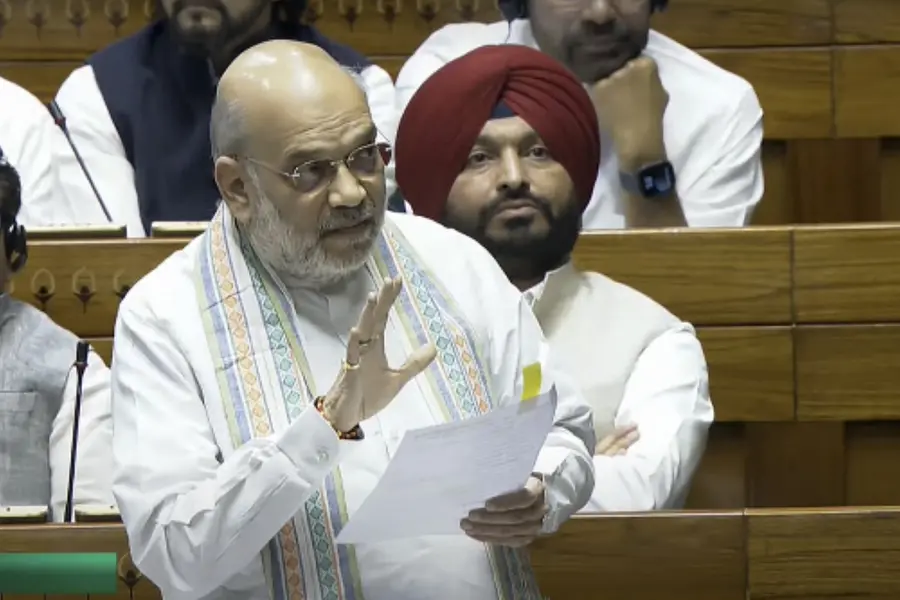
The central government is set to introduce three bills in Parliament on Wednesday, aimed at creating a legal mechanism for the automatic removal of key public office holders—including the Prime Minister, Union Ministers, Chief Ministers, and State or Union Territory Ministers, if they are arrested and detained for 30 consecutive days on serious criminal charges.
The three bills are:
- The Government of Union Territories (Amendment) Bill, 2025
- The Constitution (One Hundred and Thirtieth Amendment) Bill, 2025
- The Jammu and Kashmir Reorganisation (Amendment) Bill, 2025
What is the key provision of these bills?
If any of the above office-bearers are arrested and remain in custody for 30 consecutive days, for offences carrying a minimum jail term of five years, they will automatically lose their position on the 31st day.
"A minister, who for any period of 30 consecutive days during holding the office as such, is arrested and detained in custody, on allegation of committing an offence under any law for the time being in force, which is punishable with imprisonment for a term which may extend to five years or more, shall be removed from his office by the President on the advice of the Prime Minister to be tendered by the thirty-first day, after being taken in such custody," one of the bill says.
It also said: "Provided that if the advice of the prime minister, for the removal of such minister is not tendered to the President by the thirty-first day, he shall cease to be a minister, with effect from the day falling thereafter".
"Provided further that in case of the prime minister, who for any period of 30 consecutive days during holding the office as such, is arrested and detained in custody, on allegation of committing an offence under any law for the time being in force, which is punishable with imprisonment for a term which may extend to five years or more, shall tender his resignation by the thirty-first day after such arrest and detention, and if he does not tender his resignation, he shall cease to be the Prime Minister with effect from the day falling thereafter," it added.
Why are these necessary?
Currently, there are no constitutional or legal provisions mandating the removal of a minister or the Prime Minister if they are in jail, even for serious offences. The bills seek to close this legal and ethical gap.
1. The Constitution (One Hundred and Thirtieth Amendment) Bill, 2025
This bill proposes changes to:
Article 75 (Union Ministers, including the PM)
Article 164 (State Ministers, including Chief Ministers)
Article 239AA (National Capital Territory of Delhi governance)
The objective is to ensure that arrested public officials facing serious charges do not continue to hold power while under detention.
2. The Government of Union Territories (Amendment) Bill, 2025
It aims to amend Section 45 of the Government of Union Territories Act, 1963, which currently lacks provisions for the removal of ministers or chief ministers in UTs under criminal detention.
3. The Jammu and Kashmir Reorganisation (Amendment) Bill, 2025
This bill seeks to amend Section 54 of the Jammu and Kashmir Reorganisation Act, 2019, for similar reasons, enabling the removal of arrested chief ministers or ministers in the Union Territory of Jammu and Kashmir.
What triggered this move?
The move appears to be prompted by high-profile cases where ministers or leaders did not resign despite being in jail. Notably, former Delhi Chief Minister Arvind Kejriwal and Tamil Nadu Minister V Senthil Balaji. Both continued in their posts despite being arrested in separate cases, raising questions about accountability and ethics in governance.
What’s next?
Union Home Minister Amit Shah is expected to move a motion in the Lok Sabha to refer all three bills to a Joint Committee of Parliament for further scrutiny and recommendations.
Published: 20 Aug 2025, 08:11 am IST
Related Topics
Disclaimer: Kindly avoid objectionable, derogatory, unlawful and lewd comments, while responding to reports. Such comments are punishable under cyber laws. Please keep away from personal attacks. The opinions expressed here are the personal opinions of readers and not that of Mathrubhumi.
